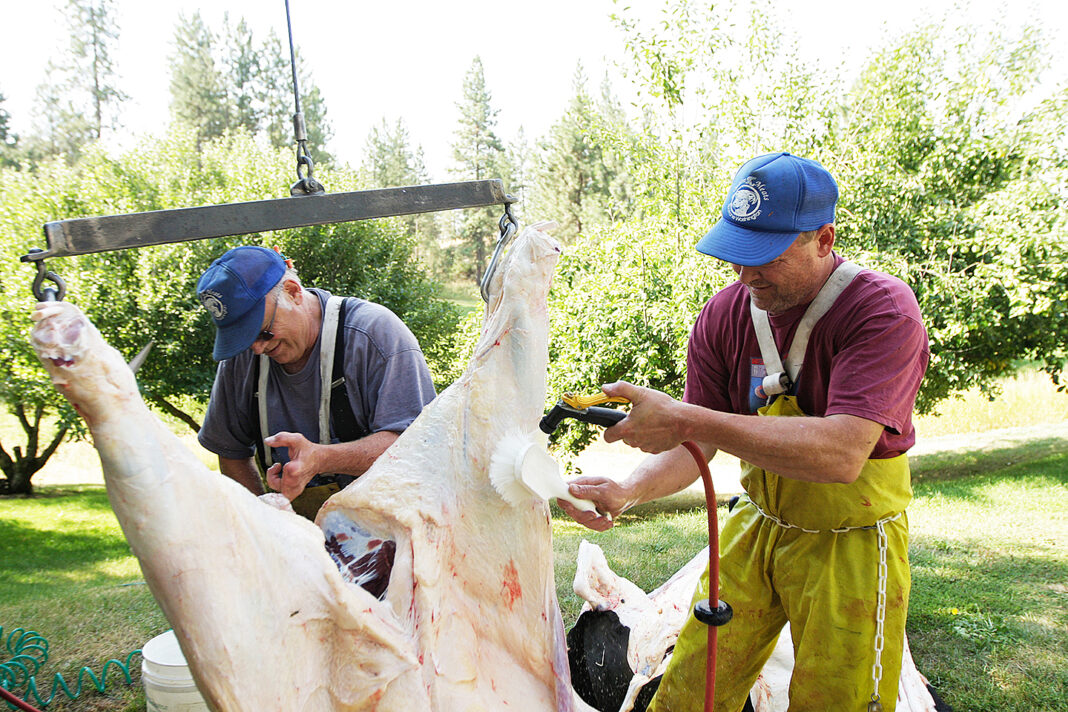
A recently closed small slaughterhouse in Odessa, Washington, is in the process of reopening, thanks to soaring demand for locally raised and processed meat. As large meatpacking facilities across the country have become hotspots for COVID-19 outbreaks — at least 277 cases have been confirmed among the nearly 1,500 workers at the Tyson Foods plant 100 miles south in Wallula, Washington, and three have died — business is booming for small meatpackers.
With grocery stores limiting customer purchases, some Wendy’s restaurants running out of beef and the price of ground beef increasing nearly 5% from March to April, customers are flocking to ranchers like Ed Gross, who has a herd of 1,500 cattle in eastern Washington. “Even big chain stores are looking to buy from us now,” said Gross, one of the founders of the Odessa plant.
Big meatpacking facilities have made meat cheap in the United States. But those low prices have come at a cost to workers and pushed smaller slaughterhouses out of business. Now, as people turn to small butchers for meat, the pandemic is exposing the vulnerability of this centralized system — and highlighting the importance of a diverse and resilient food economy.