
I recently participated in a gathering of organizations involved in narrative change. (Like nearly all meetings these days, it was held via Zoom. I’ll admit that the novelty of that technology – Chat! Share screens! – is wearing thin.)
The organizers presented us with two future scenarios for the COVID-19 crisis. In Scenario A, they imagined, “social distancing and a new contact tracing and testing program worked exceptionally well and [by spring 2021] a larger-than-expected proportion of people have already had the virus and built immunity, thus preventing a second wave. Social distancing and quarantine were phased out by end of summer/early fall 2020, and we saw a steady, methodical return to normal social behavior, with only a few minor flare ups.”
In the second, “states opened up too quickly in the summer of 2020, causing a second, aggressive surge of the virus in the winter. More senseless deaths occurred and lockdown was extended through end of the year. Now, in early 2021, there is a very slow return to normal social behavior as people are still quite fearful of group interaction and public spaces. Many businesses were unable to recover and the country is facing record levels of unemployment, hovering at 25 percent.”
Both scenarios are completely plausible; I have no idea whether either will come to pass. (There are many, more rigorous, scenarios emerging from academics, economists, and scientists. Most of them are not sunny.) But I have to say that the push in many places, including Montana, to restart economic activity makes me nervous.
In the last week, as Diana McFarland reports in this issue, the pace of event cancellations in Jefferson County has quickened. Organizers are coming to terms with the reality that Governor Bullock’s staged reopening plan precludes gatherings of more than 50 people anytime soon. So Tizer Garden’s annual Wizards and Fairies Day is off. Clancy Days has been postponed. Montana Mule Days? Sorry.
The resulting protests by business owners are understandable: Shops and restaurants depend on big revenue from the thousands of visitors who stream into the county for these seasonal events.
But the competing public health case is more compelling. In Montana, things look great: Reported COVID-19 cases have steadily declined to a trickle, and the proportion of cases to population is the lowest in the U.S. Public health experts, though, warn against letting down our guard: If social distancing weakens too soon, the virus will quickly return. “I keep telling people, the outbreak will not end with this one wave,” epidemiologist Michael Osterholm of the University of Minnesota told the health news website STAT.
In any case, nationwide, the pandemic has not abated. Rather, it continues to spread with great force. In the last week, we’ve seen daily case totals in the U.S. that were among the highest since the coronavirus first hit. As long as COVID-19 rages elsewhere, it will be difficult for Montana to ease its restrictions on travelers coming from out of state, who face a mandatory 14-day quarantine.
“Things are looking good right now [in Montana], and Governor Bullock wants to keep it that way,” says Jefferson County Health Supervisor Karen Wandel.
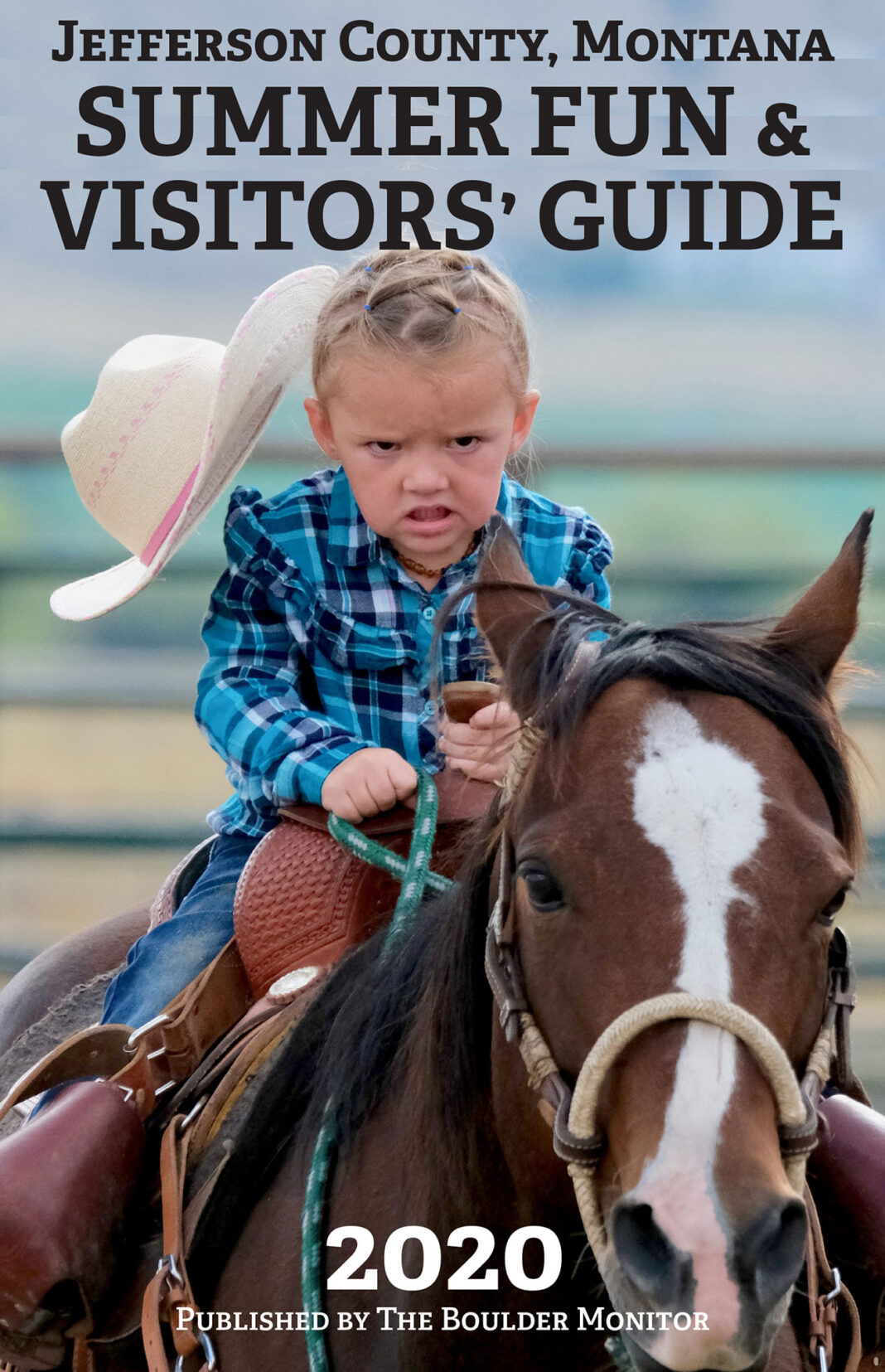
That is why I’ve decided to abandon this year’s version of The Monitor’s Summer Fun & Visitors’ Guide, which we were set to publish later this month. This was a difficult call: The guide is a money-maker for The Monitor, and it provides a valuable service for residents, visitors, and the any local advertisers who want to reach them.
The problem is, there probably won’t be many, if any, visitors. Not until the state borders open up. And a guide that implicitly invites folks to our community for activities that may create public health risks — that poses what I consider an unacceptable moral hazard.
I’m grateful to the many businesses that had agreed to advertise in this year’s guide, and I’m sorry we won’t be able to accommodate them. I’m very grateful, and very sorry, to our friend Melanie Sako, a remarkable dynamo who arranged all that advertising. We’ll be back next year.
I suspect it will be a long, quiet, difficult summer here in Jefferson County. Hopefully, Scenario A is the reward that awaits us.