
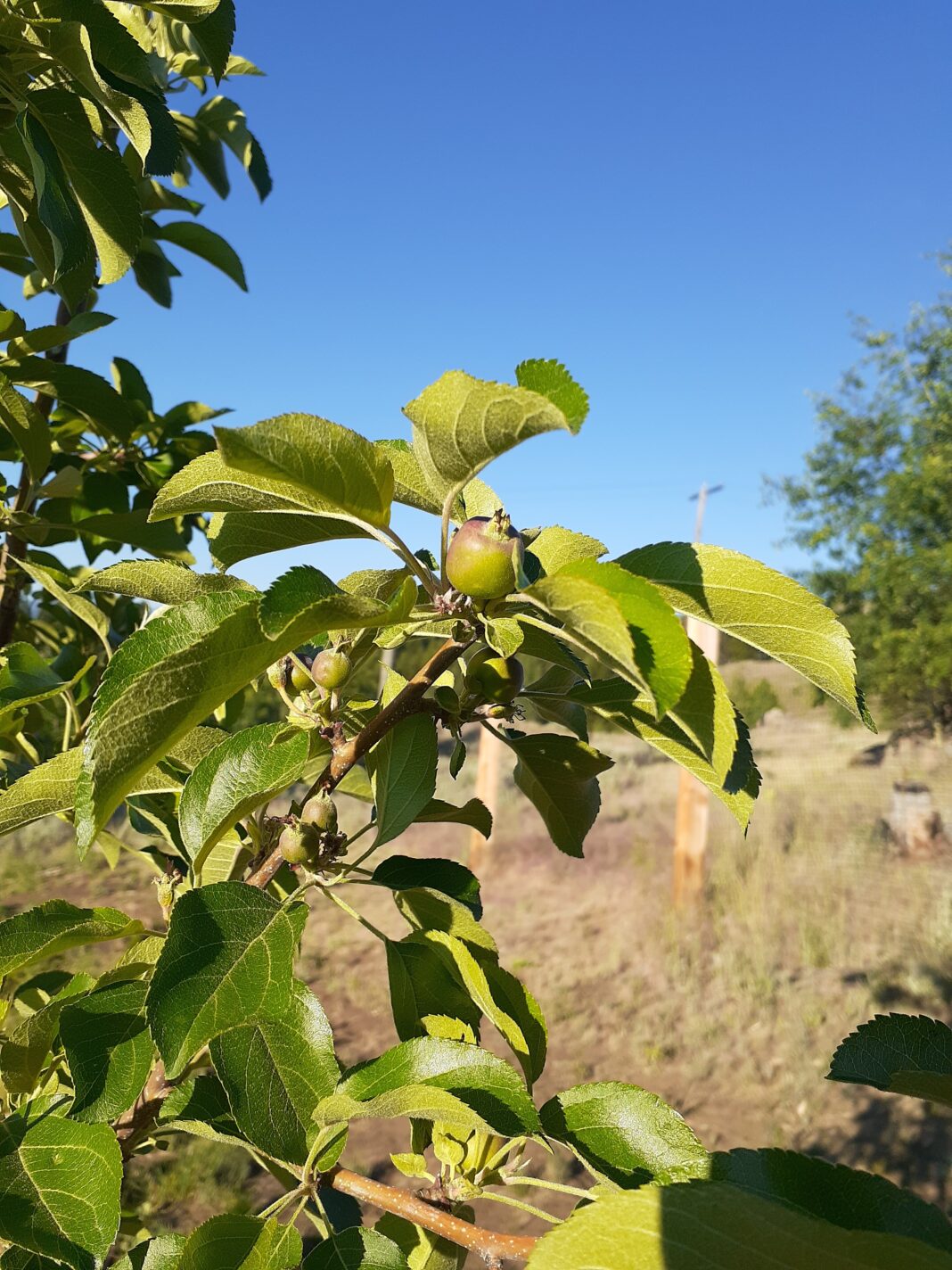
Anyone who has grown a vegetable garden or fruit trees in Montana, especially on our side of the Divide, knows that it comes with myriad of challenges. It takes a little pioneering spirit to persevere. Some years are productive and then you may get complacent. Then we get a winter or spring like this past one, and it can be really discouraging.
I went into this spring thinking that this winter hadn’t been that bad. Sure, we had our negative 30-degree days, but I didn’t think we had had long enough stretches of extreme cold for it to cause much damage. I expected that the fruit trees would have an amazing year if the spring weather would cooperate. Last year, we had very little tree fruit due to a couple hard freezes that hit right at full bloom, which is the most sensitive, critical time. This year was going to be different.
But our trees didn’t break dormancy when they should have. Trees in Helena had been in full bloom for weeks and many of my trees were still reluctant to spring to life. The honeyberries and strawberries were in full bloom buzzing with pollinators and the promise of a good fruit crop, and yet still many of our fruit trees showed little progress. Some finally bloomed late, only to be hit by two late frosts.
Time eventually revealed the death of several apple trees in our orchard, many in which half the canopy had succumbed to winter injury. Dramatic temperature swings over the previous year probably had taken their toll. Some of those trees had been in the ground since 2013 when we started our first orchard. In that time, they had survived many winters that seemed much harsher than this last one. A few of these trees were my “mother trees”; one of them produced 12 different varieties of apple from grafts I had made over the years.
Needless to say, for someone who loves apple trees as much as I do, I had to hold back tears when I cut those trees down and ran them through the chipper this spring.
When reflecting on a devastating spring like this one, I often think about all the settlers that came to our area and started with nothing. I think of all the obstacles they faced and persevered through. It takes determination and grit to grow fruit trees in a zone 4 cold hardiness area.
Even the area around Flathead Lake, which is one of the most suitable places in Montana for growing anything, doesn’t have a guaranteed crop every year. This year, the cherry orchards around the lake got hit by a weird January, when some locations saw negative 30-degree temperatures, killing many of the cherry fruit buds and in some locations killing entire trees. The good news is that most of the trees did survive and there will be a small cherry crop in some locations.
So, with all of the loss that fruit tree growers experience, we often ask ourselves, is it worth it? I pondered that question this spring as I was buying replacement trees for our orchard — but only for a few seconds. Fruit grown in Montana tastes like no other fruit. I know genetically a Honeycrisp apple in Washington is a Honeycrisp apple in Montana, but the taste of a Montana grown Honeycrisp is so much more complex. In my opinion, a typical Red Delicious apple is a pretty apple to look at, but not to eat. But if you ever get the opportunity to eat a Montana Red Delicious, do it. It doesn’t taste like the same fruit. (Keep in mind, though, that Red Delicious apples generally won’t work in our area.)
The same can be said for other fruit. If you are looking to enjoy unique-tasting fruit in Montana, seek it out wherever you can find it, and try growing some of your own. There are small U-Pick farms scattered around the state, and many farmers’ markets as well. Support them when you can, and if you go down the route of growing your own, go into it knowing that it will be a bumpy road — but that the rewards are truly worth it!
Start small to see what does best in your micro-climate. Rember you are planting for future generations to enjoy. We have had the best success with honeyberries/haskaps, strawberries and apples. If I can be of any assistance with your fruit tree adventures, don’t hesitate to contact me. Good luck!
Brent Sarchet, a certified International Society of Arboriculture (ISA) arborist certified crop advisor, runs Finn Creek Farm outside of Boulder with his wife Andrea. Ask him questions at bsarchet@gmail.com.