
In 2017, in Miller, South Dakota (pop. 1366), a group of young people decided they wanted to start an indoor movie theater. The city’s last film house, the Princess Theater, had closed in 1991, and the Midway Drive In was open only in the summer.
A grown-up told them: “That idea is too big, and it’s never going to work. Don’t even try.”
So, of course, the kids did try. They rallied their friends to the cause. They applied for a low-cost exhibition license from the Motion Picture Licensing Corporation and got permission to use the high school gym. They sold popcorn and candy. And on a January afternoon, 30 Miller residents enjoyed a free showing of “Megamind.”
The moral: Break down seemingly big ideas into smaller ones. Build support across networks. And don’t listen to grown-ups.
Over the last few weeks, a group of Boulder residents have been laying the foundation for what may become their own adventure in civic entrepreneurship. They’ve gathered in Volunteer Hall to join in “Reimagining Rural,” an initiative hosted by the Montana State University Extension Service to catalyze volunteer engagement in rural communities. Boulder is one of 47 small towns selected to participate since 2020; LaDana Hintz, Jefferson County’s planning director, and City Councilor Drew Dawson instigated its application and drummed up interest. (I facilitated two of the sessions.)
The moment sure is ripe for a local lift. Seven years after the Montana Developmental Center closed its doors, Boulder has the feel of a community still woozy from a boxer’s punch. Too many Main Street storefronts are vacant; $500,000 in state aid has come and gone without much impact. Affordable housing that might accommodate new residents has been slow to emerge. Our population is both aging and declining — not a happy combination.
The message at the core of “Reimagining Rural” is threefold: The failure of rural towns, it asserts, is not inevitable. And it’s within citizens’ power to make change happen. But doing so requires thinking in ways that can go against the small-town grain.
“We tend to overestimate the risk of failure, and deny the risk of inaction,” said Deb Brown, a serial entrepreneur whose Iowa-based company, SaveYour.Town, consults to small communities across the nation, and who spoke to “Reimagining Rural” participants on Sept. 22. “There’s the trap of slow down, ask question, and put off decisions” that hinders traditional, institutionally led change efforts.
The alternative, Brown suggests, is something quite different: Citizen-led efforts that start with an idea, then enlist supporters and build connections to feed momentum – often working outside official channels to accomplish things that government can’t or won’t. No formal meetings, no officers, no strategy – just people getting stuff done, a little at a time.
This ethos is playing out now in Baker and Fallon County, where residents realized there was a lot of potential housing stock already in place, dilapidated but still usable. “We used to say, ‘they should really do something about that old building on 3rd Street,’” said Vaughn Zenko of the Southeast Montana Development Corp. “Then we realized that ‘they’ were us.”
So a volunteer group formed a real estate investment cooperative, a model that has succeeded in other communities. It offered shares of general stock for $100 apiece, and preferred stock for $500 (promising a 6 percent annual yield). If the group can convince a third of the county to buy a share of preferred, they’ll have $500,000 to invest in housing properties. The coop is partnering with Vaughn’s non-profit, which can attract grant funding to support the needed clean-up.
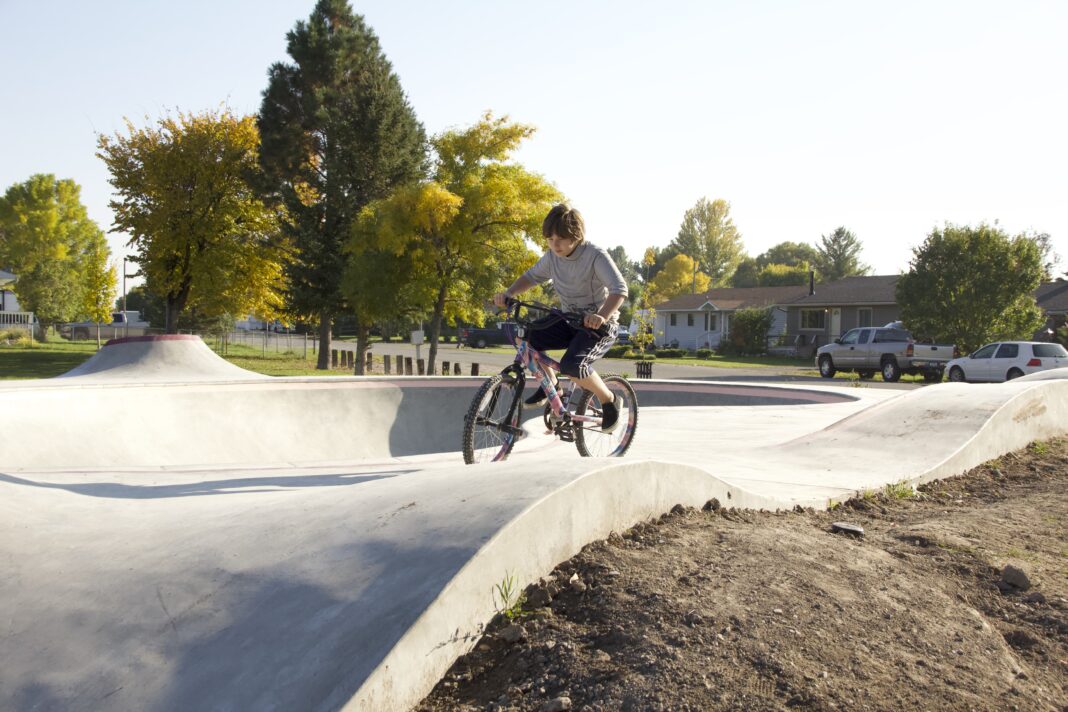
In Townsend, residents had tried for years to build a skate park. “They decided 24 years ago that they wanted a park, but they were told by local government that insurance was too high,” said resident John Hahn. “They were told the same thing again 10 years ago.”
But in 2021, a citizen group discovered that Montana towns smaller than Townsend had installed similar parks – and that if those parks were built on city or county land by professional builders, there was no additional insurance premium. That was all the ammunition it needed. Hahn and others started mustering support for the idea, marshaling as many young people as they could find. “Local leaders needed that pressure,” Hahn says. They swayed local officials who wanted recreation options for youth but were afraid that a skate park would attract “bad elements.” (The evidence says just the opposite.) And they partnered with Pearl Jam bassist Jeff Ament, whose Montana Skate Park Association is committed to building parks across the state. The Townsend facility opened last June.
Such efforts have a chaotic quality to them – ideas emerge, gather steam, and happen by dint of luck, persistence, and good fortune. That’s appealing, in a way: Who doesn’t love the idea of a rag-tag bunch bucking the system and winning?
It’s also fraught. “Reimagining Rural” embraces the philosophy that an idea is good, per se, when it attracts enough support. If you can find enough friends to build an outdoor art gallery (as they have in Havre), then you can (and should) make it happen.
That approach is in tension with things like vision, planning, and strategy – which, needless to say, also have merit. It’s too facile to simply launch into a string of popular ideas without considering how they fit into the bigger whole, and into a thoughtful design for the future.
Boulder deserves both – a plan, and the pop-up energy of entrepreneurial citizens who are committed to getting stuff done. Toward the end of the final “Revitalizing Rural” session on Oct. 6, a core group of residents tossed around potential projects – among them an art gallery; beautifying Main Street; and upgrading the city’s emergency medical response capacity.
That’s a start. What now? We invite folks – hopefully, not just the usual suspects — to start brainstorming. That group comes up with an idea, something appealing and doable. And we get to work. “I just want to have a win,” Hintz says. “Something on the ground that people here can see. Even just a little project.”
It can happen. “They,” after all, are us.