


As the use of the internet for daily living continues to rise, so does an individual’s reliance on public entity and government websites for information.
In honor of Sunshine Week, The Boulder Monitor took a look at the major government websites in Jefferson County to see what basic information was offered, or not.
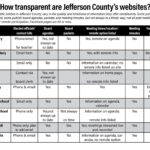
The Monitor looked at Jefferson County, the City of Boulder, the Town of Whitehall, and the Jefferson, Whitehall, Boulder, Clancy and Montana City school district websites.
The Monitor looked for specific information — such as contact information for elected officials, times, dates and places for regular board, council or commission meetings, meeting agendas, board packets of meeting materials, meeting minutes and whether the entity has a Facebook page and advertises agendas in its local newspaper or in another location.
Sunshine Week got its start in 2005 by the American Society of News Editors, now the News Leaders Association, located at the University of Missouri School of Journalism. It is designed to educate the public about the importance of openness and transparency.
Sunshine Week occurs each year around mid-March and coincides with James Madison’s birthday and the National Freedom of Information Day on March 16.
In Montana, there is no obligation for any government entity to have a website, and generally information must be available upon request, according to Matt Gibson, former executive director of the Montana Newspaper Association.
Reasonable notice
The Montana Supreme Court has made it clear that “reasonable” notice to the public is required by both Article II, Section 8 (the Right to Participate) and Section 9 (the Right to Know), according to Mike Meloy, an attorney who advises the Montana Freedom of Information hotline.
‘“Reasonable notice’ will vary depending upon the type of local governmental entity and the significance of the decision to be made in the meeting. Most local governments now rely upon their websites to fulfill their notice and agenda obligations. But there are still folks out there, believe it or not, who don’t have access to internet communications. So the local entity has to have some mechanism beyond their websites to give notice (posting, publication in the paper, radio, TV etc.),” said Meloy in an email to The Monitor.
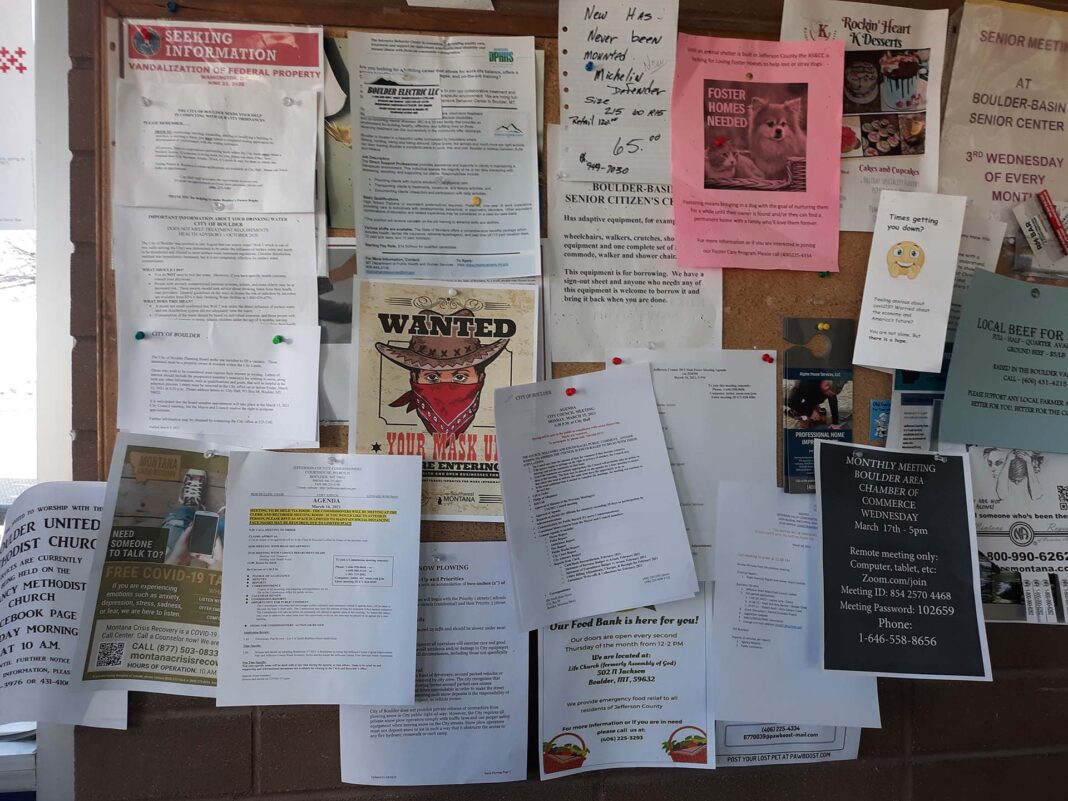
Some Jefferson County entities publish an agenda in The Boulder Monitor. Others put the agendas at the post office or other central location. Some use a variety of venues.
State statute does require all state and local entities to adopt rules governing notice and agendas to aid with public participation, said Meloy.
In Jefferson County, some entities, when contacted by The Boulder Monitor, immediately offered to update their websites, such as Montana City School, which added contact information for its Board of Trustees.
Montana City and Clancy School also realized their posted agendas were out of date, and updated those.
The Clancy School said that Trustees can be reached through the Board secretary email available on the site, so no direct contact information is currently available.
The Clancy School also offers board packets and minutes upon request.
The City of Boulder’s website is new, having launched late last year. Currently, the Council meeting agenda is not posted, but there are email addresses provided for Council members. The Boulder City Council also advertises its agenda in The Boulder Monitor and at the post office.
Jefferson County Commissioner Cory Kirsch said the county works hard to be transparent and open, and since COVID-19 has arrived, it has held its weekly meetings via Zoom and in person.
Information on how to access the virtual meeting is clearly stated on the website.
Kirsch does not know if the county will continue with the Zoom option once the pandemic is over, but it has helped people attend when they cannot be there in person.
The county’s website also contains pages for each department, some of which also maintain Facebook pages, such as the Health Department — a popular one now with the pandemic — as well as the Sheriff’s Office. The Sheriff’s Office page also has the jail roster.
Smaller public entities, such as the Basin and Clancy water and sewer districts, publish agendas in The Boulder Monitor or post them at the post office or the library. Minutes for those entities can be found via the public terminals at the Jefferson County Clerk and Recorder’s office. The public can also access minutes for the Health Board, local fire departments, the DUI Task Force and the Solid Waste Board on those terminals.
The Montana Association of Counties has conducted annual training sessions on Freedom of Information issues, but Meloy isn’t aware of a session in the past three or four years.
“The League of Cities and Towns occasionally does open-records training for clerks through MSU. The last one I did was in 2019. All of this training is voluntary and sporadic, at best,” he said.
The MACO sessions focus more on open meetings rather than the Freedom of information act, said Shantil Siaperas, spokesperson with MACO.
Kirsch said he took the annual training for newly elected officials when he first joined the Commission. It was optional, but he decided to take advantage of the information.
“It gives you an idea on what to look out for,” he said.