
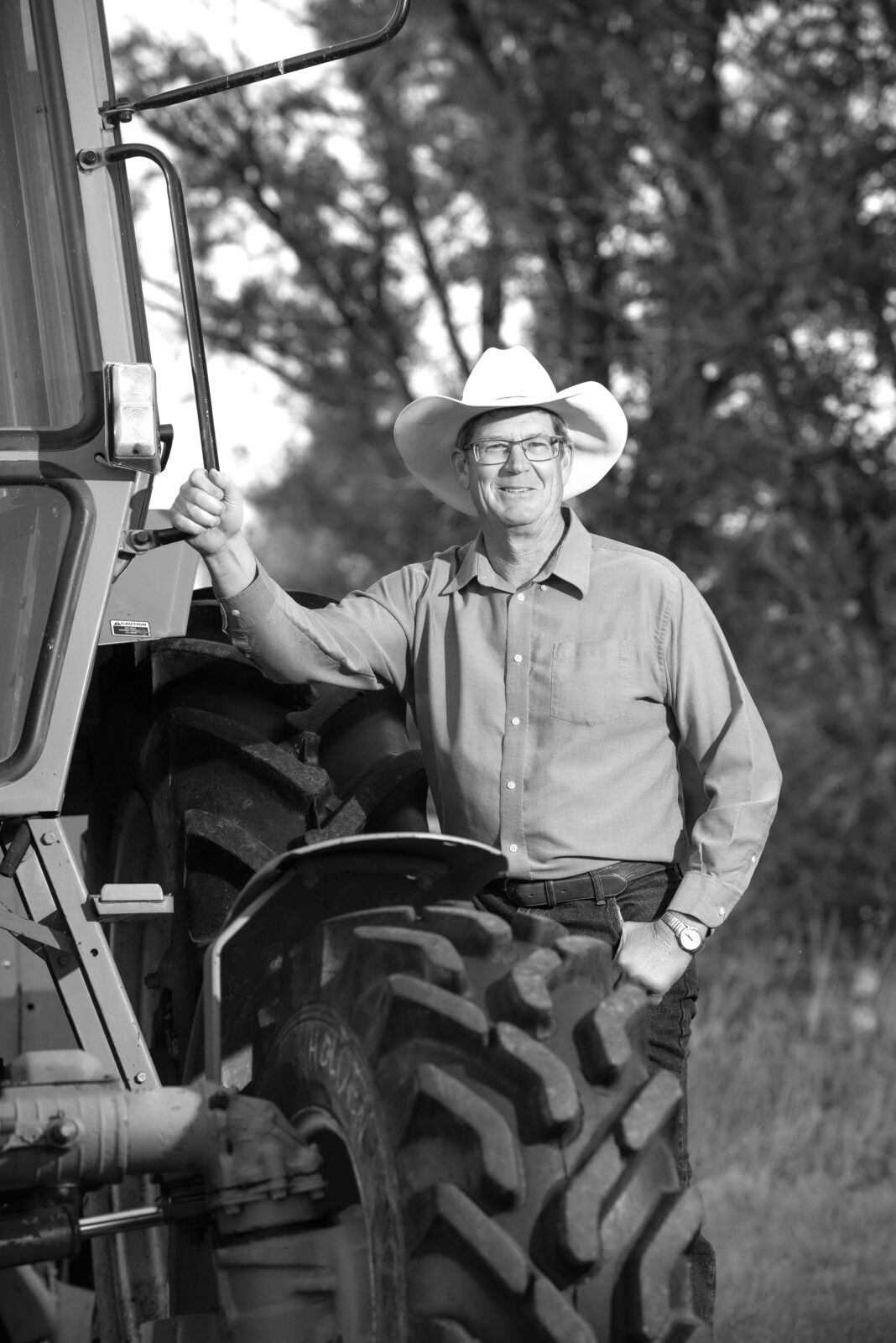
Last week, The Monitor received an unexpected visitor. Ric Holden, former Montana state senator and longtime Glendive rancher, asked if he could drop by our office as part of his barnstorming campaign for Montana’s 2nd Congressional District. We spoke with him for nearly two hours, and hoped to straightforwardly introduce him and his campaign in our election coverage.
Two days later, Senate Minority Leader Mitch McConnell told The Hill, a Washington news outlet: “We will be involved in the Montana primary.” The ‘we’ in this quote seemingly referred to the GOP’s senior leadership, or perhaps just some constellation of influential Republicans. Whichever, the die was cast: Representative Matt Rosendale, who the week before had announced his campaign to unseat U.S. Sen. Jon Tester, quickly folded his tent.
It certainly made for good political theater — but it also muddied the waters for Holden and nine other Montanans who had indicated their interest in Rosendale’s seat. While Rosendale himself “prayerfully consider[s] what is next,” as he told reporters, regarding a potential return to the 2nd Congressional District, the candidates who thought they might succeed him are suddenly in limbo.
For the record: Holden is a stoic, diligent Montanan who is running for Congress, he says, because he cares deeply about his community. He has built his campaign messaging around the agriculture and energy industries of his district, and national issues such as security along the southern border and parental rights.
As of our meeting, he was visiting many small communities such as Boulder, introducing himself in a polite and forward manner. This is what candidates for office do — especially those such as Holden who, despite his years in the State Senate, enjoy only limited name recognition and funding. (As of Dec. 31, according to his filing with the Federal Election Commission, Holden had raised just $32,869 in contributions.)
“We need a congressman in D.C. that represents agriculture clearly,” Holden said. “It’s our state’s largest industry, and we need someone with direct experience who can articulate our interests in national legislation.” He repeatedly demonstrated this sort of straightforward thinking and reasonableness, speaking to a variety of state issues backed with an encyclopedic knowledge of Montana state history.
It’s safe to say he was surprised by Rosendale’s withdrawal, as was the entire field of candidates in MT-2. Holden, like Elsie Arntzen, currently superintendent of the Office of Public Instruction, and Stacy Zinn, the former Montana state supervisor for the Drug Enforcement Administration, had previously said he wouldn’t run unless Rosendale committed to a Senate run. Which Rosendale did – until he didn’t.
Now what?
A press release issued in the days following Rosendale’s withdrawal stated: “Ric will be withholding comment on the current political situation until Rosendale decides whether he will continue in Montana politics. As of today, the Holden campaign is going to continue.”
The Republican Party’s highest levels of national power have directly interfered in his campaign, and yet he continues as before, unabated. In a way, the stakes are low for Holden; he has a day job, ranching in some of the most beautiful territory this side of the Mississippi River. He has a family, a community, and a public service record that can only be described as exemplary. As a state senator, he served for eight years until term limiting out in 2002.
“State politics can actually distract focus, something I didn’t necessarily realize until I returned to the ranch,” Holden told me. “One of the nicer parts of living on a ranch, I suppose, is bringing my attention fully to the land, and to my neighbors.” Should Rosendale return and Holden decide to exit the race, he will reassume the same life of service he has always lived.
Holden and his grassroots campaign represent a vision of American politics now dwindling — of a participatory democracy led by engaged citizens, embedded and invested in the communities they serve. That’s in tension with the reality of the modern election process, which is deeply influenced by national, party-minded strategies, and centralized political organizations often far removed from the minutia and detail of community.
For now, Holden soldiers on, his commitment to service in the face of a truly baffling array of competing interests seemingly sincere — and also crucial to the health of our republic.