
Sweat beaded on the forehead of Ken Hostetler, 62, as he moved his metal chair through the gravel and into the shade of a large tree.
“That’s the thing about Montana,” he said as he took a seat, “It can get hot, but it is always cool in the shade.”
Ken is short and round, but holds himself straight and sturdy. His ears are connected by a scraggly grey beard that rests on his chest when he talks, and he wears a thin pair of spectacles that sit on the bridge of his nose. Often, he tilts his head down, looks over them and winks with a grin.
Ken wears denim overalls, and his wife Crystal, 56, a long dress with a bonnet. The clothing of their 11 children is nearly identical — denim overalls with collared shirts for the men and boys and long dresses with bonnets for the women and girls.
The Hostetlers, an Amish Mennonite family from Missouri, make an annual trip to the Merry Widow Health Mine in Basin — even a global pandemic, COVID-19, could not scare them from the trip. Instead they took precautions when making stops along the way, Ken said. The trip is nearly 1,500 miles one way and Ken said he has made the trip off and on since the 80’s. The Merry Widow Health Mine, he said, helped a lot with his mother’s arthritis.
Between both Basin and Boulder, hidden within the surrounding mountains, there are six radon health mines, the only radon health mines, in the entire United States. People from all over the U.S. and overseas visit the mines to bask in the radiation in order to treat, or sometimes cure, a variety of conditions or illnesses
The radiation within the radon health mines, including the Merry Widow, is a result of a natural occurring phenomenon of decaying uranium, which releases low amounts of radiation. The amount varies from mine to mine, and is present in the surrounding air and water.
At the radon health mines, visitors are exposed to the radiation. The mines are by definition, radioactive. Visitors surround themselves in the invisible, odorless gas, and drink and soak in the water, claiming miraculous health benefits. According to the health mines, the radiation treats a variety of conditions including, but far from limited to, arthritis, inflammation, migraines and even breast cancer.
Today, just three are still operational and frequented by guests from spring until fall. They are the Merry Widow and Earth Angel health mines in Basin and the Free Enterprise Radon Health Mine in Boulder. The Sunshine Health Mine only recently stopped operation last year.
The Merry Widow Health Mine is a former gold mine, and transitioned into a radon health mine in 1952. It sits close to I-15, directly off of exit 156, and easy to miss if you’re not looking for it.
The radiation within the radon health mines, including the Merry Widow, is a result of a natural occurring phenomenon of decaying uranium, which releases low amounts of radiation. The amount varies from mine to mine, and is present in the surrounding air and water.
At the radon health mines, visitors are exposed to the radiation. They are by definition, radioactive. Visitors surround themselves in the invisible, odorless gas, and drink and soak in the water, claiming miraculous health benefits. According to the health mines, the radiation treats a variety of conditions including, but far from limited to, arthritis, inflammation, migraines and even breast cancer.
The Merry Widow Health Mine attracts visitors from its opening date of March 1 until it closes each year on Nov. 15. Most visitors are irregular, drawn to the mine for a quick trip, while some visitors come once in the fall and again in the spring, said owner Chang Kim. And a select few are regulars every year, like the Hostetlers.
Today, Ken and the Hostetlers come for a different reason. When Ken’s son, Charles Hostetler was 3-years-old, he was diagnosed with Duchenne muscular dystrophy. It’s a terminal deteriorating muscle disease that he still deals with to this day at 23, Ken said.
“So knowing about this, we said maybe we can undo something here that would help him,” Ken said, “we didn’t think it would actually heal the disease itself, but maybe some of the symptoms wouldn’t have to be so severe.”
This is their 20th year at the Merry Widow Health mine with Charles. Although most of the family attends the annual camping trip, a total of about 16 this year, Ken, Crystal and Charles are the only three that spend time in the radioactive health mine. Each day they go into the mine for one hour per visit, three times a day.
The biggest change they see in Charles after spending time in the mine is the improvement of his immune system, Ken said. However, he doesn’t think it has done that much towards treating the incurable disease Charles lives with.
“As far as his muscular dystrophy is concerned, we don’t know that it’s done anything for that so much except for that rather than getting really weak and really sickly. He has hardly ever been sick two days in his life, to tell you the truth, with about 35% use of his lungs,” said Ken.
He said the family has learned to love the mountainous area on the Boulder River, which is quite different from Missouri with its flat land and many lakes and rivers. It’s a lot of fun, he said. They were staying in Basin for a tentative two weeks and spent a lot of that time cruising the mountains on side-by-sides and ATV’s.
“It’s kind of home to us a couple of weeks out of every summer and when we come into the valley here we say, ‘well, we’re back home to Basin,’” Ken said.
The radiation within the radon health mines, including the Merry Widow, is a result of a natural occurring phenomenon of decaying uranium, which releases low amounts of radiation. The amount varies from mine to mine, and is present in the surrounding air and water.
Low-dose radiation has been used within the medical community for years, including the first half of 20th century, to treat viral pneumonia, according to James Conca, an earth and environmental scientist for 33 years. He contributed an article to Forbes Magazine, published May 13, titled, “How low-dose radiation could be the trick for treating COVID-19.”
He references, in the article, the past treatment of pneumonia with radiation treatment. But he also includes the conflicting opinions between researchers and medical professionals on the potential harmful and beneficial effects of radiation.
Although radiation is still used in the medical community today, radon is a carcinogen, cancer causing, and any ingestion of radiation is harmful, according to the Environmental Protection Agency, How harmful depends on the type of radiation and the amount ingested. Different people may be more susceptible and the cancer does not form until years after exposure.
“While experts disagree over the exact definition and effects of ‘low dose,’ U.S. radiation protection standards are based on the premise that any radiation exposure carries some risk,” according to an EPA publication.
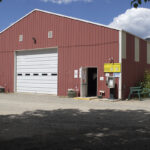
“Look for the big red building,” said Veronica Kim, one of the owners.
Veronica, 63, and her husband, Chang, 67, have owned the mine since January, 2008. But their first visit to Merry Widow came four years prior, and was based on a referral from a Seattle doctor.
Veronica has connective tissue disease, a genetic disorder that she has dealt with since middle school. It began with knee pain, which was initially shrugged off as growing pains. Veronica lived with the pain until she moved from South Korea to the U.S. when she was 25. It was while living in Seattle that Veronica experienced one particularly bad night where she could not move her whole body.
“Painful, screaming pain, like level 10,” she said.
The emergency room staff did not know what it was, and Veronica was sent to another hospital for an evaluation where she was given several medications and injections. But after a while, the medications and injections began taking a toll on her body, and her immune system became weak, she said.
Later, Chang suffered a back injury and Veronica drove him to a Chinese herbal medicine and acupuncture doctor. Their subsequent conversation led the doctor to tell her of a health mine in Montana. The doctor said he was seeing his patients getting really good results from the mine, according to Veronica. He said that it might be a good idea to give it a try.
After arriving at the mine in April of 2004, Veronica met a regular patron who said she should come for three years and if she does, she will see benefits.
“At that time I was in a wheelchair, limpy legs, and I couldn’t sit properly for more than one hour,” Veronica said, “I was really, really severe.”
But two to three days later, the swelling in her joints, hands and feet was gone. It was a big change and she could tell the mine was helping her. But the pain was still there.
Veronica continued with two sessions a year, spring and fall. Three years later her pain was gone. And during that time visiting the mines, her doctor in Seattle reduced all of her medications.
According to Veronica, Chang was ecstatic over her apparent recovery. When they were buying the mine he told the former owner that buying the property was not only a business decision for the couple, Veronica said.
“Because you save life, you save family, you save community,” Chang told the former owners, according to Veronica.
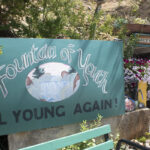
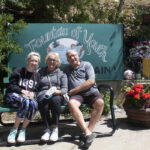
“Fountain of Youth”
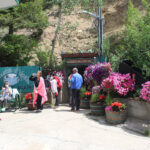
The entrance of the mine sits across from the Boulder River from the RV park and up a gradual gravel incline to the parking lot. A concrete retaining wall, painted green, surrounded by pink, purple and white flowers, with flowing white letters spelling “the fountain of youth” marks the entrance — a heavy wooden door with a metal handle.
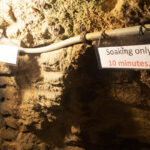
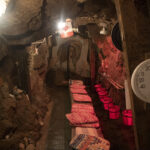
Inside is as quiet as a library with the exception of the small stream that flows from the back of the mine, where the water pours out of the mountain to the front where it exits. Contrary to the 80 degree weather outside, inside the mine tunnel it is damp and a cool 60 degrees, the temperature year-round, according to the mine.
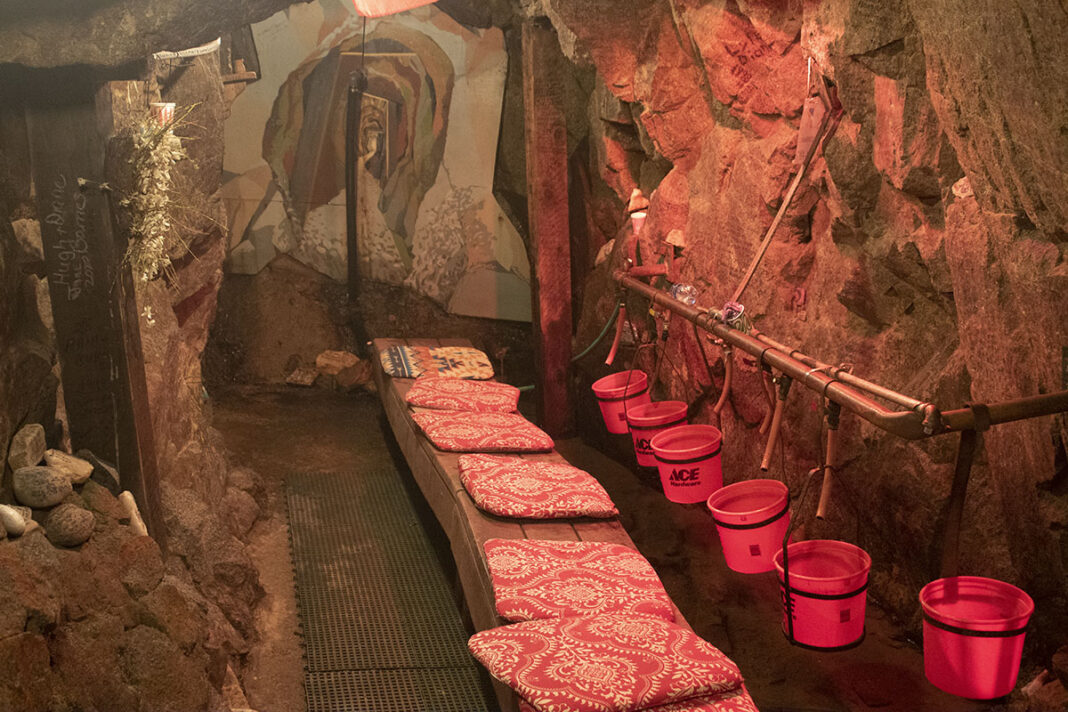
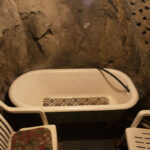
Benches are lined up in the back for people to sit, and temperature gauges hang on the rust-stained tunnel walls. Bathtubs, where visitors are allowed to soak, are hidden around corners and behind curtains.
Visitors are eager to share their own stories with other obvious newcomers.
Sahara Brignoli, an older woman with a cane sitting near her feet, said she first came to the mine 20 years ago, and this summer was her first trip back since then. She came to the mine again because, like many visitors, she has arthritis.
But one day she forgot her cane, and for the first time in six months, Brignoil said she didn’t need it to walk. Brignoli then went on to describe the stories of healing she’s heard from other patrons — “spectacular,” she said.
David and Connie Myers, both in their 70s and from Seattle, first heard of the mine from a friend. The friend recommended that they let them take their granddaughter, who struggled with juvenile rheumatoid arthritis, to a radon health mine in Montana.
The Myers were worried, and so were the girl’s parents, of sending her to the radioactive mine. But after doing some reading, and some mild convincing, they allowed her to explore this alternative therapy, David said.
The girl was practically carried in on the first day, David said, but by the fifth or sixth day she was swinging on a swing set and hopping around the playground, and by the tenth day, she was moving well and doing things she had never done.
“It was literally amazing,” David said.
As for himself, David said the swelling and inflammation in his feet go down after he soaks them in the water of the mine.
Ultimately, despite the conflicting medical opinions, Chang said it doesn’t matter if the radiation from these mines is good or bad for you because, frankly, he has listened to the testimonials of visitors and seen the miracles it has had on the health of both visitors, and his wife.
“We think this is a blessing from God,” Veronica said.