
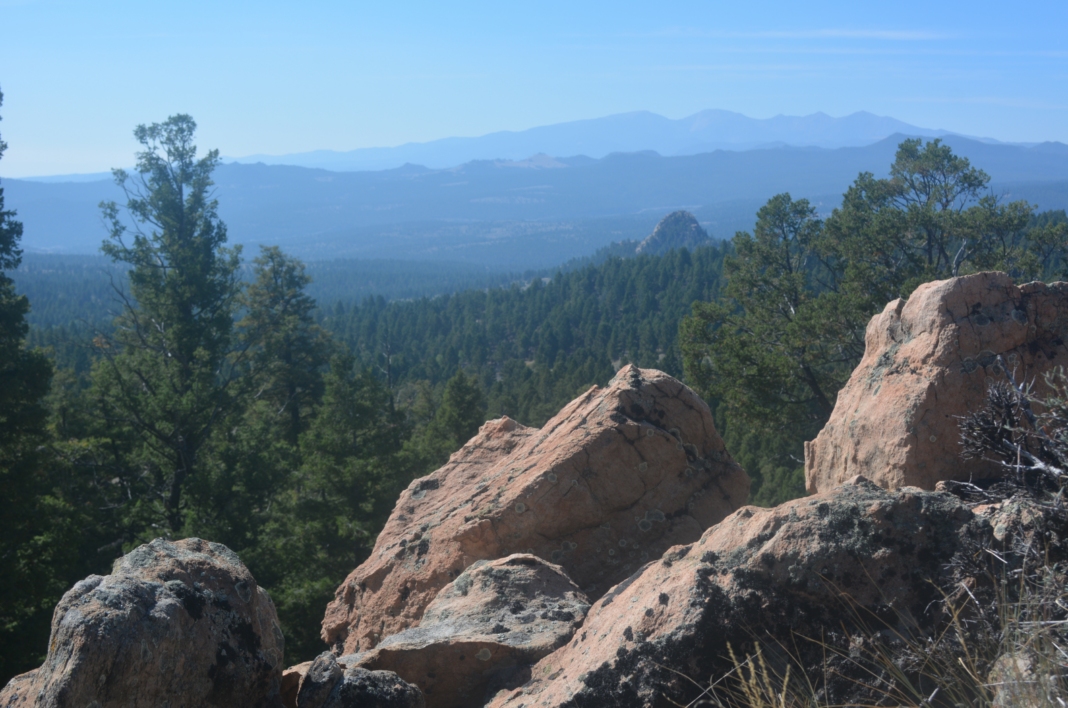
We were saddened to hear of the lifelong local elk hunter who recently stopped setting up camp near Pipestone, where a quiet dirt road crossed a ribbon of creek. As the jeep and side-by-side traffic has increased lately, his little hideaway among the aspens has become a destination of rock obstacles and glistening pools, where Search and Rescue teams regularly turn up to save bogged down, inexperienced drivers.
Jefferson County – where sagebrush flats climb through boulders and forest to the Continental Divide off I-90, and creeks trickle from hidden draws and ridges of lodgepole pine and fir – offers a wealth of natural beauty and recreation options. These great outdoors should be a magnet that attracts visitors, grounds Montana traditions, and drives local livelihoods.
But that promise is very much at risk. A growing flood of unregulated traffic across and through the forest is undermining safety, damaging the environment, and compromising the long-term viability of our outdoors as an economic engine. Thoughtful and far-sighted regulation of outdoor travel on U.S. Forest Service lands is needed soon to remedy this emerging problem.
Every U.S. National Forest is required to have in place a travel management plan that regulates which routes are accessible to various visitors – hikers, bikers, ATV riders, hunters, and more – and what type of travel is permitted in any given area. Yet for several reasons, the vast majority of the Beaverhead-Deerlodge National Forest (BDNF), Montana’s largest national forest, has lacked established travel planning oversight for nearly 40 years. Until the plan is in place, Jefferson and neighboring counties will face the troubling economic, environmental, and recreational fallout.
Travel planning wasn’t always a thing. Just 50 years ago, people explored old mining and logging roads on foot or horseback. Then all-terrain vehicles (ATVs) spurred riders to venture off-road and a growing network of trails impacted forest lands and public safety.
Regulation of forest travel failed to keep up, so in 2001 Montana required motorized users to stay on existing roads and trails. But forest exploration continued, largely unregulated. In 2005, a new federal law mandated National Forests to identify routes people can and cannot travel, and by what means, and to produce a map enforceable by law.
Twenty years later, the BDNF still has no travel plan, though not for lack of effort. Since 1995, the BDNF has initiated, delayed, prioritized, re-initiated, nearly completed, again delayed, and finally re-committed to travel management. The standard process is to gather data, develop a proposal, solicit public input, and analyze environmental impact. It requires a lot of staff hours and considerable funding, and the various moving parts make it easy to disrupt.
As federal administrations switch out leaders, priorities shift down the food chain. Budgets are reduced and key positions vacated. Travel Management gets put on hold, again and again.
Meanwhile, times change at the local hotspot. A pandemic happens. Social media highlights an outdoor Mecca; everyone’s favorite pastime, from hunting to camping to riding side-by-sides, becomes a bona fide economy. Recreation brings in big dollars, paying dividends to local counties.
But all this falls apart on unregulated roads, especially when use increases over the years. Without Travel Management on the BDNF, impacts ripple across the surrounding counties, with more severe outcomes every season. Just within Jefferson County, we have witnessed:
-
Heavy traffic undermines visitor safety. Vast trail networks, with more users on an array of vehicles, become confusing without an official map. Users travel as they please, while officials have no legal basis to issue travel citations.
-
Rampant erosion degrades watersheds, wildlife habitat, and cultural sites. Deepening impacts could lead to irreversible damage.
-
Popular areas become overcrowded, leading to conflict between different users. Risky off-road travel increases, resulting in lost riders and injury.
-
Criminal activity, including armed assaults, drug trafficking, and motor vehicle theft, increases, especially at hotspots with gateway interstate access.
-
Countless users – hikers, bikers, motorbikes and motorcades, sportsmen and anglers, rockhounds and birdwatchers, grazers and wood cutters, tent and RV campers, plus those seeking solace or natural beauty – denied an enjoyable, law-abiding experience.
-
Emergency response calls overwhelm law enforcement as first responders struggle with meagre resources.
Highlighting these concerns, successive Jefferson County Commissioners have urged the BDNF and Regional Forest Service leadership to prioritize travel management. In 2008, the County was named a cooperating agency, obligating the BDNF to coordinate with the County on forest planning actions. Multiple times, county officials have spent considerable time and effort – your tax dollars – laying the groundwork for a BDNF travel plan, only to have the rug pulled out from under them at the last minute.
In 2022, after years of budget reductions, workforce shortfalls, and federal regulation reform that limited BDNF action, strong demand for outdoor recreation finally spurred some travel planning progress. The BDNF engaged four counties and Montana Fish, Wildlife, and Parks to provide input. Staff from all corners compiled reports, revised databases, and updated old maps.
But now the effort is stalling yet again. New priorities, including a recent executive order from President Trump to increase domestic timber production, have emerged. The local and regional Forest Service staff and budget are facing reductions. The details are vague, but we’ve seen this movie before: Washington dictates priorities, putting local needs on the back burner.
Yet there is a silver lining, or two of them. For starters, local consensus is key to getting travel management back on track, and we have it. Everybody we’ve spoken to, citizens across the board, want to get this done now. Locals and visitors want forest guidance, and a map, so we can all do right by our public lands.
Second, the travel management prep work for BDNF is largely done. The BDNF has invested in it, and Jefferson County is ready with support. We can’t fill USFS staffing gaps, but we can demand a functioning resource agency and lay out our needs. The next step is for the BDNF to bring its proposal to the public so staff can respond to comments and coordinate with counties to finalize the plan and map.
Jefferson County is far from alone. From Dillon to Philipsburg and Wisdom, the same factors play out across the BDNF in Anaconda-Deer Lodge, Beaverhead, Butte-Silver Bow, Granite, Madison, and Powell counties. And the ripples extend beyond southwest Montana: federal regulations left in limbo too long invite litigation that can destabilize a forest region.
The urgency is real, as our most recent research and data grow outdated the longer we wait. We’ve been promised a travel plan for more than 20 years. Instead, these lands and local communities are suffering. It’s a challenging process; we get that. But national and regional directives should not persistently supersede local priorities.
The public needs and deserves a travel plan on BDNF lands, for public safety, economic stability, and the long-term resilience of our beloved forests. Our message to decision-makers in Montana and Washington is: Don’t miss this opportunity to push through a crucial initiative.
Champion Montana’s natural treasures and recreation opportunities. Create economic opportunity rather than forcing local communities with limited resources to shoulder the burden.
Show how Montana’s largest National Forest can balance federal and regional goals by delivering on an urgent local priority.
Jefferson County will benefit. But so too will surrounding areas, the state of Montana, the federal government, and all Americans who value outdoor opportunity and our country’s natural bounty.
Vaia Errett is vice-chair of Jefferson County’s Parks, Trails, and Recreation Commission. Dan Hagerty is chair of the Jefferson County Commission.