
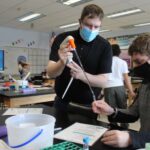
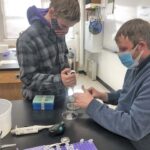
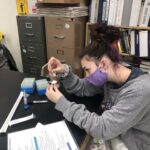
Just because something can’t be seen doesn’t mean you can’t look for it.
That something is bacteriophages, or phages for short.
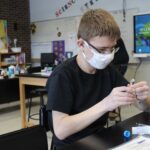
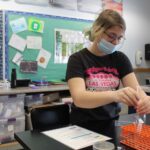
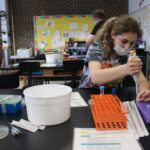
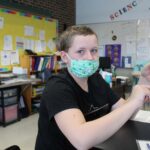
Jefferson High School science students, as well as middle schoolers at Boulder Elementary, were on the hunt recently for the type of viruses that could one day be used to fight “superbugs” or antibiotic resistant bacteria.
As viruses, phages do their magic by infecting, and ultimately killing, disease-causing pathogens, such as the bacteria that causes tuberculosis (TB). However, phages are specific to the type of bacteria they will kill, so there is always interest in discovering new ones.
The search for new phages is part of a program out of Montana Tech, and which has been coming to Steve McCauley’s science class at Jefferson High School since 2014. This year, the program was expanded to include Connie McCauley’s science classes at Boulder Elementary.
At JHS and Boulder, students were instructed to bring in a water or soil sample to be used in the process.
Soil and water samples were chosen because the program, called PHAGES (Phagedigging Helping Acquire Genuine Experiences in Science), uses as its target a bacteria that is in the same family as the TB bacteria, but is harmless to humans.
Mycobacterium smegmatis, or SMEG for short, is a soil bacteria found everywhere and was the bacteria that the students would be working with.
Montana Tech Field Coordinator Chris Doyle led the seventh graders on March 15 in Connie McCauley’s class. He told the students that their soil and water samples likely all contain phages, but what they’re looking for is a phage that will kill the SMEG bacteria.
“Hopefully we have a winner,” he said.
There was a winner at Jefferson High School in 2015, the first year JHS students began phage-hunting, said Steve McCauley.
Finding a target phage is rare, but former JHS students Sky Wagoner and Ethan Zuefelt each found a phage that year. Those phages were entered into a database and test tubes and will continue to be studied for their potential usefulness, said Steve.
Before phage hunting begins, however, Dr. Marisa Pedulla, a biology professor at Montana Tech, spends a day with the students teaching them about phages and the importance of science to society.
Another JHS graduate, Kylie Marks, returned this year to work with the students. She participated in the program while at the high school and now works in the phage program at Montana Tech.
In the end, no targeted phages were found at JHS or Boulder, said Steve.
The students found some fungus, but nothing that was useful, he said.
This was the second year of doing the phage hunt for Royce Schultz.
Last year, it was sort of a routine, “have to do” experiment, said Schultz.
That changed this spring, after the world has spent the past year fighting the pandemic, caused by a virus.
Because of the pandemic, the experiment took on a special significance because people are actually dying from the COVID-19 virus, said Schultz.
So the thought that something could be discovered could save a life shed a new light on the experience, he said.
For sophomore Quinne Shultz, it was a chance to do a hands-on experiment, which she particularly enjoyed.
And while the name of the bacteria, “SMEG,” made it sound weird and creepy, it wasn’t bad,” she said.
Not finding the target phage was a bit disappointing, “but it was super cool to try and find them,” said Shultz, who plans to pursue a career in the medical field.
Schultz said people tend to think of science experiments as complicated, but this one was relatively simple.
“You just put in the work and you get results,” he said.
How to find a phage
• Collect a water or soil sample
• Add the phage buffer to the soil or water sample. The phage buffer is a saltwater solution that has been run through an autoclave. The buffer helps the phages infect the bacteria. “It’s gatorade” for phages,” said Montana Tech Field Coordinator Chris Doyle.
• Use a microcentrifuge tube, syringe and filter to filter the sample.
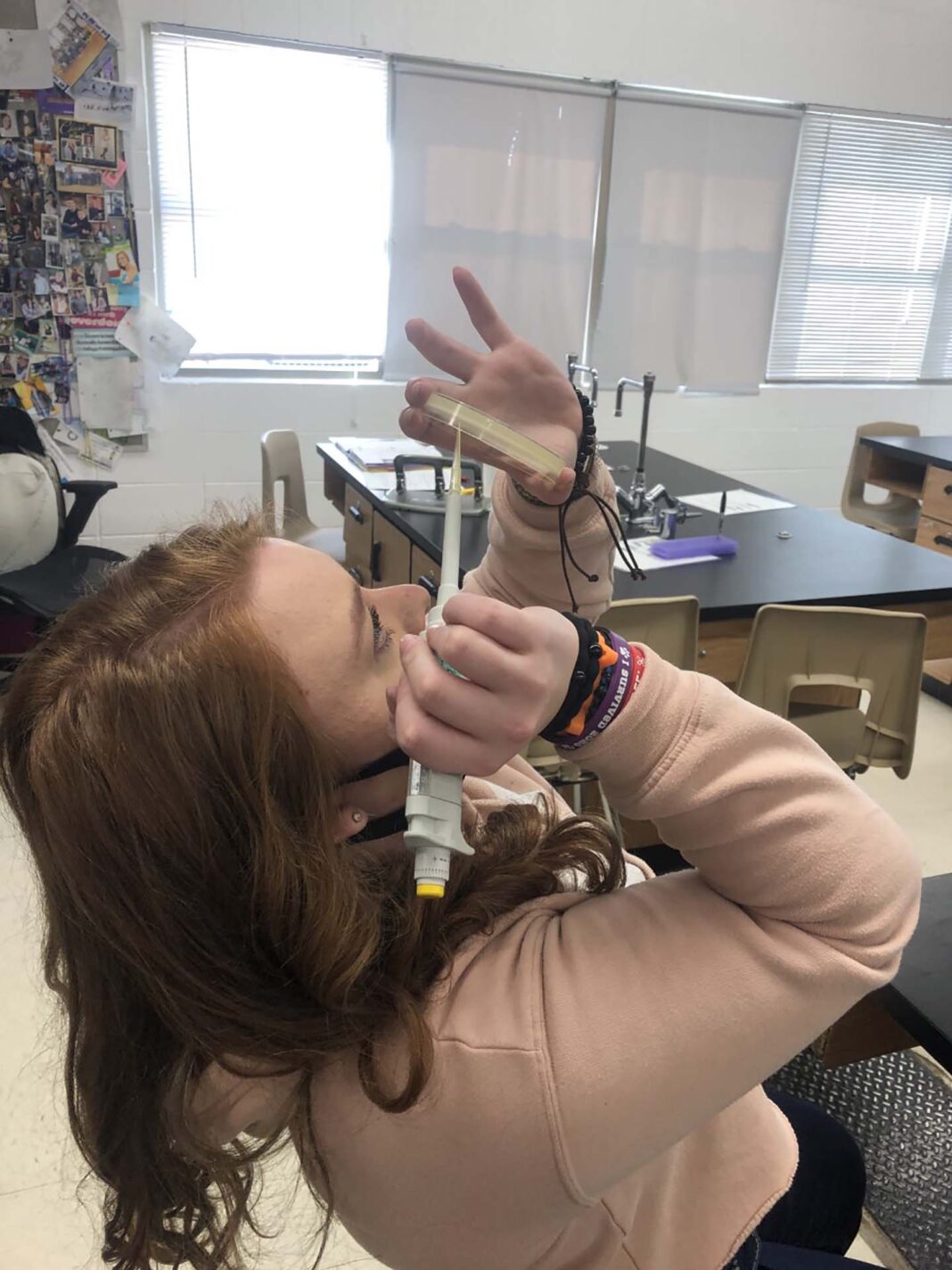
• Infect the sample with SMEG using a micropipettor. Let the mixture sit for 10-15 minutes.
• Prepare the petri dish with the bacteria mixed with melted top agar and swirl to spread.
• Incubate the petri dishes and incubate for about 48 hours at 37 degrees celsius.
• The appropriate phages can be detected if holes are seen in the area where the bacteria was placed.