
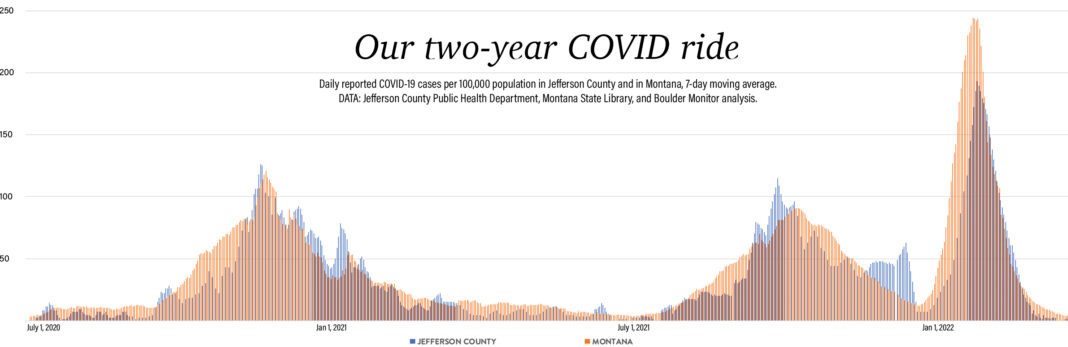
Jefferson County has been here before: loosened pandemic restrictions, few new or active coronavirus cases, and a collective sigh of relief that an unprecedented global pandemic has, for the moment, abated. That was the case in June 2021, too. And then it came roaring back, with consecutive delta and omicron variant surges delivering the county’s highest rate of cases—and the most deaths—in a span of a few months, already a year and a half into a pandemic that was late to arrive in the county.
“We haven’t been here since June,” Pam Hanna, the county’s public heath supervisor, said this week, referring to last summer’s lull in cases of COVID, the disease caused by the coronavirus. “We’re just hovering right there where there are a few cases. Obviously our numbers haven’t dropped to zero. We’ve dropped to zero one or two days … but then we’ve got another case before we report again.”
The Jefferson County Public Health Department generally reports the number or new and active cases weekly, although Molly Carey, the department’s clinic coordinator, issued twice-weekly reports during the heights of surges in cases. The department reported two active cases on Monday, and three new cases total since the Monday before that, April 4, when the deportment also reported two active cases. The department reported only one active case in each of its weekly reports for the three weeks before that: March 7, 21 and 28.
The low case tallies recently are a stark departure from a few months ago, during the omicron surge in February, when the county had nearly 90 active cases at a time. The delta surge in early October brought more than 70 active cases at a time to Jefferson County.
Fifteen county residents died from COVID from late August through early February, a span that so far remains the deadliest timeframe for the virus in the county, and that immediately followed a drop in cases to nearly zero just weeks prior. Twenty-three county residents have died from COVID since the start of the pandemic in early 2020. No new deaths have been reported since the 23rd death, in early February.
“I doubt that we’re out of the woods. I’m not a doctor or a medical person, so I don’t really know,” County Commissioner Leonard Wortman said, noting that he’s spent many hours consulting his doctor about COVID. “His thoughts were that COVID is going to be around a while,” but “people will get the disease but they don’t get as sick or die from it.”
New variants will likely cause more surges in the future, Hanna said. Jefferson County, with a 52% vaccination rate and possible immunity in people who were recently infected, may weather future surges better than before, she said.
“We don’t know where we’re going to go. We hope that we’re in a case where cases remain low. That’s what everybody hopes for. Chances are right now we’re in a pretty good place. We’ve got 52% of our population vaccinated and a large portion of our population that have had COVID in the last few months,” Hanna said, adding that the new BA.2 variant already looms on the horizon. “It’s a variant of omicron, kind of like a sibling to what we just saw, so maybe that’s going to give us a bit of protection but we don’t know. This virus … has gone beyond what we think and what we know many times.”
The lull in cases right now, she said, “is a good time for us to do other things,” like getting vaccinated or receiving booster doses, “because this is a time for prevention.”
“Now’s the time to prepare in case we have a surge again.”