
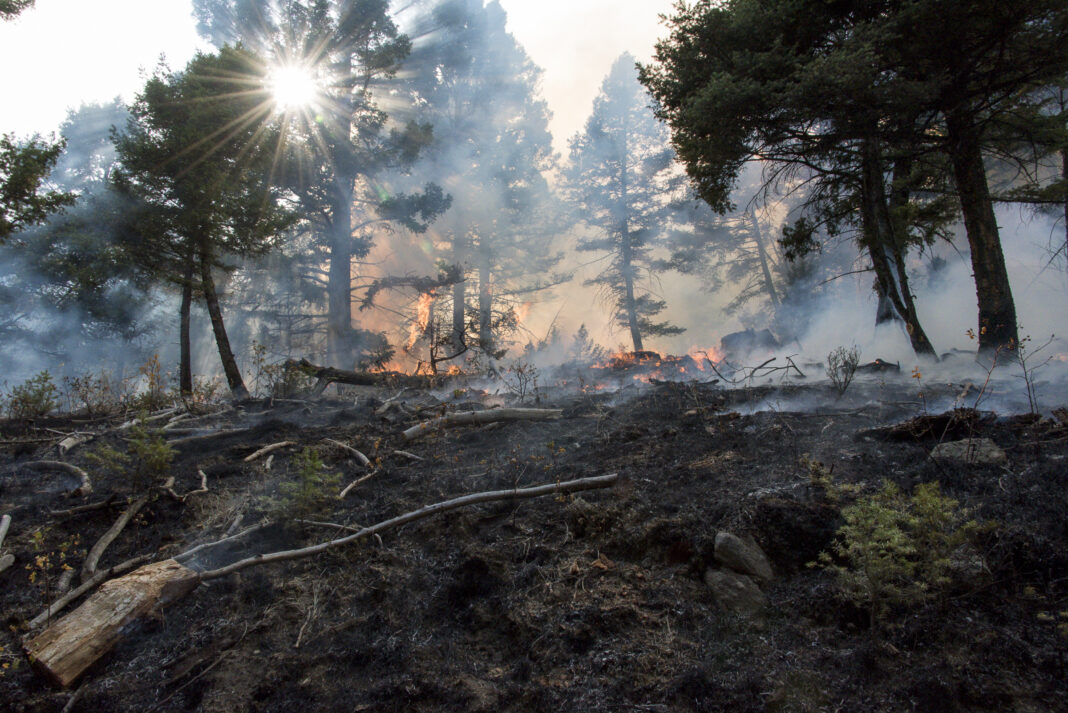

As the U.S. Forest Service faces extraordinary tumult, its Helena-Lewis and Clark National Forest is set to launch a new, 20-year prescribed fire plan that would nearly triple the acreage burned or cut back each year and dramatically change its approach to land management.
The proposed Forest-wide Prescribed Fire Project aims to increase safety, give forest managers more flexibility to determine which at-risk areas are treated, and curb wildfire severity by reducing potential sources of fuel.
“There is such a known need for more fuel reduction work to reduce risk,” said Emily Platt, the forest’s supervisor, who led the plan’s development over two years and will supervise its implementation. “There’s no question about its effectiveness. We know if we do it right, it will change the way fire happens.”
Across the Rockies, fire frequency has increased five-fold since the 1970s, while average annual burned area has leapt a stunning 1700 percent. As a result, the U.S. Department of Agriculture-run Forest Service deemed its existing plan for the 2.9 million-acre HLCNF out-of-date and on July 23 published a 216-page report laying out the new plan.
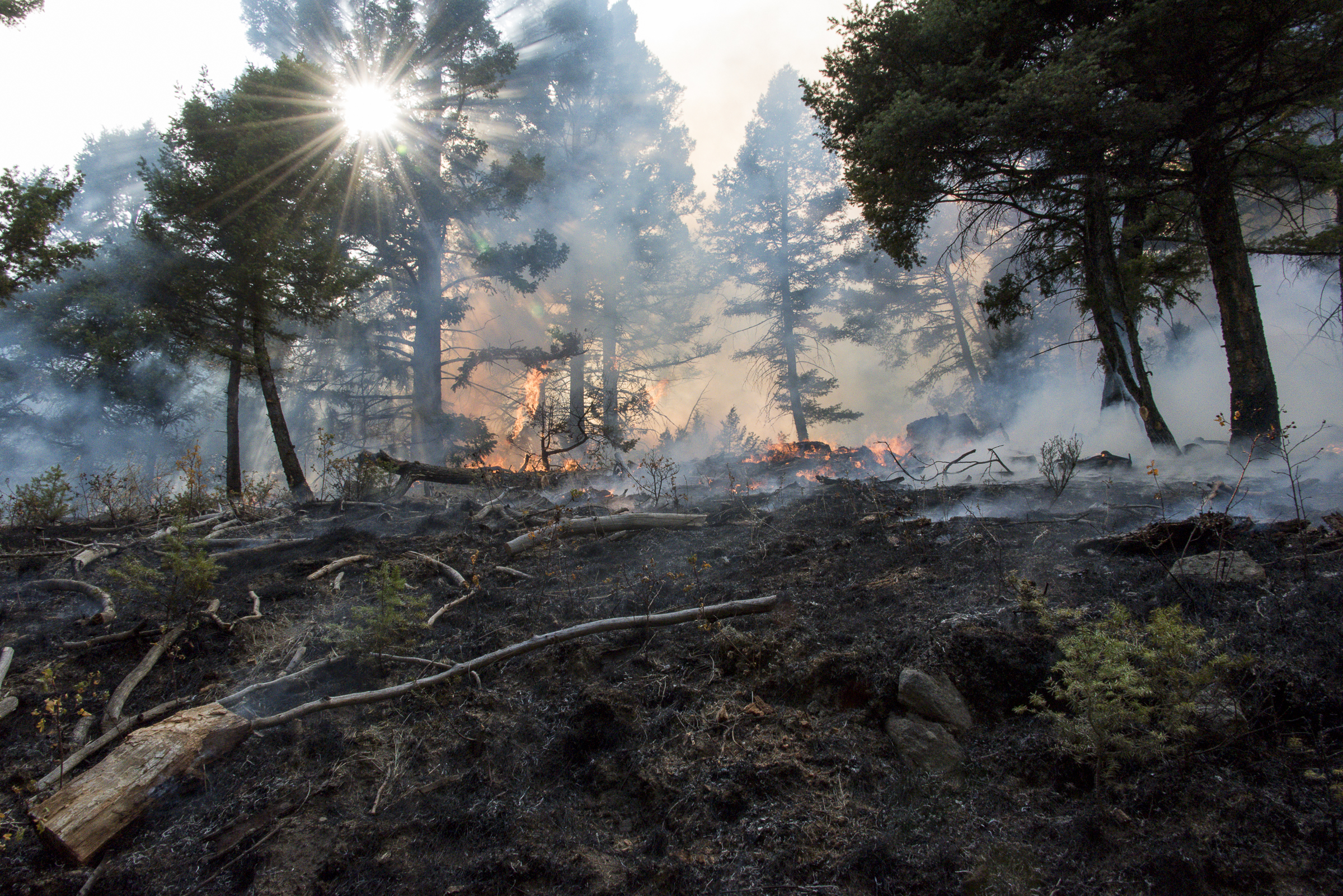
In recent years, HLCNF has been treating 8,000 to 15,000 acres with prescribed burns, fuel reduction and thinning each year. With an average of 24,000 acres consumed by wildfire annually, the forest is still falling far short of the nearly 100,000 acres that once burned naturally every year.
That, atop many decades of a strategy anchored in a deliberate effort to suppress natural fire, according to the Forest Service, has left the forest with too few large trees, too much new growth, and an unhealthy mix of ponderosas and lodgepole pine, increasing the risk of more massive wildfires.
The proposed plan aims to increase the annual prescribed firefighting to around 40,000 acres to sharply reduce available fuels. The project prioritizes the Elkhorn Mountains area in Jefferson County (including 33,500 acres within Beaverhead-Deer Lodge National Forest), where just under half (47.9%) of the land will be treated over the life of the project.
The new target reflects a more aggressive approach than laid out in HLCNF’s 2024 preliminary plan, which foresaw 20,000 acres treated annually. Feedback from scientists and area groups convinced forest supervisors to up the stakes.
“We wanted to be able to more effectively change how wildfires burn across the landscape,” Platt explained. “Even 40,000 is not as much as historically burn in forest, so it doesn’t yet address the backlog.”
There appears to be little dispute that the ambitious target is appropriate: The science of wildfire has changed dramatically in recent decades, and many studies have documented the effectiveness of prophylactic forest cutting and burning.
“Prescribed fire is a critical tool in the forestry management toolbox that has been missing on the landscape level for quite some time,” observed Doug Dodge, Jefferson County’s director of emergency management.
But the plan’s debut, likely to happen after a 45-day period for public comment on the environmental assessment, is colliding with the reality of a Forest Service facing dramatic restructuring. The USDA recently announced that the forest agency will abandon its nine regional offices, including one in Missoula.
Congress is wrestling with an executive order by President Trump that would merge the federal wildland firefighting programs of the Forest Service and the Interior Department. And since March, the Forest Service has lost as many as 7,000 staffers, or more than 20% of its workforce — including many with firefighting experience.
Some observers wonder how HLCNF will tackle more firefighting with fewer resources. “The scale of it is an interesting question,” said Lois Olsen, a former HLCNF forest ecologist who is now president of the Tri-County Firesafe Working Group, which works with property owners to reduce fire risk in Lewis & Clark, Jefferson, and Broadwater counties.
Olsen generally supports the new plan, but says that, given the decreased workforce, “this idea of burning 40,000 [acres] is probably going to be really difficult to achieve.”
Platt acknowledges that reality, and said “if we get more people and more funding, we’ll be prepared to do more work.” In the meantime, she said, the Forest Service can move prescribed burning from the so-called wildland-urban interface – where towns meet woodlands, and where the HLCNF has focused its efforts in recent years – to targeted wilderness areas where natural landscape features can help contain fire, requiring less staffing.
That flexibility points to a critical feature of the new plan: a shift from the Forest Service’s existing approach of two-to-three-year site-specific decision cycles focused on at-risk locations with economic and environmental need to a more responsive approach that allows managers to act more quickly on places with the greatest risk of high-impact wildfires.
Fire experts generally applaud that change. As the plan noted, “the Forest Service has frequently been in the position of spending two to three years on environmental analysis for a site-specific prescribed burning project only to have a wildland fire come through and burn part or all of the project area prior to…analysis completion or project implementation.”
On the other hand, “giving themselves a lot of flexibility is in tension with accountability to the public,” as Steve Platt, president of the Helena Hunters and Anglers Association, an environmental advocacy group, put it. How to walk that line?
HLCNF appears to enjoy broad trust with constituent groups in the region, reflecting its efforts over the years to engage the public in its work. Emily Platt hopes to sustain that trust — while also retaining strategic and tactical flexibility — by holding annual public meetings where forest managers can review recent activities, describe their plans, and take feedback.
“The intent is not to put out this plan for 20 years and not talk to people ever again,” Emily Platt said. “We will continue to engage with anyone moving forward.”
The Forest Service also has committed to reviewing its progress and efficacy every five years, addressing concerns that a 20-year horizon is simply too long in the face of rapidly changing environmental and political conditions.
The plan’s description of two proposed projects in the Elkhorns illustrates how the new strategy could play out. The Forest Service envisions clearing trees killed over the last decade by pine beetles near private land in the Warm Strawberry area, south of Montana City and east of Clancy.
With some prescribed burning, it says the work would reduce the risk of larger fires and restore more open spaces to benefit wildlife. In the Elkhorn Grassland/Shrubland area, further southeast and deeper in the wilderness, the Forest Service would treat 4,800 acres in the first year, removing colonizing conifers in open meadows and creating a “fuel bed” for prescribed fire operations aimed at removing surface fuels.
Over the course of 20 years, the plan aims to reduce colonizing confiders by 70% to 90% across an area of 33,452 acres, reducing fire spread and severity and “maintaining more live forest over the long term while improving wildlife habitat and hunting opportunities.”
The Elkhorns would be the most intensive area of activity under the HLCNF plan: nearly half (47.9%) of its 159,021 acres would be treated over 20 years. Thirty to fifty percent of that treatment would be by burning, the rest by fuel reduction and thinning. A Forest Service spokesperson said the two Elkhorn projects would begin early in the course of the plan, which is set to start in October.


