
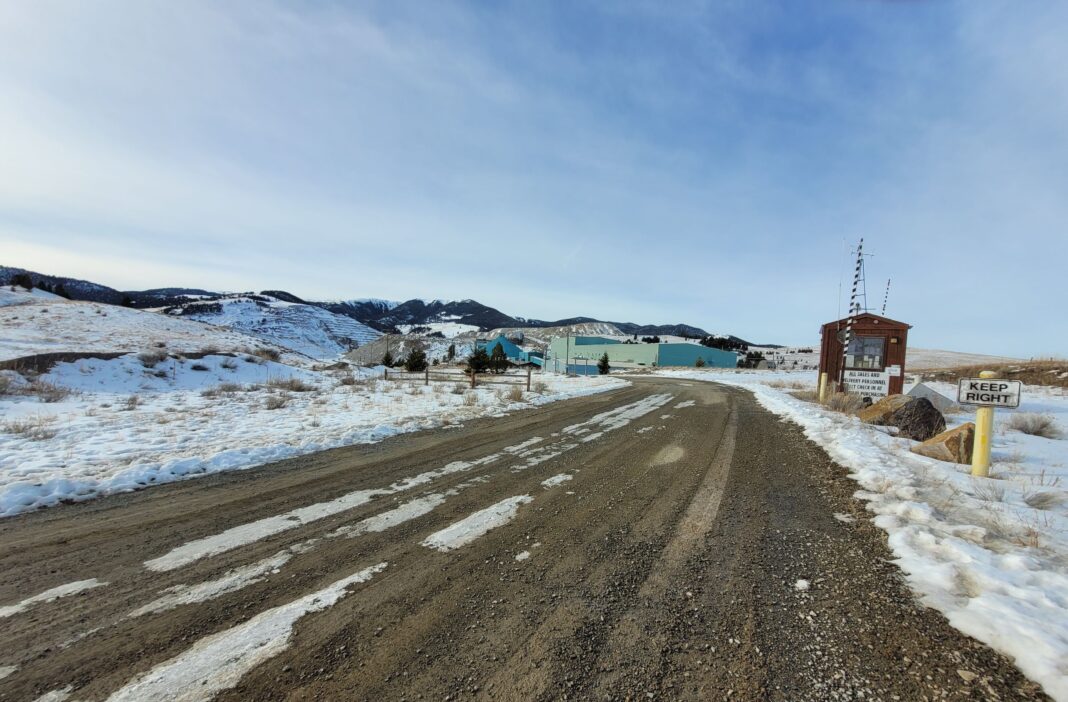
It could be that the end is finally near for Montana Tunnels Mining Inc.
Montana’s Department of Environmental Quality on Jan. 22 started a process to force the forfeiture of Montana Tunnels’s (MTMI) environmental bond for its mine outside Jefferson City, after the company failed to pay $1.5 million due Dec. 31 – casting further doubt that the mine will return to operation under current ownership, if at all.
Montana Tunnel’s Chapter 11 plan of reorganization, approved Oct. 4 by a U.S. Bankruptcy Court judge in Butte, required that it fully pay a bond mandated by DEQ of mining companies to ensure that the costs of future environmental liabilities are funded. The proposed bond was set at $40.96 million; MTMI had paid $21.5 million before the plan’s approval, and it made an initial $1.5 million payment, as scheduled, on Nov. 30.
But in order for the mine to reopen, MTMI had to make a second payment of $1.5 million by year-end — and to pay the remaining outstanding amount of $16.46 million by Mar. 31, a hurdle even MTMI Chairman Patrick Imeson admitted was daunting. Imeson told The Monitor in October that the company was negotiating with institutional investors to get financing that would allow it to pay the full amount of the DEQ bond.
In 2018, DEQ suspended Montana Tunnels’ operating permit for failing to post adequate bond, and that looming liability likely was a precipitating factor in the company’s bankruptcy filing in December, 2022.
“DEQ has worked diligently with the current operator to come to a resolution,” said DEQ Mining Bureau Chief Dan Walsh in a statement Jan. 25. “While this wasn’t the outcome we were hoping for via the bankruptcy proceedings, we will take the necessary steps to forfeit the bond and allow other operators to consider the mining permit or we’ll ensure that the site is reclaimed.”
Jefferson County similarly has not been paid the first of 48 monthly payments of $78,248.13 that was due on Jan. 4, according to country treasurer Terri Kunz. MTMI owes the county a total of $3,110,505 in back mineral extraction taxes, interest and penalties.
Jefferson County Attorney Steve Haddon said the county still hoped to continue collecting on that debt. “We’re in process of evaluating our position on this,” he said, noting that the county could retain a bankruptcy law specialist to help it navigate what comes next.
But “I think Tunnels has been given as much benefit of the administrative laws of Montana as it deserves,” he added.
Imeson and MTMI’s attorney, James A. Patten, did not respond to requests for comment.
DEQ’s decision doesn’t per se end MTMI’s Chapter 11 protection — and it’s not clear if it will, in fact, stick. A DEQ spokesperson, Moira Davin, noted that the agency hasn’t before implemented the statute that allows it to forfeit a bond — so it’s not clear whether MTMI could still recover the bond by paying what’s owed.
However, the court-approved plan stipulates that if the company fails to pay the bond, “this case shall be immediately dismissed on motion of any party in interest including MTMI.”
In addition, the bankruptcy plan explicitly depends on Montana Tunnels’ ability to either secure new loans or restart the mine’s operations, or both, to pay creditors. Imeson said in October that he hoped to launch operations at two small mines, Golden Green and Diamond Hill, this spring. Doing so, he said, could create confidence for an initial public offering of stock, or note or bond financing, that would support the reopening of the much larger Montana Tunnels mine.
The Jefferson City mine, which once produced gold, silver, zinc and lead, has not operated since 2008. Montana Tunnels Mining took control the following year — and has regularly claimed in the years since its intention to reopen and even expand the operation.
In the meantime, however, the property itself has degraded, according to DEQ and Earthworks, an environmental advocacy group that in 2018 conducted a review of the site with Trout Unlimited Montana.
That report noted that testing in 1987 had found elevated cyanide levels in groundwater monitoring, and that a 2008 environmental impact study determined that groundwater quality “have exceeded secondary maximum contaminant levels (SMCL) for sulfate and manganese and increased in concentrations over time. Average concentrations of cadmium and zinc were also above water quality standards.”
And in 2020, an environmental assessment prepared by DEQ’s Hard Rock Mining Bureau recommended constructing a new, half-mile channel for Clancy Creek, moving it away from the mine’s failing pit wall and out of the plastic pipe that has contained the waterway since 2013.
The DEQ statement indicated that the bond forfeiture process could allow a potential successor operator to take over the permit. Another company would be required to make up the $17 million difference between the required bond and the amount currently held by DEQ.
Davin, the DEQ spokesperson, said statute allows the agency to hold a suspended permit for up to five years before terminating it. If a successor operator is not identified, DEQ will begin reclaiming the site, it said.