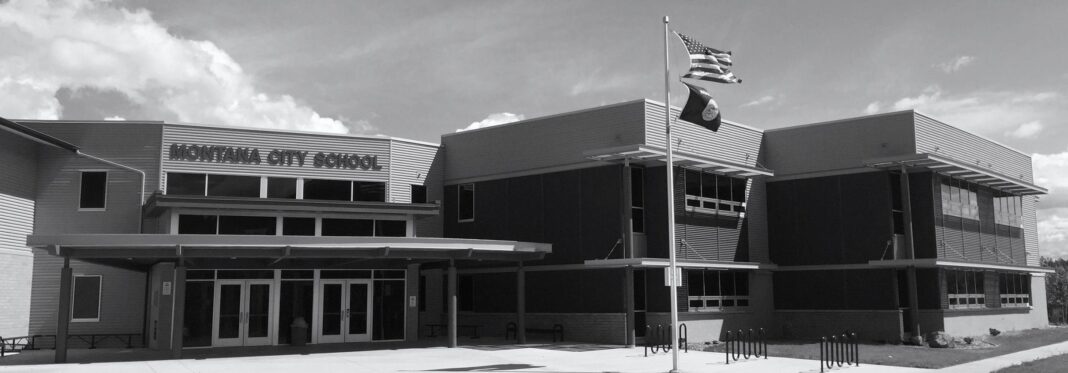
This summer, Montana City School took on the challenge of maintaining and improving students’ educational and social well-being by hosting two programs: summer school and a social skill camp. Both appear to have been successful.
“In an effort to decrease the amount of regression and therefore the amount of time teachers have to spend in the fall to catch students back up to their spring level, Montana City School (MCS) made a commitment to provide opportunities to help students maintain the skills they developed,” Cori Trudeau, the principal for third through fifth grade at MCS, told The Monitor.
Of the 30 students regularly attending the two-hour sessions, three times a week, Trudeau said 28 of them maintained or improved their math or reading skills over the summer. Several students also improved or maintained their skills in both subjects.
Trudeau said the school measured the program’s success using STAR test scores, an exam students take three times a year to “monitor growth in comparison to their peers throughout the country.”
After working hard in the summer, Trudeau said she hopes these students can continue improving their knowledge and spend less time relearning skills.
“We hope to see continued growth throughout the year,” she said.
Although the data showing improvement in students who attended the social skills camp – which was designed to improve behavior in the classroom and on the playground – is “much more subjective” than the summer school program, Trudeau said, teachers and administrators have had fewer behavioral problems with these students than they have in the past.
“These students have shown amazing growth over the summer,” Trudeau said. “It has been great to watch these students … use the skills they learned over the summer to cope with disappointment, heightened emotions and improve on their ability to develop friendships with their peers.”
Daryl MIkesell, K-2 and 6-8 principal at MCS, agreed that these students have behaved better.
“The transition from school to summer time can be very difficult for these kids,” Trudeau said during the school’s Sept. 14 board meeting, adding that this can lead to more problems earlier in the school year.
Trudeau said the school has considered hosting a skills program during the lunch hour to see continued improvement in students’ behavior.
Fifty MCS students with high academic achievements also participated in a voluntary Science, Technology, Engineering and Mathematics camp during the summer break.
A new behavioral program
Additionally, all of MCS students and staff will take part in the PAX Good Behavior Game, a grant funded program.
According to the University of Montana, the PAX program – a “preventive intervention” – teaches students self-regulation, self-management and self-control.
“PAX GBG has been proven to change student brain chemistry with life-long effects that dramatically impact mental health, substance abuse, graduation rates and suicide in our children and communities,” reads the UM PAX page. “In an effort to prevent circumstances contributing to the Opiate Epidemic, the state of Montana launched a large-scale implementation of the PAX Good Behavior Game in Montana schools.”
As part of the PAX program, classes will devise a “vision,” or a goal which coincides with MCS’s motto “above the line by design.”
When classes achieve their goals, students are rewarded with a “granny’s wacky prize.”
PAX Partners Ann Burk and Elise Fleming told the board in a presentation that “granny’s wacky prizes are strategies teachers will use to reward students for a job well done. These short, fun group activities are far more rewarding than stickers of material items.”
Burk describes these activities as small things that “the kinds find joy in.” Granny’s wacky prize may include a game of telephone, a rock, paper, scissors showdown or a game created by the students.
To help get students’ attention, teachers will all have a harmonica to play as a “quiet signal.” Burk told the board that studies have shown that the harmonica plays soothing sounds, which can calm the brain.
Teachers who don’t want a physical harmonica will have access to an app to play the harmonica sounds.
The PAX program also utilizes “tootles” – notes encouraging students and staff members for using positive PAX actions – as a written reinforcement of the program’s goals of promoting peace, productivity, health and happiness.
Bulletin boards throughout the school will display these notes after they have been sent home with the students for their parents to see.
Following the presentation, school board member Mikal Wilkerson shared her feeling about the program: “It’s things like this that make me really glad that 10 years ago we came to Montana City.”