
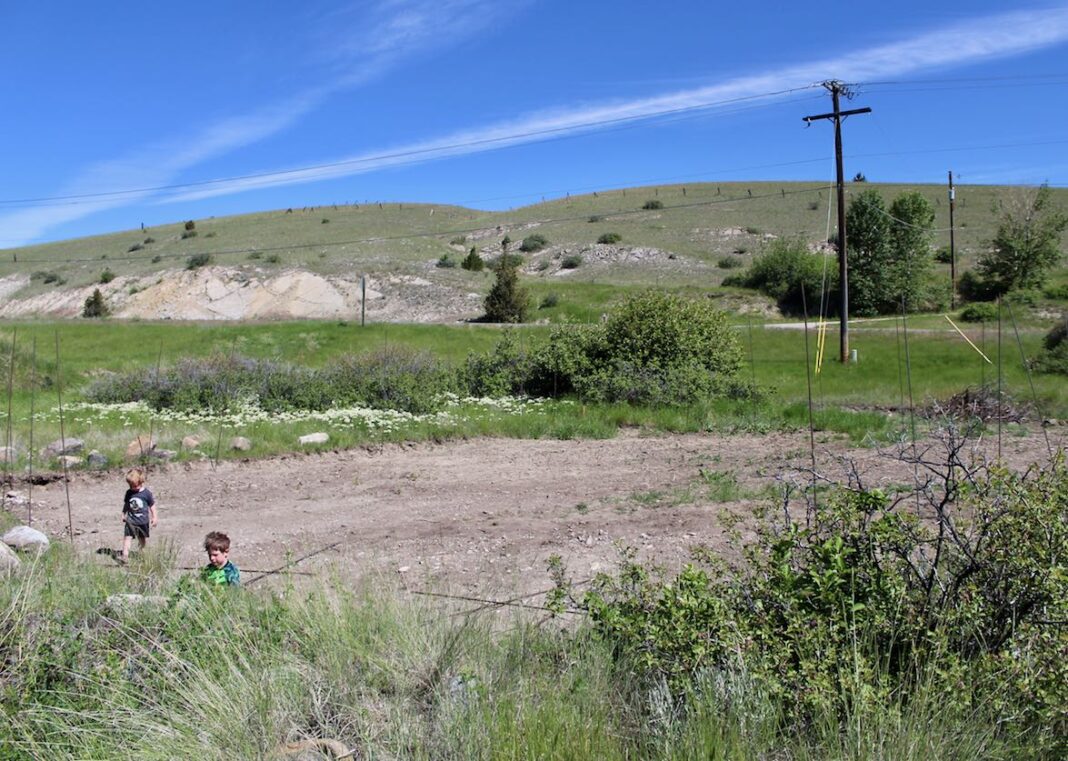
The Montana City School PTA recently awarded money to a makerspace and a community garden, two new programs that will be implemented at Montana City School next school year. The programs were awarded $1,000 and $2,500, respectively.
The makerspace is headed by school librarian Stephanie Heggen, while the community garden is headed by middle school teacher Martin Kuhl.
Makerspace
Makerspaces are places for students, and sometimes adults, to work with gadgets and technologies they may not otherwise have access to, to cultivate their creativity and work on projects that they find fun, either in class or outside of it. Heggen said the idea for a makerspace at Montana City School started when the school’s third-through-fifth grade principal, Cori Trudeau, asked her to look into the concept and how it might fit into the school.
Trudeau said in a phone interview that a makerspace is something she’s been interested in for the school for a couple years, but that it was just a matter of finding someone with the time and interest to take it on, which is where Heggen came in. “I think it’s a great way for kids to learn, [because] it’s hands-on,” she said. She also said that it will help prepare kids to navigate a future that is “very rich in technology.”
According to makerspaces.com, the tools and gadgets used in a makerspace can vary from high-tech gadgets like 3-D printers and robots to no-tech tools like markers and cardboard. It can be geared toward more scientific and technological thinking, or it can be geared more toward arts.
Heggen said she has always been interested in science, math, technology and electronics, which is part of why Trudeau asked her to look into a makerspace. However, she said at first she was skeptical of heading the project because she didn’t know what it would look like or how she would fit into it.
“At first, I was really scared about it,” Heggen said. “I’m not an artsy and craftsy type lady.” But after researching some of the most popular makerspace technologies and formats to see what might be the best fit for Montana City School, Heggen decided to move forward with the project.
When asked why she thought the makerspace is important and useful for kids, she replied that science and technology are where many jobs and careers are headed, and that the makerspace will teach them vital skills about how to think creatively and solve problems. “Kids need to learn those kinds of things,” she said.
Unlike more common makerspace formats, the makerspace at Montana City School will be structured as a check-out system because the school doesn’t have the space to have a room dedicated to housing a makerspace. Students will be able to check out technological gadgets and tools — such as virtual reality headsets that will allow them to virtually view space and the human anatomy — from the school library during class time.
Montana City isn’t the first school district in Montana to invest in a makerspace. As of last school year, Havre Public Schools had implemented makerspaces in its middle school, two other elementary schools and its high school. However, unlike Montana City School’s format, Havre’s makerspaces are in dedicated school rooms that are open to students before and after school and stocked with different technologies.
Heggen, who wrote and submitted the funding proposal to the Montana City School PTA, said the next step is to order the gadgets and tools to familiarize herself and other teachers with them so students can use the makerspace when the 2020 school year starts.
“Getting [the items] ordered before summer is key,” Heggen said. Community garden
While the makerspace will likely be set up by the beginning of the next school year, the community garden will most likely take longer to implement, according to Kuhl.
Community garden
Community gardens come in many forms. They can produce fruits and vegetables a community can harvest, grow flowers everyone can cultivate, or, in the case of the Montana City School’s, be educational, full of plants indigenous to Montana and signs with accompanying information on them.
Kuhl said he got the idea for a community garden from when he was a student at Helena High School, where he was in an “Excel” class where students had a garden that was home to many plants native to Montana. He said he thought it would be a good thing to implement in Montana City.
Although the idea was his, Kuhl said the planning and organizing was mostly done by a group of 10 eighth graders he had in the school’s gifted and talented program. They chose which plants to grow, how they would fundraise, and even the building material for the planter boxes: Trex, a durable composite material that is much more weather-resistant than wood or other materials.
The catch is that Trex is expensive. According to Kuhl, a 1 foot tall, 6-foot-square planter box made of Trex would cost $7,800. Kuhl said his students, rather than raising funds with the usual bake sales or car washes, are leaning toward more fun ideas such as a kickball tournament.
Kuhl said if necessary, they’ll ask students’ families to help fundraise. People who donate could potentially have their name memorialized on the box, he said.
Besides the $2,500 PTA gift, the garden also got a $1,000 grant from the National Wildlife Federation, which has already been spent on shovels, hoes and other supplies, Kuhl said.
If all goes according to Kuhl’s plans, his eighth-graders will start planting when school begins in the fall and the garden will open by next spring.
The garden will be tended by students and open to the public for viewing. Students will have access to binders of information about each plant it contains, and signs on each planter will list the names and information about the plants inside.
One student, Robert Stimpson, started working on an app so anyone with a phone can scan a QR code on the planter and view information on the plant. Stimpson, who enters Helena High this fall, said the app wasn’t finished but has been passed on to incoming eighth-grader Luke Mest. Stimpson said the app will include a garden map, plant list and possibly quizzes.
Kuhl said the garden will likely be open 24/7 and include a wheelchair-accessible trail.