
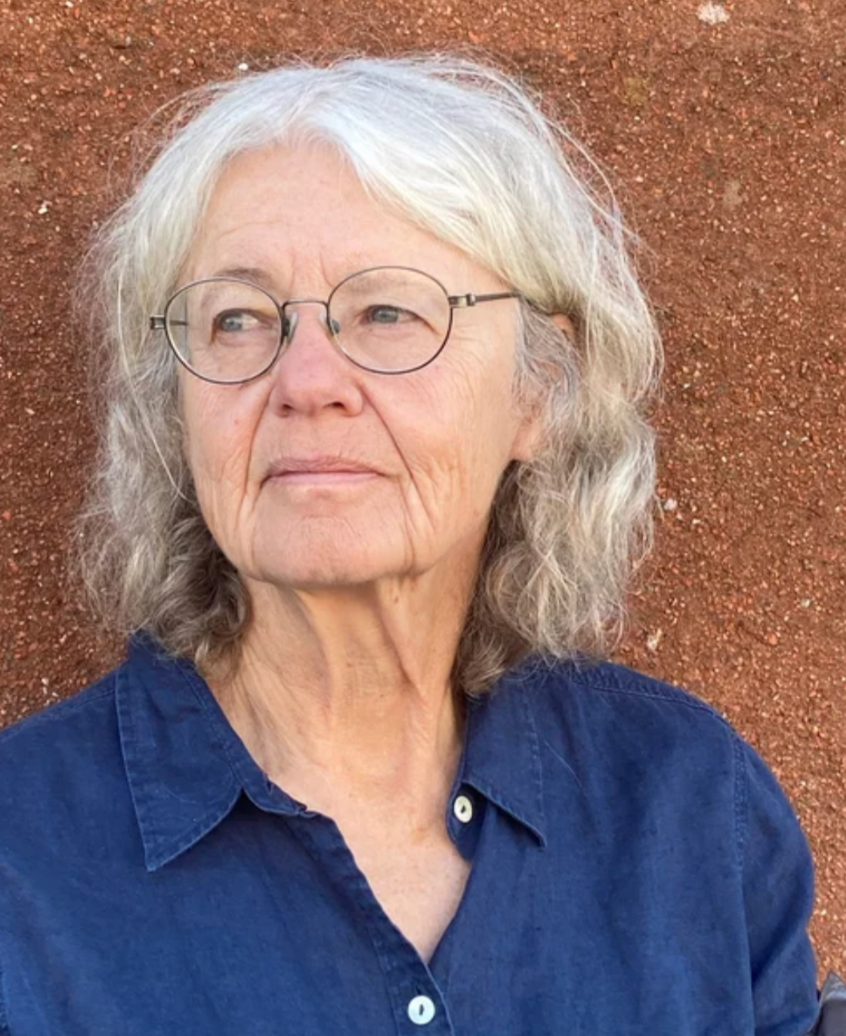
Indiana-born poet Melissa Kwasny has been a Montanan since her undergrad studies began in 1974 – and a Jeffersonian much of that time. She’s called Basin home since 2019 after living outside Jefferson City for nearly two decades while teaching at Helena’s Carroll College.
Over the years her writing has won a shelf full of honors and awards: in 2007, the Idaho Prize and the Silver Meadow honor from ForeWord magazine; two years later, the Alice Fay Di Castagnola Award and the Poetry Society of America’s Cecil Hemley Award; and from 2019 to 2021, she served as Montana’s poet laureate.
Now Kwasny has added another laurel to her mantle: her seventh collection, The Cloud Path, recently won the 2025 High Plains Award for poetry. I reached out to the award-winning poet for her reaction and insights into her perspective.
The Monitor: You learned in October that your book The Cloud Path won the High Plains Award for poetry. What does this honor mean to you?
Melissa Kwasny: The High Plains International Book Awards, established in 2007, are awarded to books that celebrate the High Plains in the U.S. and Canada. The awards are unique in that nominated books are initially read and evaluated by community volunteers before finalists are passed on to judges. I love that my book appeals to the general reader, to someone who may not read poetry often.
Monitor: Why do you think this book, partially a meditation on aging and loved ones passing away, has resonated with readers?
MK: The poems in The Cloud Path were written in a time of grief—personal, political, even planetary. It was the time of my mother’s slow and painful dying, and the years of the pandemic, when everyone I knew was grieving some kind of loss: of loved ones, livelihoods, school days, community. The poems are about dealing with grief, but they are also about caregiving and healing. Most people can relate to all those things.
Monitor: In “The Cloud Path” poem you write “here on the melting ice-edge of loss”…the pond “still holds our weight”. This struck me as hopeful, highlighting human resilience. Is that how you’re feeling these days?
MK: When I was grieving the incipient loss of my mother, what I call “anticipatory grieving,” I found that walking in the natural world always offered me solace. Many of the poems are titled after forms of healing I found on various paths: “The Bitterroot Path,” “The Lupine Path,” “The Chokecherry Path.” As I write in the poem “The Willow Path,” I came “for their peace and instructions.” The path of clouds is, like our path as humans, temporal and temporary. Loss is inevitable here on earth. I suppose what I feel at the end of the poem is not hopeful as much as grateful.
The Cloud Path (title poem from Kwasny’s latest, award-winning collection)
Last night, my mother’s dog woke me to find her drenched with sweat,
passed out, as we say, unreachable.
My mother, who refuses to wear her hearing aids,
moves unhearing into her world, her own narrative interpretations.
Passing through:
as needles through the fine or heavy cloth
as clouds over the mountain—they are more transient than us
nuages en lambeaux (torn clouds)
Six friends have died. My father has died. My grandparents, two cats, a beloved dog.
Passed away, a perfect phrase,
for away is where they go. A quickness seen from the ground.
And the past, which we often misuse or misspell.
Blue on the cloud-hem indicates pressure being released,
a body on the down slope, misshapen. Relative to what stays the same so long.
Do you have moments, too, when you fear everything is sliding,
that you are here on the melting ice-edge of loss,
though the pond hangs onto its ice daily, dry leaves skipping across the surface.
I love that it still holds our weight.