
In my most recent column, I shared a few accounts from my personal and professional life that I consider “Stories Worth Telling” – narratives that provide insight into my views and values on preventing illness and promoting community health.
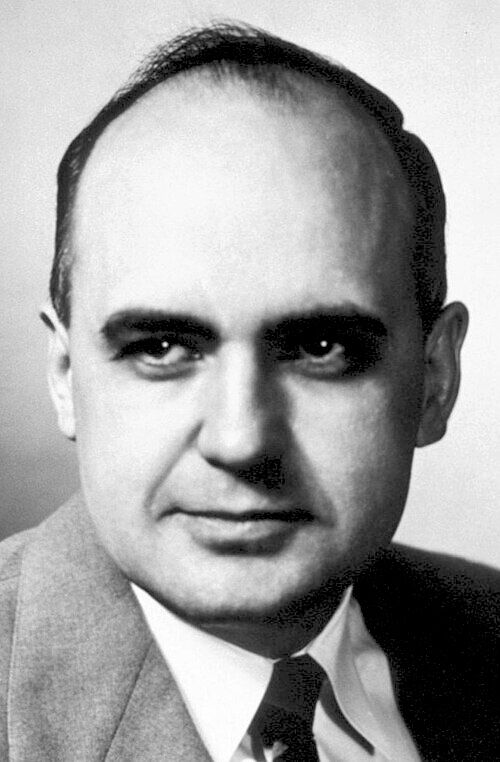
Today, I’d like to share one more – the story of a rural Montana boy who grew up to become the world-class scientist and great public health champion Maurice Hilleman. Still largely unknown, Hilleman was born and raised on a farm in Custer County. He was driven by his work ethic, love of plants and animals, and a belief that “the world should be better for having been in it”.
When I first learned of him in a college microbiology class, many elements of his story intrigued me. He grew up in the same era as my grandparents and in similar circumstances: on a farm in rural Montana, raising cattle, chickens, and vegetables. The future scientist took a special interest in the chickens, caring for them and getting to know them. That experience proved invaluable, as many of his achievements involved chicken eggs.
Hilleman was born in 1919 in Miles City. Sadly, his mother and twin sister died during the birth process. It was his mother’s dying wish for Maurice to be raised by his aunt and uncle who lived nearby and had no children of their own. Maurice’s seven older siblings lived with their father on the family farm.
As a young boy, Maurice showed an aptitude for science. Living with his aunt and uncle allowed his curiosity and intellect to thrive due to the open-minded atmosphere of their home. Living near, but not with, his birth family produced in him a strong work ethic and desire to succeed. These qualities produced a humble scientist who did much to change the world.
Hilleman would become known as the Father of Modern Vaccinations. A giant among scientists, Dr. Hilleman is credited with developing more vaccines than any other individual in history, including more than half of the routinely recommended vaccines for children today. As the leading vaccinologist of the 20th century, and perhaps of all time, Hilleman’s vaccines have shaped modern-day healthcare and are said to save more than eight million lives each year.
So, how did a Montana farm boy become one of the true giants of 20th-century science, medicine, and public health? When he graduated from high school in 1937, his family had no money for college. He got a job at the local J.C. Penney’s, a valued opportunity during the Great Depression. His older brother later persuaded him to go to college, and Hilleman applied for, and won, a full scholarship to Montana State College (now Montana State University).
He majored in chemistry and microbiology and graduated at the top of his class in 1941. Three years later, he earned his PhD from the University of Chicago. From there, Dr. Hilleman embarked on a remarkable career as a scientist and virologist for E.R. Squibb & Sons, the Walter Reed Army Institute of Research, and Merck Pharmaceuticals.
The first vaccine he developed helped protect U.S. troops during World War II from Japanese encephalitis virus, the most common cause of encephalitis. Encephalitis can lead to swelling of the brain and even death. While working at Walter Reed in Washington, D.C., he researched the influenza virus and made a discovery that is vital to our understanding of influenza.
His research detected changes in the virus. In most cases, the changes were small. These small changes became known as antigenic drift. Drift is the slow, subtle change in surface antigens that necessitates the production of new vaccines each year. Sometimes these changes are more dramatic and result, essentially, in an entirely new virus subtype.
This is referred to as antigenic shift. And because people lack immunity to the new virus, an antigenic shift can result in a pandemic, as with the 1918 influenza pandemic. There was also a shift detected in 1957 in Hong Kong, later referred to as the Asian flu. Dr. Hilleman recognized this antigenic shift, becoming the first person in history to predict a pandemic.
As a result of his prediction, scientists collected specimens from the infected and isolated the virus. His team tested the virus against the blood of service people and civilians. None had antibodies against the virus, confirming it was a new strain. Hilleman and his team then created a vaccine before this new strain of flu arrived in the U.S., mitigating the impact of the epidemic.
Maurice was born during the deadliest influenza pandemic in history. When the next global flu pandemic arrived in 1957, he was positioned to save thousands of lives – and his Montana roots played a part. This is where the chicken and its eggs enter the picture.
Fertilized chicken eggs had been part of vaccine development since the 1930s. Eggs provide an affordable and sterile medium in which viruses can replicate before scientists weaken or kill them to create a vaccine. Maurice knew from his chicken-tending youth that farmers typically harvest their roosters late in the hatching season.
He also knew that preparing 40 million doses of an influenza vaccine would require millions of fertilized eggs to incubate the virus. Thus, he warned vaccine manufacturers to advise egg suppliers to spare their roosters because they were needed to produce the new influenza vaccine.
Dr. Hilleman often credited the chickens he raised in his youth with his successful use of chicken eggs for vaccine development. “Coming from a farm,” he liked to say, “I always had a good friend called the chicken.”
Years later, he gave his friend a helping hand. In 1971, Hilleman produced a vaccine to prevent a viral infection, Marek’s disease, that produces lymphoma in chickens and would periodically wreak havoc on the bird’s population. He made the vaccine using a related virus found in turkeys. “I figured I owed it to the chickens,” he quipped.
From 1957 until his retirement in 1984, Dr. Hilleman worked for Merck, overseeing their vaccine research and helping develop vaccines for chickenpox, hepatitis A and B, pneumonia, meningitis, measles, mumps, and rubella. When he created the innovative MMR vaccine, he became the first to combine viral vaccines. Ever since, children have been protected against three diseases (measles, mumps, and rubella) with one injection.
Another unique story from Hilleman’s career occurred with the development of the mumps vaccine. When his five-year-old daughter contracted mumps in 1963, Dr. Hilleman recognized the symptoms and collected a specimen. Weakening the virus obtained from his daughter, he created a safe and effective mumps vaccine. Even though Maurice found little value in being recognized for his work, he left a legacy for his daughter by naming the weakened strain of mumps after her: the Jeryl Lynn strain is still in use today.
The great value of effective vaccines is that we see less of the suffering and loss caused by the diseases they prevent. However, in Dr. Hillman’s later years he watched parents begin to choose not to vaccinate their children due to misinformation. His science-driven mind had a hard time with this. “Can’t we learn from history?” he lamented in his memoir. “Do we really need to sacrifice our children to learn these lessons?'”
I’ll close with the powerful statement Montana State University issued to honor their esteemed alumnus: “Dr. Hilleman accomplished his work with great tenacity and even greater humility. Today, he is remembered by many as one of the world’s top scientists, who was able to advance global public health through his ethics, values, and hard work — qualities that can be traced back to his Montana roots.”
Pam Hanna is the county’s public health supervisor. Contact her at phanna@jeffersoncounty-mt.gov.