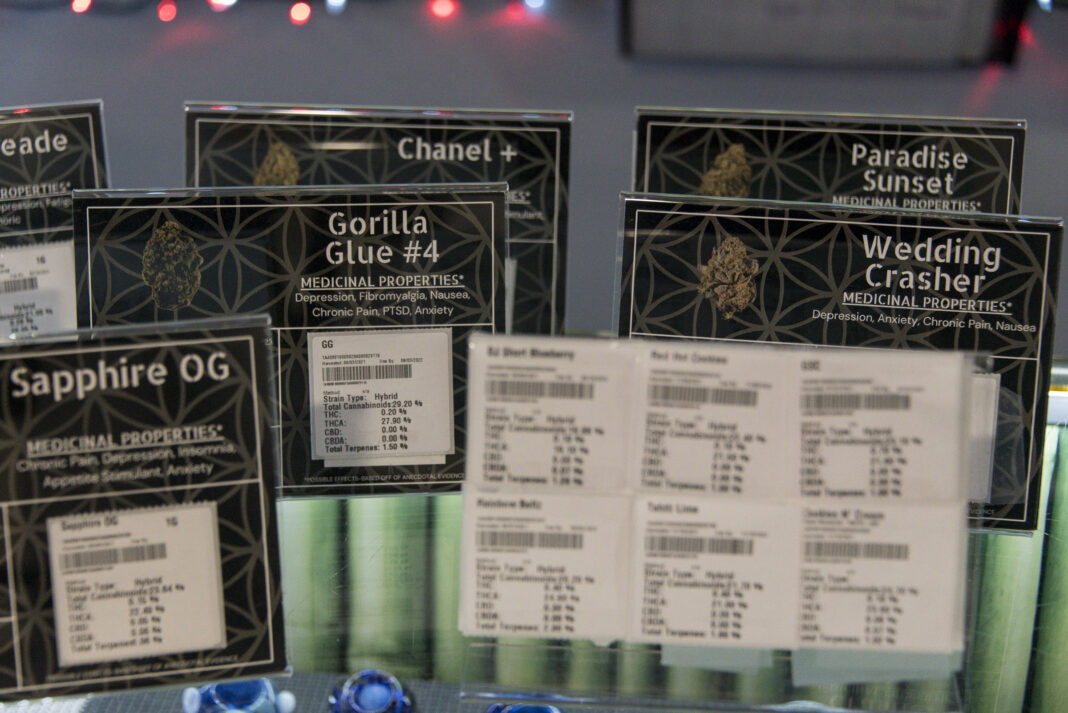
The County Commission voted July 23 to put on the November election ballot referendums that would impose an additional 3% excise tax on sales of medicinal and recreational marijuana.
If voters approve the measures, the new tax could generate about $22,000 each year in revenue, of which slightly less than half would go to the cities of Boulder and Whitehall.
The state already collects taxes of 20% on recreational (described legally as “adult-use”) marijuana sales and 4% on medical sales. The proceeds are divided between addiction programs; Fish, Wildlife and Parks accounts; Military Affairs; and crisis intervention training; as well as the state general fund.
But Montana also allows residents in counties in which marijuana is sold the option of approving the additional 3% local tax. Of the 28 counties that allow adult sales of marijuana, only two, Jefferson and Glacier, have not imposed the local tax, according to the Department of Revenue.
Commission Chair Cory Kirsch explained that, until recently, relatively modest local marijuana sales didn’t justify the administrative costs of a ballot referendum and collecting and distributing the tax.
Now, however, two marijuana retailers operate in the county: Bloom Montana in Boulder and 406 Organix in Whitehall, which opened in mid-2023. Together, the two stores have averaged monthly adult-use sales of $54,048 in the first six months of 2024, according to Department of Revenue data. Medical-use sales have averaged $7,166 a month. That suggests combined annual revenues of close to $750,000.
Counties that collect the local tax must keep 50% of the proceeds, according to statute. 45% of the revenue is divided between cities or towns where marijuana is sold, based on their relative populations; and the remaining 5% goes to the Department of Revenue.
The county’s share is unrestricted and can be spent on whatever the Commission decides. Kirsch indicated that there is a strong preference to allocate the revenue to support mental health services.