
“We’re doing something successful. If we weren’t we wouldn’t be here.”
The words of Greg Hughes, owner of The River Pizza & Subs, appear to ring true for businesses in Boulder and elsewhere in Jefferson County.
More than two years into a global pandemic, and five months into a European war, the American economy is in turmoil: With supply chains still clogged, consumer prices jumped 9.1% in June from a year earlier, the biggest 12-month increase since 1981. U.S. stock averages are down 15% since January on fears that the nation could soon enter a recession.
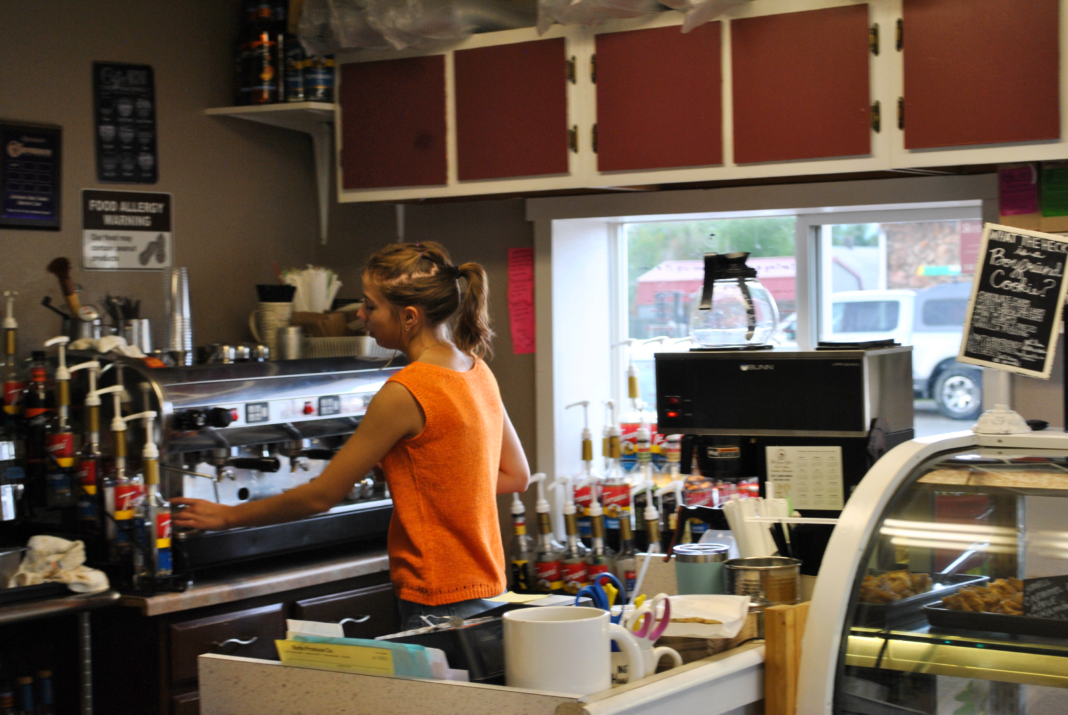
The regional economy isn’t immune from those pressures and fears: Hughes and most others are wrestling with stark inflation and a dearth of employees. But most say they’ve been able to weather the challenges so far — and some even say the disruption represents an opportunity to grow stronger.
The biggest pressure for most is price inflation.
“Flour is $26 a bag, up from $15 a year ago,” said Kayla Holman, owner of the Sweet Spot. “Coffee is around $5 more per pound than it was four years ago, and it keeps going up. Some items have gone up nearly 40 percent.”
Barry Wareham, owner of Mountain Good, also feels this pain.
“Egg prices are outrageous,” he said.
Dave Schell, owner of Dave’s 32 oz. Bar, Grill and Bowling, has had similar struggles.
“We’re having a hard time keeping the menus up to date,” Schell said. “Every week we’re getting a price increase from one of our vendors. It’s tough to have a good lunch menu at a decent price now. Fortunately prices of alcohol haven’t really been affected, but food has increased 25%.”
This reality has made for some tough decisions for business owners. For example, Holman knows it’s in her best interest to raise her prices, and the day will likely come, however, she has held off despite the hit to her bottom line.
“I want my prices to be affordable,” she said.
Rusty Giulio, owner of The Windsor and the Elkhorn Bistro, echoes this sentiment, saying he has raised prices but tries to keep it to a minimum.
“We try not to raise them too much,” he said, “just enough to cover the costs.”
Lisa Vossler, co-owner of L & P Grocery, has also struggled with price increases.
“Our goal is to serve the community, and it’s hard because people often have a set budget, which in some cases has been greatly affected by the increases,” she said.”
It’s uncomfortable to raise prices, Hughes said, but he doesn’t see any other option.
“If I don’t raise my prices to make up for the inflation I can’t keep the lights on,” he said. “It’s unfortunate, but it’s what we have to do…we have increased our portion sizes to try and make up for it.”
Still, it’s hard to “make up for it,” as it seems practically every item has risen in price, Hughes added, even peanuts.
“A year ago it was $22 for a case of peanuts,” he said. “Now they’re $37.90. And this is not something I can adjust because peanuts are free, so I have to justify the price increase some other way.”
Despite the inconvenience, Hughes said customers understand.
“The price increase doesn’t seem to be affecting people,” he said. “We’ve had to raise them 15% on average, but our customers continue to support us, and, thanks to tourism, foot traffic is up from this time last year.”
Tourism a saving grace for downtown businesses
Hughes isn’t the only business owner in the community to see a rise in tourism this year, despite a slower start.
“It started slow with Glacier opening later and Yellowstone getting impacted by floods, but tourism has really started to pick up,” said Wareham. “Canadians can travel to the U.S. again and people throughout the country are starting to feel more comfortable traveling. It’s good to see.”
“We’ve seen a lot of bikers come through lately,” said Gail Hale, owner of Basin’s Silver Saddle. “We’ve also seen more tourism in general, which is great, but it’s also been challenging. It’s hard to get help.”
Hale said she currently has nine employees, and only two of them are full-time. Ideally she’d like to have 12, but at this point she’ll take what she can get.
“It’s hard to find people who want to work,” she said. “Nobody wants to work, and I hear that’s the case in other places, as well.”
Elkhorn Bistro manager Jennifer Chapman can attest to this, too, as she’s experienced a lot of turnover in front of the house, leaving her to do a lot of the work herself.
“I’ve worked seven days a week for the past four weeks straight,” she said.
Finding enough help is one of the biggest issues hampering local businesses in Jefferson County, no matter what the industry.
“During the pandemic it was hard to get people to work, and that’s remained the case,” said Cory Kirsch, owner of Hardware Hank.
In some instances this lack of staff has led to reduced hours.
“For the first time in our history, we’re closed on Mondays,” said Hughes. “This has been the case since June 1. It hurts.”
This isn’t how Hughes expected to start the summer. Ideally, he’d like to move forward with an idea to attach a candy store to The River.
“Candy store is coming, but there’s absolutely no way to get it open without having the staffing,” he said. “How can I have a candy store if I can’t keep the restaurant open seven days a week? Unfortunately, I can’t make this concept a priority right now.”
Finding solutions
What can be done to improve the situation so many businesses find themselves in? For some, the answer lies in simple improvements, such as curb appeal.
“It’s important to beautify our downtown and make it more welcoming,” said Chapman. “I like to have a variety of flowers outside and have a theme for the decor each month. I’d love to see more businesses do something similar.”
Dave Schell – who did major renovations on what used to be Phil and Tim’s – agrees with this sentiment and believes it could be further enhanced with more camaraderie within the business community.
“If we can get all of our local businesses here to clean up what’s out front I think it could really help our little town,” he said. “When people drive through and see something they like, they’re more likely to stop and give us business.”
Schell’s installation of asphalt, beer gardens and a dramatic interior makeover have not gone unnoticed and are inspiring other business owners, such as Giulio, who is going to make some improvements of his own. This includes a taproom on the second floor of the Windsor and a patio on the south side next to Ace hardware.
“It’s good to have some new blood,” Giulio said. “Now I have to up my game to keep up with what Dave’s doing. It’s important. We all live here, play here and everyone benefits from the commerce, and we all need to do our part here. It should be a group effort.”
For this reason, Giulio said he believes competition is healthy, be it another bar or another hardware store.
On June 18, Dale Morris and his wife Bridget Morris – who own the Ace Hardware in Whitehall – opened an Ace on Boulder’s Main Street. This had been in the works for nearly a year, but pandemic-related setbacks stalled the construction. Now it’s here, at a time when it’s already challenging for Hardware Hank – a business that’s been here since the 1970s – is having trouble finding as many employees as it needs. Kirsch said that for now he is just watching to see how things go and to see if and how he needs to adjust his business.
Having Ace in town, however, has already benefited some local businesses, such as Joe Faline and Rose Perna of Alpine House Services, a local roofing, siding and exterior remodeling business who were contracted to do the roof. Having a big job in town is particularly helpful considering the high gas prices.
“Gas is crazy,” Perna said. “It costs Joe over $110 to fill up his truck, so it costs us every time he goes to Helena to get materials, and the prices for those materials are insane, too. We built a piece of property and were going to build a house, but we can’t do it right now because of how high the prices are.”
Jason Warren of Boulder Valley Iron Works can relate, as he’s seen jobs dry up due to high prices and supply issues. It’s inspired him to consider putting more emphasis on manufacturing jobs and less on job site construction. Either way he needs to find employees with knowledge of the trade, and they’ve been hard to come by.
“I’m just going to keep riding it out and look for options that best support me and my business,” he said.
“I listen to what Warren Buffet says: in inflationary times, you’ve got to be really good at what you do,” added Giulio, “and if you’re really good at what you do, things take care of themselves.”
Keith Hammonds and Quinne Shultz contributed to this article.