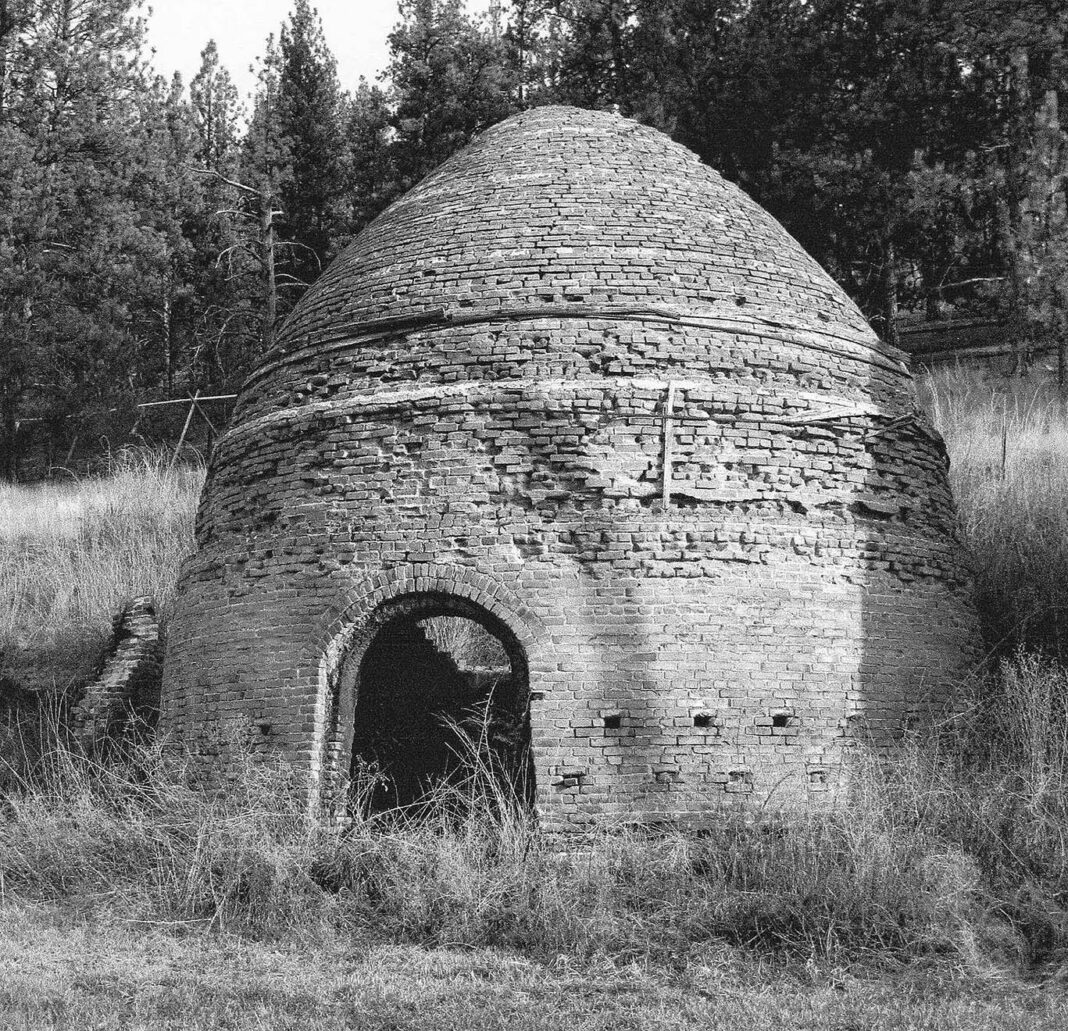
Kilns the remnants of a bygone industry

An old kiln at Alhambra by Lee Silliman, 2014.

RELATED

Remnants of the western mining industry make up the newest exhibit at the Jefferson County Museum. This exhibit features images of an historical remnant critical to the nineteenth century mining industry in the Western states — the stone or brick kiln.  These large ovens allowed materials to be heated to high temperatures under controlled conditions.  Most photographs show old kilns that transformed wood into charcoal, an important fuel which produced high temperatures needed for smelting raw ores during the frontier era. 

These conical structures of stone or brick allowed freshly cut wood to be slowly burned with limited oxygen for a few weeks to produce the valued, lightweight charcoal for economical transport.  Groups of skilled immigrant carbonari, or colliers, often constructed and tended these charcoal kilns.  Some kilns shown in the exhibit transformed coal into coke fuel, or heated limestone into quicklime, a useful industrial compound.

Since timber was usually the basic ingredient, photographer Lee Silliman found these kilns in mountainous areas.  Being made of earth materials, many kilns have survived the ravages of time.  They speak to the elemental struggle of former generations of nation builders. Along with this exhibit of 24 large framed black and white photographs of Montana kilns, there is a display of nine photographs about the Carlson charcoal kiln pits in Bernice.  This was provided by Sherry Carlson.

📧 Continue Reading

You've read 2 free articles. Enter your email to unlock 2 more articles and get our newsletter.

For unlimited access and premium features, explore our subscription plans.

— OR —

Subscribe Now

Already a subscriber? Login here

- Advertisement -spot_img

LATEST NEWS