
Last month, the Jefferson High School Board of Trustees circulated a survey to the community regarding the future of JHS, and the results revealed at the Jan. 19 meeting found that those who responded supported a renovation of the existing school.
The long-touted idea of moving the school to the northern end of the county was rejected by the Board based on the responses received, and instead it will seek support on a levy that would allow a more comprehensive renovation to the school.
Out of the 6,405 surveys mailed to district registered voters, 2,036 were returned — a 30% response rate.
The results showed that 17% supported moving the high school to the northern end of the county, 27.6% supported a high level upgrade, 16.7% supported a bare bones upgrade, and 38.2% supported making no changes to the school at all. This means 61.3% of the community supported making a change — but appear to differ on what that change should be.
“A high percent of the community said nothing,” pointed out At-Large Trustee Kevin Harris. “30% responded to the survey, more will respond to a levy vote,” he said, referring to the need to borrow money to do the renovations.
The options listed on the survey were based on a Building Conditions Assessment completed last year. The assessment concluded that the biggest issues centered around the lack of Americans with Disabilities Act (ADA) access, classroom size, lack of electrical outlets, inadequate athletic facilities, among other concerns. The Trustees used the information provided by the assessment and provided the public with four possibilities, ranging from a do nothing option at no cost to $25 million for a new school.
Based on the survey results, Board members agreed to shoot for the more extensive upgrades to the existing facility.
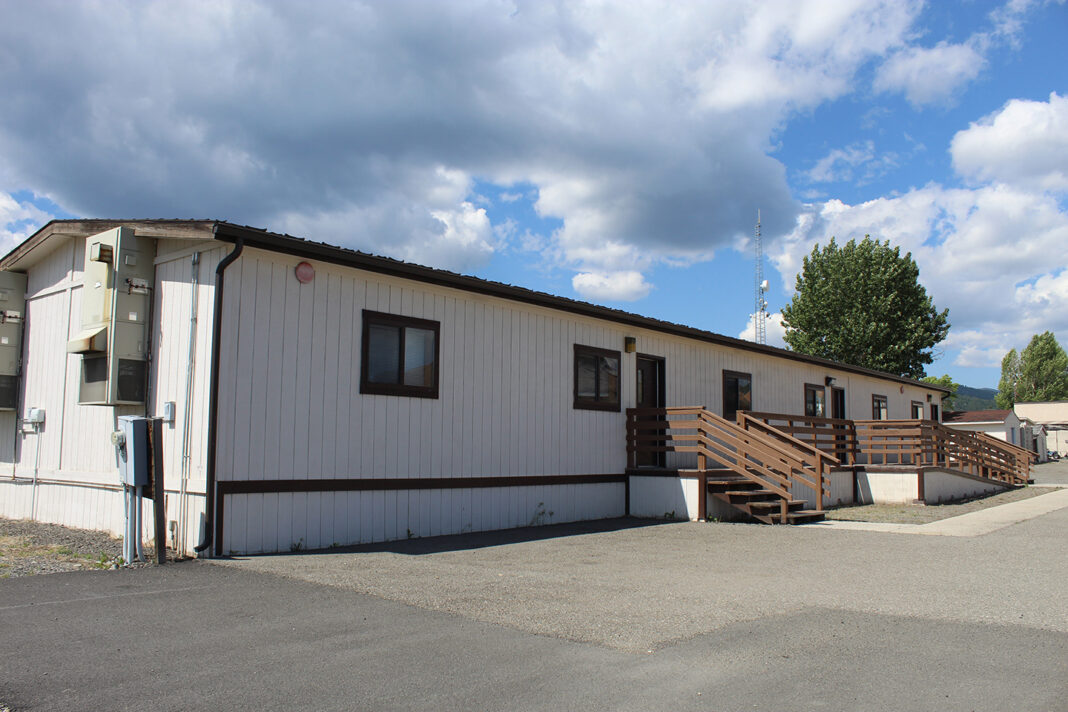
As listed on the survey, this option was estimated at $13-15 million and would remedy the ADA issues and upgrade and expand the high school. The expansion could include, as suggested in the survey, an auditorium for the theater department, increased classroom space with higher capacity while eliminating the modular classrooms, and improving the outdoor athletic facilities — namely the football field and track.
The tax burden for this option, at $15 million, was estimated at $64 a year for every $100,000 in taxable value to service a 20-year bond, according to the survey.
The other options included moving the school to the north end of the county and building an entirely different campus, remedying only the ADA issues, or doing nothing at all.
The survey sent out in December followed a previous attempt in October, but those results were discarded because of a mailing label error on the part of the printer, according to school officials.
JHS Superintendent Tim Norbeck said that the community survey data, which was compiled by his clerk and students’ help, differentiates the demographics, such as area and age, and gives the board a complex view of opinions held by members of the district. “It will be a good dialogue for the Board,” Norbeck said.
The preliminary survey results were broken down by age and location.
Most respondents, 44.9%, were over age 60, while 4.9% were between 18-29, 10.8% were 30-40, 13% were 41-50, 15.6% were 51-60, and those who did not provide an age on the survey represented 10.8% of respondents.
In terms of location, 40.4% of all respondents were from Montana City, 38% were from Clancy, 19.6% were from Boulder and 2.9% from Basin.
When discussing the survey results, Harris backed the higher-level upgrade proposal.
“I agree that more people said Boulder, and if I were to point in a direction, I would say to heck with a bandaid — do it and do it right,” he said.
Montana City Area Trustee Justin Willcut agreed.
“A lot more people want to see it done, and done well,” he said.
In order for the Board to proceed there must be a district-wide vote on the levy, which will need to pass with 51% or more voting in support of the tax increase. In the hopes of garnering support, the Board discussed coming up with “a very specific number” when it came to the renovation costs.
According to Kyrie Russ, vice chair of the JHS Board of Trustees, “We have a lot of groundwork to do before a levy vote could take place. I can’t say with any authority when that could be. The next step in the process is for the Board Facilities Committee to meet to start discussing options for the expansion/remodel project. We would have to have detailed plans and a budget put together before we could ask voters to approve the project.”
A presentation or package developed by the Facilities Committee will be presented to the public when it is completed, according to the Board. The full survey results and comments are available for review in the school’s district office.
Moving the school north
The idea of moving Jefferson High School from Boulder to the northern end of the county is nothing new, but the latest iteration of this idea sprung from a 2019 demographic study, and was presented to the community as an option in the district-wide survey.
Former JHS Trustee Travis Pierce said he did not believe the option of moving the high school was viable in the past or near future.
“Being from the north side, there is a convenience factor … I was never on board with it at all, but it was something I had heard talk of so I investigated it,” he said.
Pierce said that based on information gathered from previous administrations about this option, it did not seem feasible at the time due to cost and the lack of land options.
Meanwhile, Boulder Area Trustee Buster Bullock said that there was the thought that building a new school in the northern part of Jefferson County had wider support, but the survey results showed otherwise.
In addition to the cost of a new facility, Bullock was also worried about the impact of moving the school from downtown Boulder to the northern end, most likely in the Montana City area.
Boulder has already suffered a blow from the loss of the Montana Development Center, which closed in 2018, and with it, took 250 jobs.
“A lot of the Main Street of Boulder is Jefferson High School … we have a lot of teacher base and what [the move] would do is in question. I don’t think it would kill downtown Main Street, but it certainly wouldn’t help it.”
Bullock believes updating the current high school would be simpler and more cost-effective than building an entirely new campus. He also stated that choosing to move the school “doesn’t fix the problems today,” and that changes would have to be made to JHS for the students who would be attending prior to the completion of an entirely new building.
“In my mind, there are some simple three or four million dollar upgrades to the school we have now and we are on our way,” he said.