
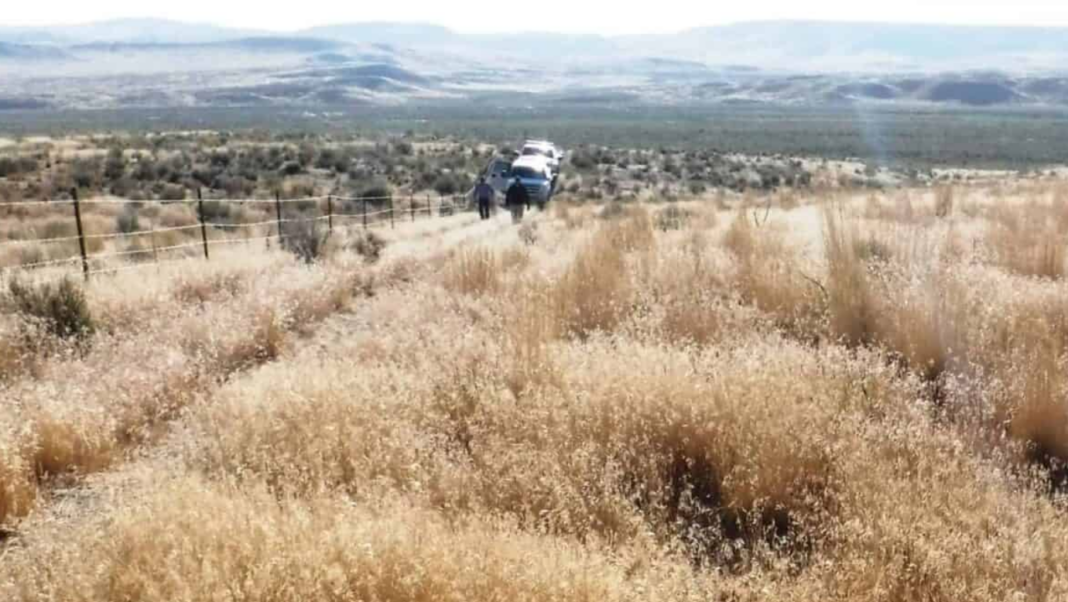
It’s a bone-dry year in Montana; the rivers are already low. We’re hoping for rain not only to ease the dry conditions, but also to ease the weed pulling. We even get a little excited about pulling weeds when the forecast calls for rain.
Few things are more frustrating than trying to pull thistles and dalmation toadflax out of bone dry ground. Every weed top that snaps off without the roots coming up is chalked up as a loss.
My retired wife has done the lion’s share of weed control. We thought we had a few different types of weed, but thanks to an app called Flora Incognita we have been able to take a picture of and identify more than a dozen on several acres of hill behind our house.
Among the noxious invaders we are dealing with are houndstongue, white top, knap weed, mullein and cheatgrass. There aren’t many things that work as well as good old-fashioned weed pulling. On several acres, though, that takes quite a lot of effort. We have used a little bit of Roundup, but we haven’t used bio controls – insects that attack the weeds.
Because many weeds came over here from Eurasia, they traveled without their natural enemies. Using biocontrol brings those foes to the battle. I called Todd Breitenfeldt, director of the Whitehall Project of the Jefferson County Weed District, which supplies people with insects to attack invading flora.
He said there are three weed species that are very responsive to biocontrol in our part of the world. “We are having really good results on Dalmatian toadflax, leafy spurge when it’s on dry sites – it won’t work where it floods – and spotted knapweed,” he said. As for cheatgrass, which has rapidly colonized our land in the last few years, “there are no biocontrols.”
That may be for the best. A recent study in Australia called the Biocontrol Paradox found that while introducing insect enemies from the plant’s home country may knock some species back, they often rally and, instead of competing against each other, start cooperating to resist the invaders and emerge stronger.
At least the biocontrol agents are unlikely to become pests themselves. “These insects have been very well host-tested,” Breitenfeldt told me.
Here in Montana, it’s clear there are a lot of weeds that still need yanking. After that, the next step should be replanting native species. “Re-vegetation is one of the big strategies everybody should be using to fight all noxious weeds,” says Breitenfeldt.
Meanwhile, the other day at sunrise I looked out my window at one of our weed patches to see a mother turkey and six chicks. They were staring at the ground at a different sort of noxious infestation: prairie voles, who thrive among the weeds and create mounds of dirt. Those turkeys, now that’s the kind of old-fashioned biological control we’re happy to accommodate.
Jim Robbins is a longtime freelance journalist in Helena, where he writes for The New York Times and other publications. He is the author of six books, most recently The Wonder of Birds, winner of the 2017 Montana Book Award.