
Green grass, warmer days and leafing-out aspen trees always get me excited to get gardening. The indoor transplants I’ve been nurturing since January are begging to go outside. This recent bout of wild Montana spring weather (6” of snow in Boulder twice this month) provided a good reminder that mountain gardening can be tough sledding.
On what date is it safe to start seeding or move transplants outside? Every location is a little different. Whether you till a little or a lot, you’ll want to do some soil preparation prior to seeding or planting transplants. A good rule of thumb is if the soil sticks to your shovel, it’s too wet. Leave it for another day or two.
Tilling damp, heavy soil can compromise the structure and increase compaction. If you’ve never had your soil tested, or it’s been a while, it’s a good idea to take a representative sample of soil from your garden and send it to a laboratory for analysis. I tend to use Midwest Labs, but there are a lot of options out there.
The five most important tests are pH, percent organic matter, nitrogen, phosphorus, and potassium. You could also examine the level of soluble salts, sulfur, iron, manganese and boron. (For more info on soil testing and interpreting the results, visit this website: https://apps.msuextension.org/montguide/guide.html?sku=MT200705AG.)
When interpreting the test results to figure out which nutrients you need, be sure to follow the recommendations for this area. Southwest Montana soils are a world away from the soils of the South or Midwest, or even from Colorado or Washington state. In my experience, most local soils have a high pH, are low in nitrogen, and sometimes deficient in manganese.
If you apply compost, it is a good idea to apply and incorporate your compost prior to collecting your soil sample. After testing my soils on a consistent basis, I mostly know what my soil lacks, so I incorporate my main fertility in the spring just prior to planting and then side dress certain plants, like onions, with additional fertility during the growing season.
Soil temperature is a big indicator on when to plant. Plants need a certain soil temperature to germinate. Seeding in cold soils could cause seeds to rot, or the germinating plants might grow slowly and look unhealthy at emergence. Cool season crops like spinach and peas will germinate in soils of 40 degrees F and up, while warm season crops such as corn and beans need at least 60 degrees F. And by the way, if you’re intimidated by annual plants, you could start with perennials such as fruit trees and small fruit instead.
When does the overnight frost end, making it safe to seed outside? At higher elevations, you’ll likely wait until mid-June, though it should be before that elsewhere. You could look at historical data for the average last frost date, as well as the first frost date in the fall. But every year is different. Some springs I’ll have my sweet corn planted by mid-May. This year I haven’t even thought about it yet. This means I’ll probably have to use a quicker-to-mature variety or take my chances and hope for a late fall freeze.
Jefferson County has so many micro-climates: just because your neighbor is no longer dealing with frost at night doesn’t mean you’re done with it as well. Years of experience in a single location and an old timer’s understanding are among the best tools.
Before moving your transplants outside, give them at least a few days to acclimate to the outdoors (this is called hardening off, and refers to plants adapting to sunlight, wind, changing temperatures, and so on). Start by setting them outside for a few hours in a shaded spot, then gradually increase their outdoor time. If it’s still freezing at night, don’t forget to bring them inside. I’ve made that mistake myself, and it makes for a rather unpleasant morning.
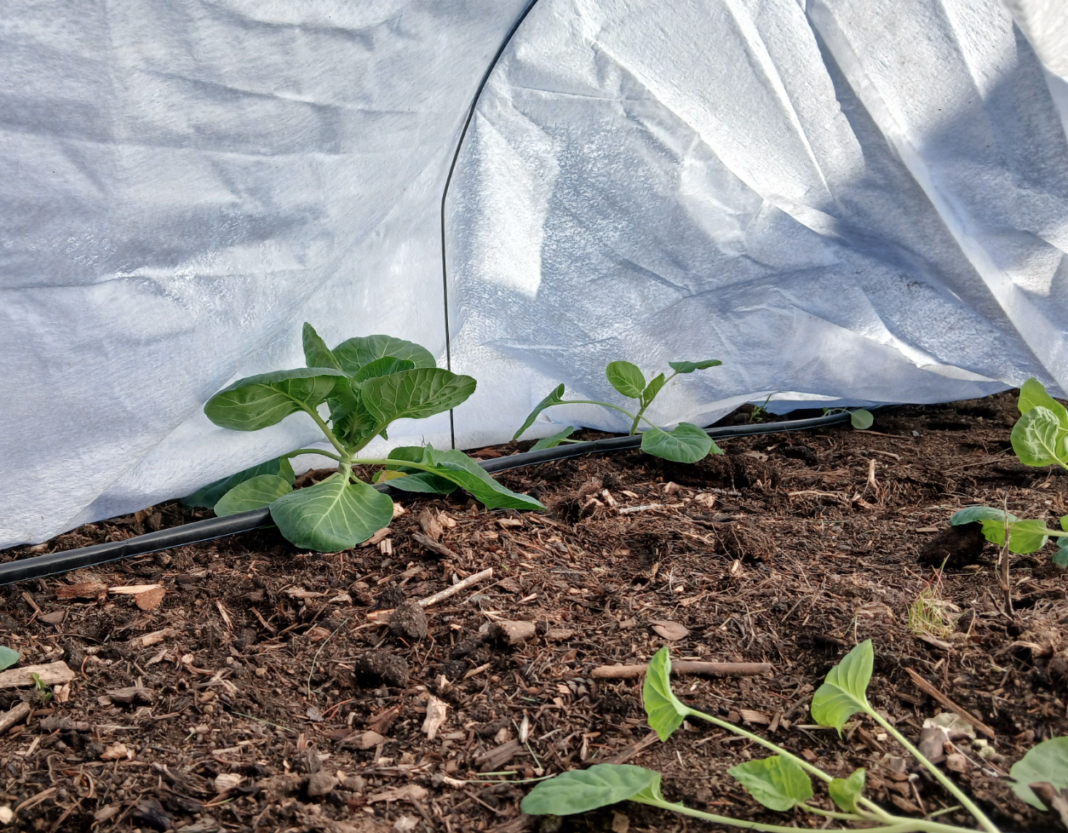
Once your plants are hardened off, it is a good practice to avoid planting during the hottest part of the day to avoid stressing the plants. I recommend the early morning or evening. Row covers, also called frost blankets, are great for protecting young plants from transplant shock. They also provide 2-5 degrees of protection from frost. Thus, if the temperature falls to 30 degrees F, your plants should still be just above freezing. I often use them in the fall to extend the season. But to get the best results, be sure to elevate the row cover above your plants to provide an air gap.
Gardening in the mountains isn’t easy. But overcoming a challenge is always more rewarding and fulfilling. Most seasoned gardeners I know want to see others garden successfully, so they’re happy to share their insights. I appreciate your support in reading my column, but you could also lean on the gardening gurus in your area. Just keep in mind that a technique or seasonal approach that works for your neighbor may not work for you. Stay vigilant.
Here’s to making this year a productive one in our gardens, so we can save a little at the grocery store and enjoy the harvest with friends and family.
Brent Sarchet, a certified International Society of Arboriculture (ISA) arborist and crop advisor, runs Finn Creek Farm near Boulder with his wife Andrea. Contact him at bsarchet@gmail.com.