
During the summer, my family eats as many meals as we can outside on our deck. With our short summers, we find ourselves soaking up every last bit of the season. There is a lot to be said for enjoying a meal or drink surrounded by the sounds of nature: hummingbirds whizzing by, night hawks, swallows, and bats providing their insect control services, and the occasional chicken that likes to visit us on the deck.
Especially late in the summer, though, our time on the deck and outdoor picnics get cut short by the bombardment of Western Yellow Jackets and Baldfaced Hornets. Every year is different and at our place, the last couple years haven’t been bad — but this year their numbers have exploded. Why does this happen, what can be done about them, and are they good for anything?
First, you need to know for sure which type of insect you’re dealing, with because some people inaccurately use the term “bees” to describe all species of wasps, hornets, and bees. Sometimes, wasps and hornets can be confused with bees and vice versa, and since we know that most bees are beneficial pollinators, it’s important to know what you have so we can avoid harming our beloved pollinator species.
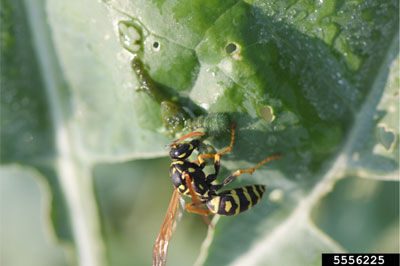
Paper wasps such as the Yellowlegged Paper Wasp are less known for their pollinating work, but they do pollinate to some extent while searching for suitable food. More importantly though, they feed on undesirable insects such as cabbage loopers, cut worms, and other larvae found in the yard and garden. They are easy to identify because their legs dangle below their body when they fly. They aren’t usually bothering you outside either.
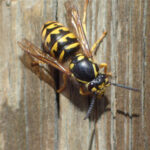
But Western Yellow Jackets — yellow and black, with abdomen not “hairy” like those of bees — are less desirable, because they do not primarily feed on live insects and their larvae. Instead, they feed on dead insects, earthworms and other carrion. They can also forage on sweet material like honey and fruit late in the season. Yellow Jackets are also known to be robbers of honey. I once listened to a respected entomologist refer to them as useless, annoying insects, so I feel comfortable referring to them in this manner. They can quickly turn a lovely picnic into a race to see how fast we can eat and get back inside.
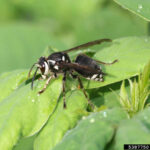
Baldfaced Hornets are also worth mentioning, because even though they can be annoying, they are for the most part, beneficial. They feed their young strictly on a diet of living insects, particularly caterpillars that may be eating your garden. However, they will feed on sweet fruits, honey and the sugar water in your hummingbird feeders. So be sure that you aren’t inadvertently feeding them near the places you like to spend time outside. They are easy to identify because they are large with prominent black and white markings.
In addition to honeybees, we have many native bees that are critical pollinators, and are actually more efficient at pollinating than our non-native, European honeybees. Keep in mind that rarely will native bees or honeybees be bother you outside unless you are close to their hive or nest. A honeybee maybe interested in your sweet drink or food but will tend to give up interest quickly.
So how can we control unwelcome deck invaders? The queens of all three of these wasp and hornet species are usually the only ones that overwinter, so the key to keeping their numbers low is to use attractant traps in the spring (usually in May or early June in our area) when you have an opportunity to catch the overwintering queens and their first workers, and in late summer when new queens are raised and preparing to overwinter. The traps will still help during the summer, but then you are only catching the workers. Removing the queens is critical.
Another control option is to find their nest and destroy it. A borrowed bee suit can make this a more comfortable adventure. Timing is key in effectively managing wasps and hornets, so start early (as soon as you see the first Yellow Jackets in late spring) and then target them again in late summer when the weather starts getting cooler.
Good luck, and cheers to a few more weeks of long summers evenings on the deck!
Brent Sarchet, a certified International Society of Arboriculture (ISA) arborist certified crop advisor, runs Finn Creek Farm outside of Boulder with his wife Andrea. Ask him questions at bsarchet@gmail.com.