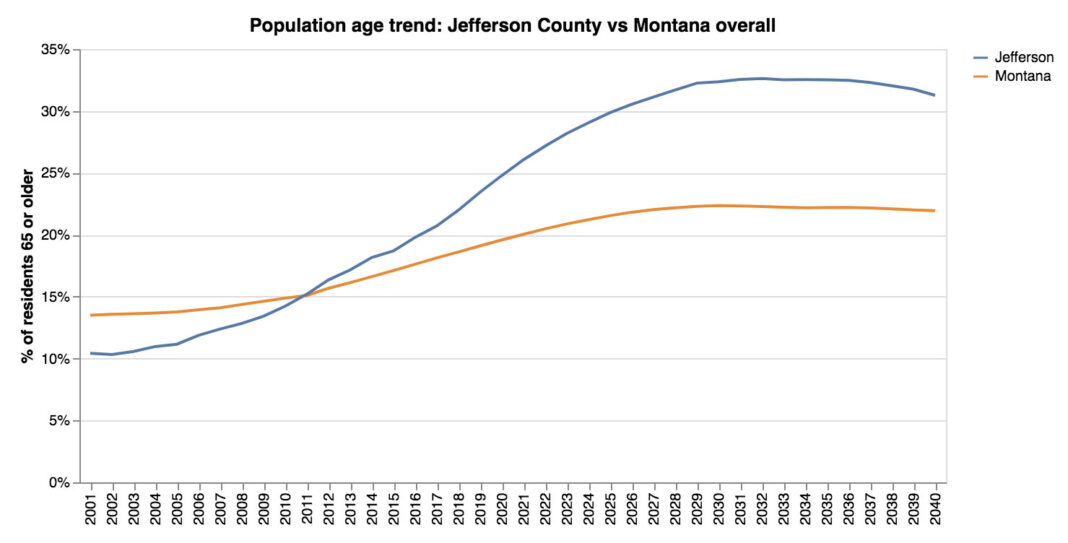
People have been parsing the human lifespan into a taxonomy of ages forever. Aristotle proposed three categories: youthful, prime of life, and elderly. Two thousand years later, Shakespeare’s Seven Ages of Man carved human chronology into seven slices, with the body’s final frailty circling back to the original oblivion of infancy. And in the 1980s, British historian Peter Laslett proposed a revised map of three ages, with a caveat for the third: it could be a time of post-retirement fulfillment and achievement, or it could collapse, a la Shakespeare, into dependence and decrepitude.
The character of any individual’s third age hinges on some key factors, including health, wealth, community, and the government policies and cultural customs that influence them. Navigating those factors requires independence, assistance, access, and education. The latter, especially, is lacking. Missoula Aging Services Executive Director Susan Kohler told a room full of Montana journalists in November that one of the biggest impediments to a fulfilling third age is “lack of preparedness.”
Get ready