

A few weeks ago, I described what I’ll call a belonging gap: Many Americans feel left out even in their own communities, a phenomenon that can weaken civic participation. (“Belonging and civic life in America,” June 19.) As we wrestle in Jefferson County with the question of how to engage and activate more citizens, I spoke recently with Julia Hotz, author of the new book, The Connection Cure: The Prescriptive Power of Movement, Nature, Art, Service and Belonging (Simon & Schuster). Here’s an edited version of our conversation.
Tell us about your book.
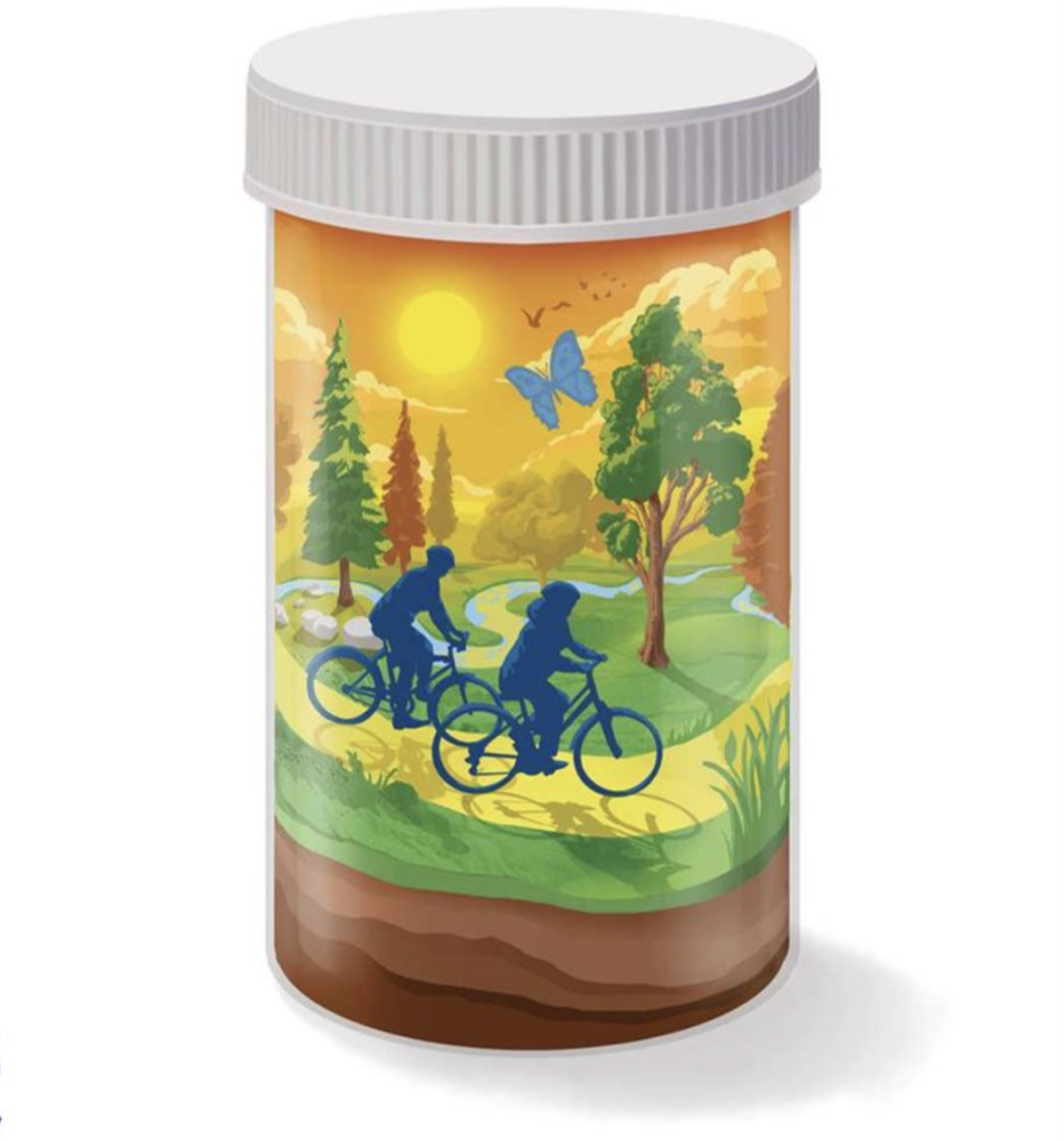
The Connection Cure describes something called social prescribing, a practice through which doctors, therapists and community health workers prescribe people tailored resources and activities — for more movement, nature, art, service and belonging — in the same way they prescribe pills and therapies. It’s being used to treat everything from depression to Type 2 diabetes, chronic pain, dementia, loneliness. And it can reduce pressures on the health care system itself: fewer doctor’s appointments, fewer hospitalizations, and lower costs. That’s one reason it’s being replicated now in 31 countries.
You make the distinction between the physical determinants of health and social determinants. Tell us what that means.
There are basic, physical resources that all of us need to get to be healthy: food, water, clean air, a safe house. But after that, people have psychological needs for joy and connection. They need to have people they can rely on in a crisis. They need to have a reason to wake up in the morning. And it’s through those psychological needs that social prescriptions for activities in our communities — like guided nature walks and art classes — can be powerful.
It’s an age-old idea: Indigenous wisdom, positive psychology, Eastern medicine, integrative medicine, holistic medicine all say that it feels really good when our environments are good. You know, nobody feels bad after a nature walk. People rarely feel worse after visiting a museum. But the idea of actually connecting this to health care, having it be through a literal prescription, is pretty new.
I’ve been writing about how people belong, or don’t, in their communities. You frame belonging as one of the determinants of connection. So first, what is the difference between belonging and connection?
Yeah, people hear “connection,” and they immediately think, oh, okay, so like, friendships, right? And that’s an element of it. But really, social prescribing is about everything in our environment that makes us feel more human, more in touch with ourselves. Some, like art, are pretty individual experiences. But belonging inherently requires other people, right? It comes from this idea that actually we evolved in groups. We all need confidants who affirm who we are, and that requires other people.
You focus a lot on the value of social prescriptions to the individual who is suffering. But what’s the impact on community health and civic function when we bring people into more productive connection?
I’ve been thinking about that a lot. It’s true that social prescriptions are ultimately for an individual. But a happy byproduct is that they actually do improve our civic health, just by a function of taking us out of our homes and our own heads and putting us in contact with other people and in our communities.
Movement, nature, art, service, belonging — all of these were once a daily staple of our lives, and those lives required us to be in community, to cooperate with one another. But there have been some very tempting forces that have replaced those things: Social media, the 24-hour news cycle, this culture that focuses on consumption when we’re feeling discomfort. Social prescriptions remove us from those forces — so instead of buying something or going on an angry Twitter rant, we can get out of that solitary environment and reconnect to the truest elements of the human experience.
There’s a great quote in your book: “The modern condition is mostly trying to do things on your own that people have historically achieved with a large support network and wondering why you’re tired all the time.”
Ha, right. I love a lot of modern conveniences, and I’d rather have that stuff. But we can live with more balance. Yes, we can have the conveniences of modern life, but let’s also remember that we are ultimately part of this modern world together.
I’m really interested in the Compassionate Contact Corps. Tell us about that.
I love this story. The Compassionate Contact Corps is a program started by the Department of Veteran Affairs, kind of by accident, when during Covid everything had to pivot to virtual services. The VA used to have a lot of in-person programming, and it couldn’t do that anymore. So it started calling veterans and asking how they were doing. And what came out was that a lot of them were tremendously lonely: Without in-person connections, a lot of them lost their only lifeline to meet other people.
So a guy named Prince Taylor said, what if we created a volunteer program in which volunteers check in on these isolated veterans? And then a psychologist, Laurie Murphy, said, yes, let’s do that — but let’s also make sure it’s going beyond just a standard check in — Hey, are you alive? — and use these as an opportunity to really form deep connections. So they created the Compassionate Contact Corps, which enlists volunteers to call veterans who identify as lonely for 60-minute phone calls once a week, helping to reduce feelings of loneliness.
You could imagine that idea being reproduced in all sorts of ways, including in rural communities.
I couldn’t agree more. Last week was National Loneliness Awareness Week, and there was a lot of well-meaning reporting on the importance of in-person groups and investing in real-life connections. But critics pointed out that, if you live in rural parts of the country and you don’t have a car, that’s a huge barrier to getting together. What I love about the Corps is that it anticipates that barrier.
Social prescriptions are made by professionals. But as individuals and community entities, how might we help people overcome the barriers to connection?
Social prescribing is so intuitive. But we need it to become part of our cultural vocabulary, that we can take social prescriptions the same way we take pills and therapies and that they don’t necessarily have to replace one another. I think it will help people get over that metaphorical ocean when we all, as a culture, start accepting these five things as forms of medicine.