
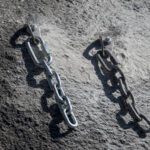
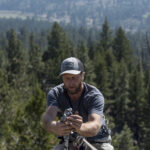
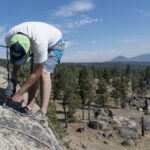
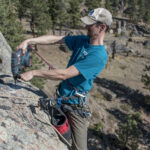
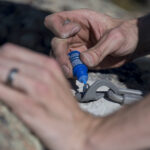
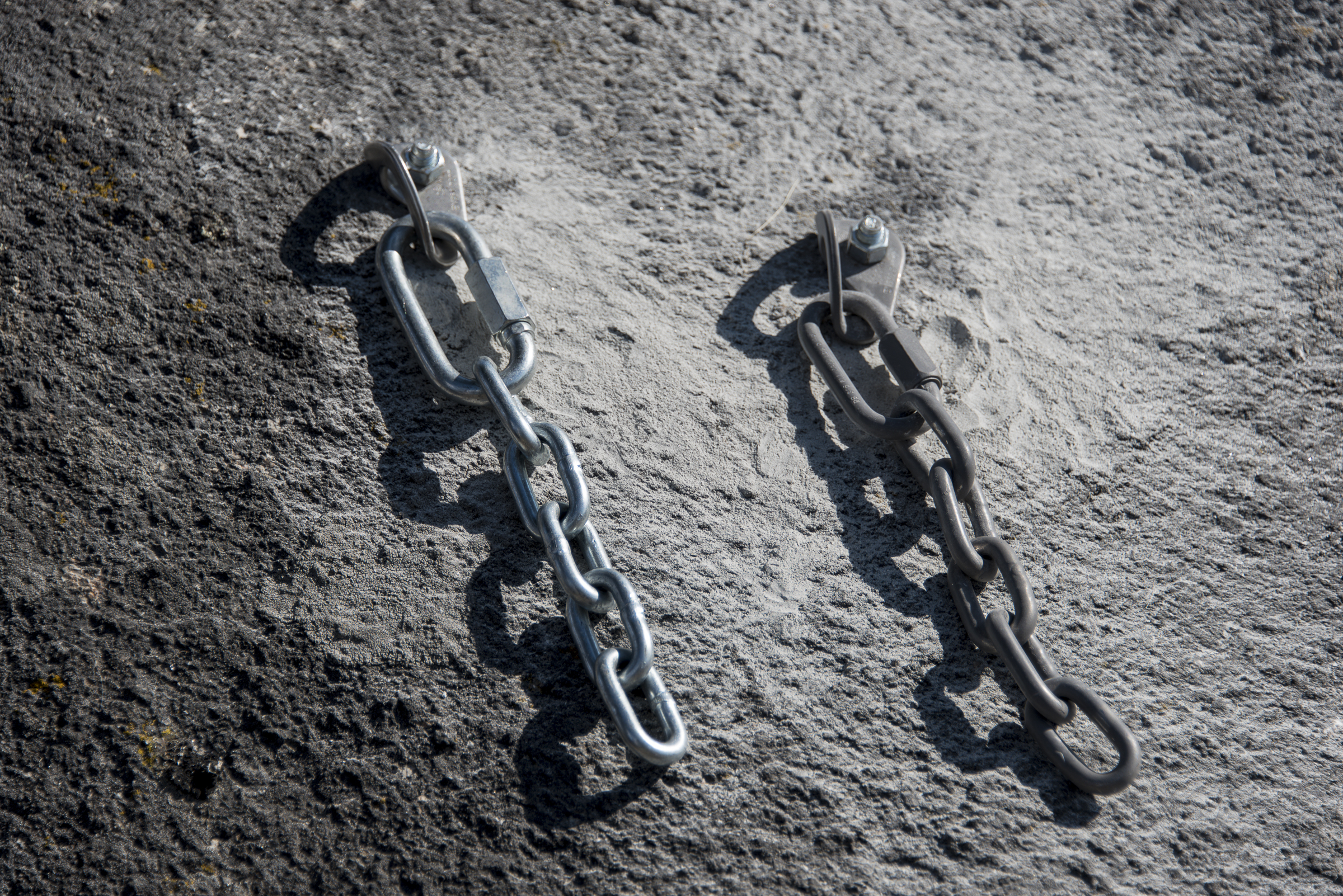
With about 50 feet of open air beneath him, Matt Goudreau leaned back into his climbing harness and rested his weight in it, pulling taut the rope that ran from his rappel device to an anchor tied above. His life depended on his harness, rappel device and rope—and the two steel anchor bolts in the rock above that the rope was attached to. Goudreau, 36, bent forward, gripping a powerful electric drill, and drove the bit into the rock, sending a cloud of beige dust into the air. Within an hour, two brand-new stainless steel bolts, with hangers and about 1 foot of chain each, comprised the anchor at the top of “School Daze,” a popular climbing route on Haystack Rock, near Clancy. A local family of four was quick to set up a rope and burn laps on the route, as work continued to replace the bolts atop an adjacent route.
From Spire Rock to Sheep Mountain, spanning Jefferson County from end to end and dotting the granite outcroppings that poke through the ground from the Boulder Batholith below, as many as 150 climbing routes attract local climbers and climbers from around southwest Montana. And almost all of those routes, according to Helena Climbers Coalition Board Member Dan Bachen, feature bolts of some sort—generally a pair of two bolts at the top, and often a series of bolts running vertically up the route, too. And all of those bolts, he said, will someday need replacing. Many already do.
“Like anything, fixed hardware degrades through time. A lot of the hardware that’s in place right now is steel that … might not be dangerous to use right this minute, but in the next 10 years, 20 years, might be less safe to use. The quality of the hardware is deteriorating,” Bachen said. “Besides things rusting, use can also degrade hardware. Folks, by virtue of climbing, that puts wear and tear on hardware.”
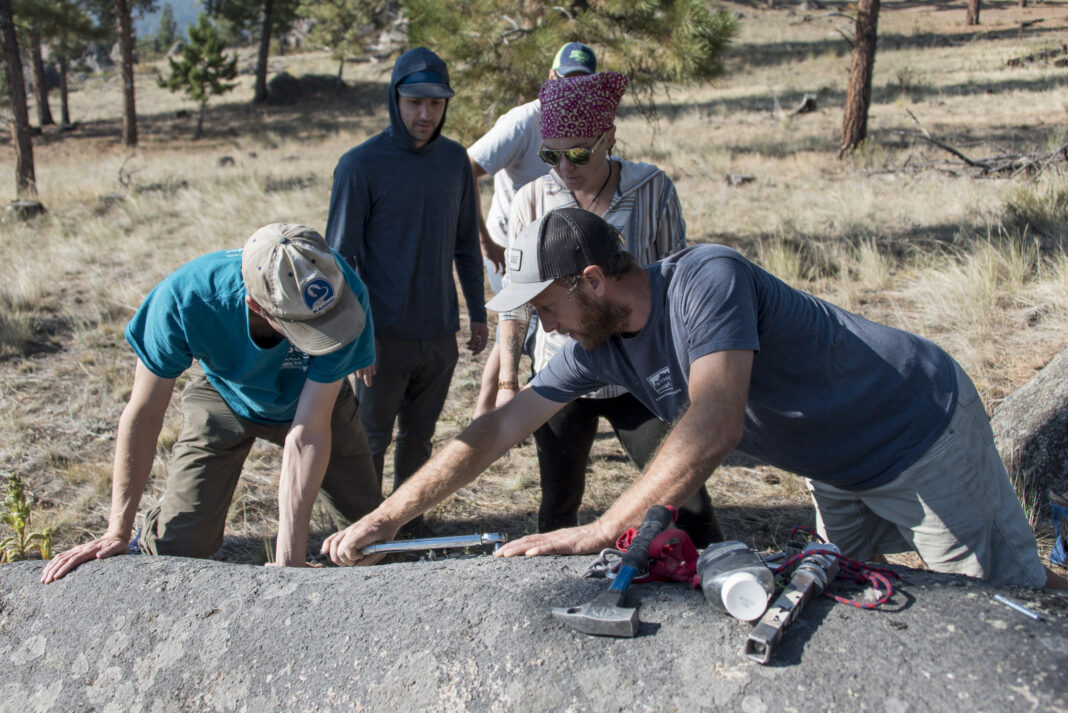
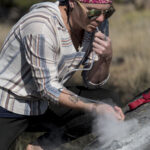
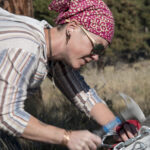
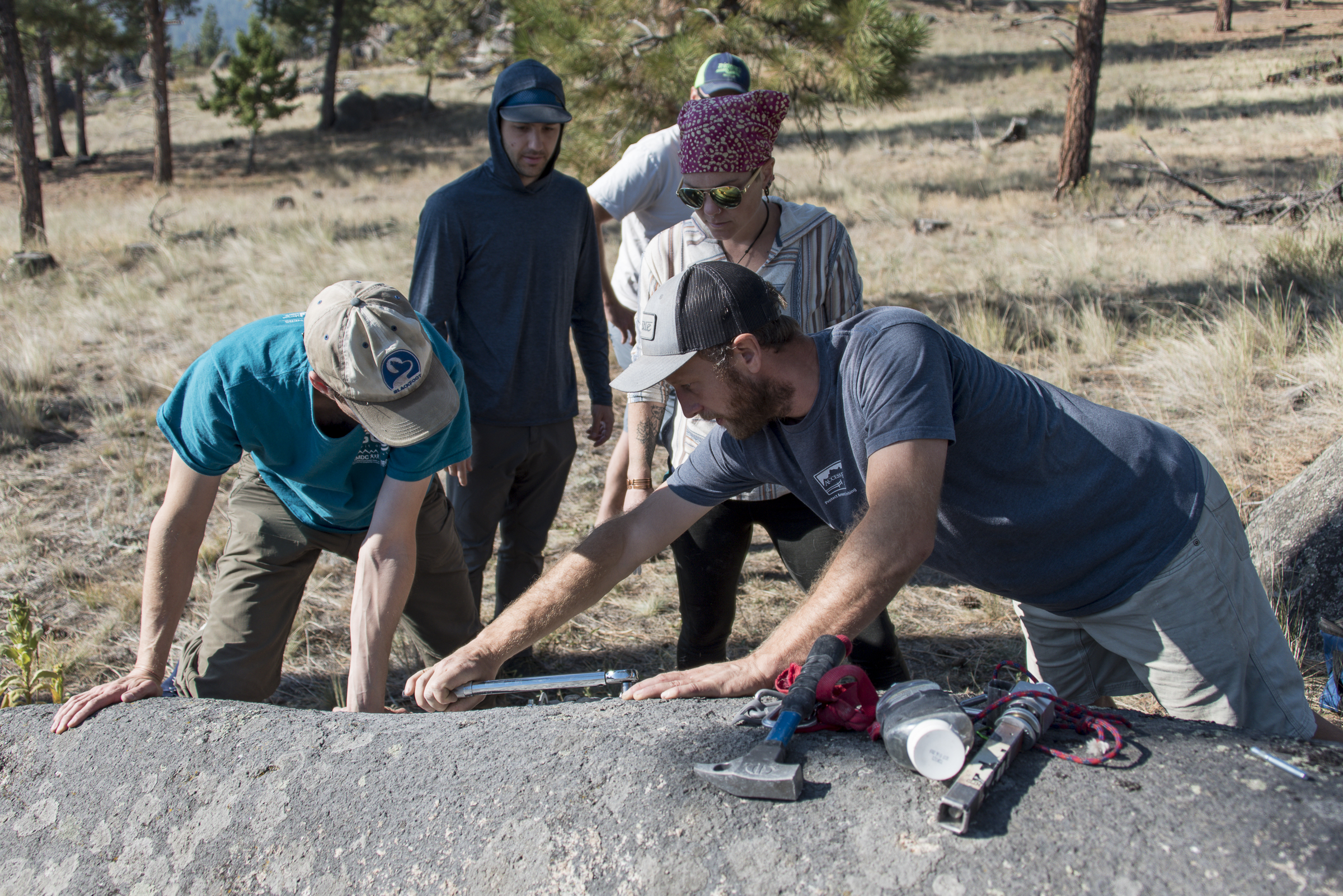
On Saturday, 36-year-old Bachen and a small group of local Helena climbers met at Haystack Rock on Sheep Mountain, about 2.6 miles northwest of Clancy, and Bachen, a wildlife biologist who sometimes rappels into caves to survey bat populations, taught the group how to maintain bolts, typically by removing old bolts and replacing them with new ones, reusing existing holes when possible and drilling new ones when necessary.
While some routes require climbers to place removable gear into cracks to protect them in case of a fall, many top-out with a bolted anchor. Some routes feature bolts along the way, allowing a climber to clip their rope to a bolt with a carabiner rather than placing gear, and others have top anchors that can be accessed by a hike or scramble, allowing for a rope to be affixed above without first ascending the route.
A lot of routes in the greater Helena area—there are as many as 500 of them—were established in the ’80s or ’90s, Bachen said, when bolt-intensive “sport climbing” exploded in popularity and thrust rock climbing into the relative mainstream of outdoor pursuits. Now, though, a lot of those original bolts are outdated or deteriorating, and with as many as a dozen or more bolts on some routes, there’s a lot of work to be done.
“It’s going to take a small army,” Bachen told the group, assembled around a waist-high boulder that would serve as a demonstration for bolt install and removal.
Climbing routes are almost always on public lands, and land-management agencies generally take a hands-off approach to establishing and maintaining routes, Bachen said, although some individual land managers occasionally manage or restrict the establishment of new routes in specific areas if they feel it impacts the environment or other land uses. Maintenance, however badly needed, is almost always performed by volunteers in what Bachen described as a jurisdictional “grey area.”
“In terms of maintenance, that’s an interesting question, because really there is no organization that is tasked with that, specifically,” Bachen said. “More recently there’s been this model of local climbing organizations that’s seemed to flourish in the past 10–15 years, and the Helena Climbers Coalition is one of those. All these local organizations can help play a role in that,” by performing work themselves or training and equipping volunteers. The roughly 4-year-old coalition, he said, often buys hardware with money from membership dues and grants, and makes an effort to equip local volunteers interested in performing maintenance.
Those volunteers need to get it right. If a bolt fails—or, more commonly, the rock in which it’s placed fails—the consequences can easily be debilitating injury or death.
“A bolt’s only as strong as the rock it’s in. These bolts probably won’t fail unless they’re placed in bad rock,” Bachen said. “There’s an art to it, and a lot of it is dictated by what the actual rock is.”
But how do you know?
First, tap the rock with a rock hammer: A sharp ping indicates solid rock, a hollow thunk indicates cracks or voids within. Pick a flat spot on solid rock and drill perpendicular to the surface, stopping halfway through to let the drill bit, usually three-eights inch, cool down. Then blow away the dust, ideally using a length of tubing (“silicosis is a real thing,” Bachen reminds the group). Next, hammer a specialized expanding wedge-style stud bolt into the hole, leaving about a half-inch exposed. Finally, place a hanger—a tab of steel drilled to fit over the bolt and featuring a loop for clipping carabiners—over the bolt and thread on a nut, tightened to about 20 inch-pounds of torque. Add thread-locking compound under the nut for extra security. A few links of chain, which aid in rigging a rope for rappelling, are often affixed to the pairs of bolts and hangers placed atop climbing routes, affording climbers a way back down.
Bolts and hangers should always be stainless, Bachen said, which often necessitates the removal of old non-stainless hardware. Chain, he said, is relatively replaceable and wears over time from rope—that can be less-expensive plated steel. Stainless wedge-style stud bolts used in hard rock cost about $1.50 apiece, he said, while more complex five-piece expanding bolts, often used in soft rock like sandstone, cost $8–$10 each.
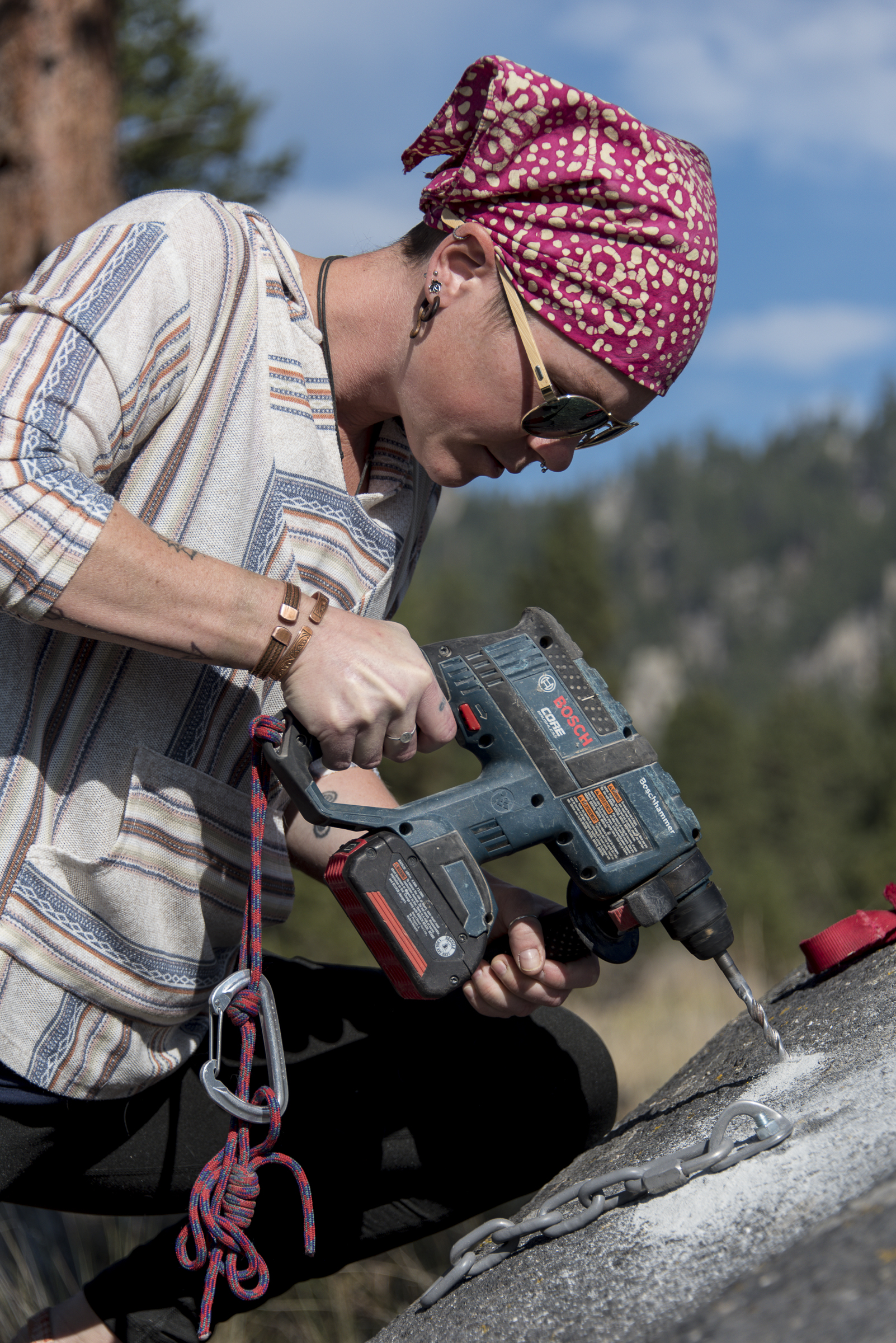
Bolt removal can be as simple as removing the nut and hanger, tapping the bolt a few threads deeper into the hole to disengage the wedge sleeve that expanded when the nut was initially tightened down, spinning the bolt in place with a drill to notch the wedge so it catches the sleeve instead of expanding it, and then extracting the bolt with a purpose-made tool.
If a bolt can’t be removed, or if a new bolt installed in a hole can’t be tightened to the proper torque, then it’s time to drill a fresh hole, ideally no closer than 4 inches from existing holes. Unused holes can be plugged with epoxy putty and covered with bits of gravel to maintain a natural appearance.
“This stuff’s not rocket surgery, it’s construction,” Bachen said. “When we do this work, we’re not looking to add bolts or change the nature of the route.”
Whether it’s an art or just basic construction, by spreading the knowledge of how to do it, Bachen hopes to “involve the broader climbing community, because we have so much work to address these routes. I think it allows folks to take ownership over the local crags. I think the place that belongs is in the local community.”
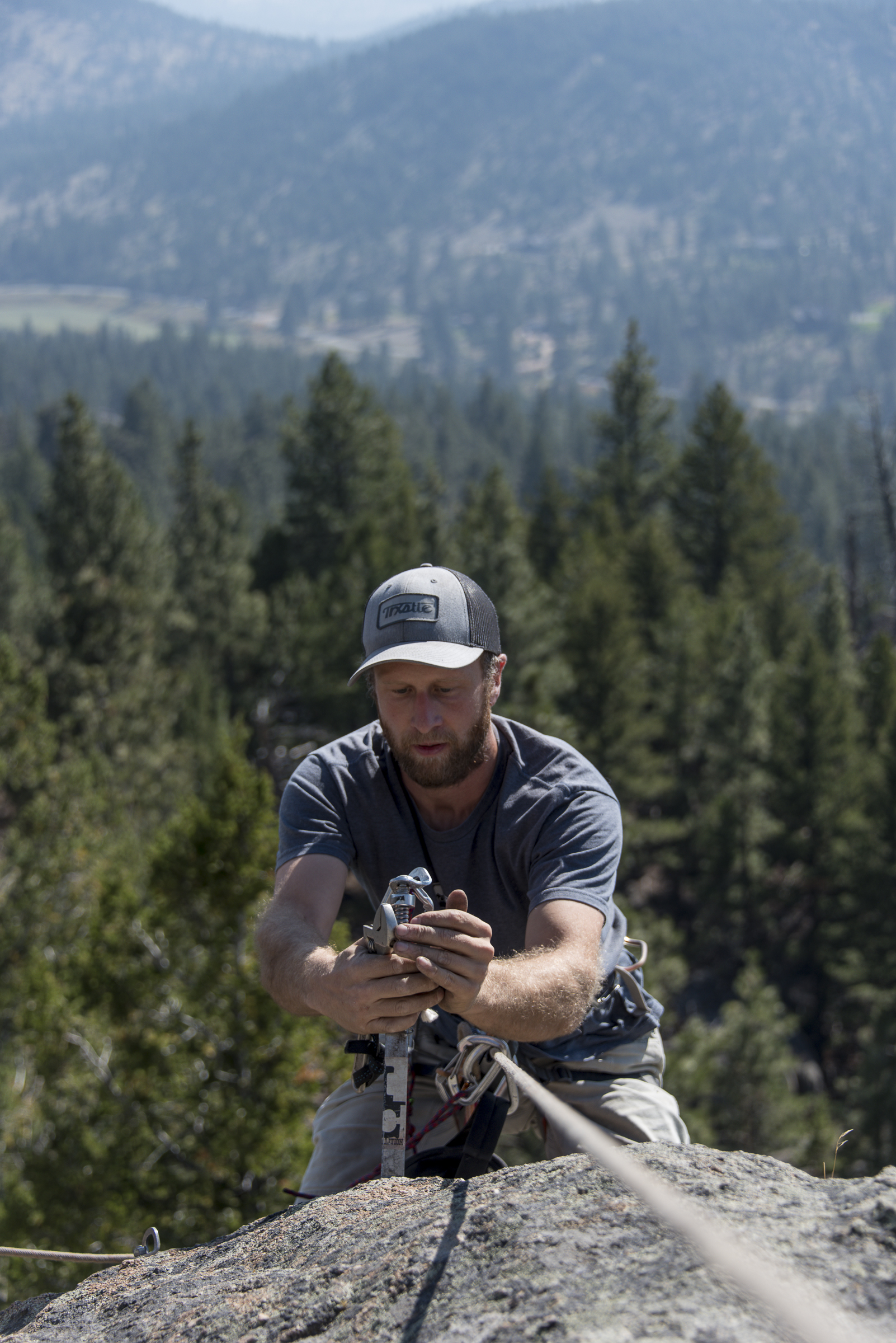
Goudreau, who works installing solar power systems around the area, said after the event that volunteer maintenance is “a way to give back to the community.”
He’s been climbing for more than a decade and usually ties into a rope a few times each month. He said he was surprised by the time and effort required to replace just a single bolt.
“We replaced four bolts and that took, how many hours?” he said.
Before the clinic, he hadn’t really thought about the installation or maintenance of bolts—”it was all the clinic,” he said.
But would he put his newfound skills to work in the future to maintain local hardware?
“Oh yeah, certainly.”