
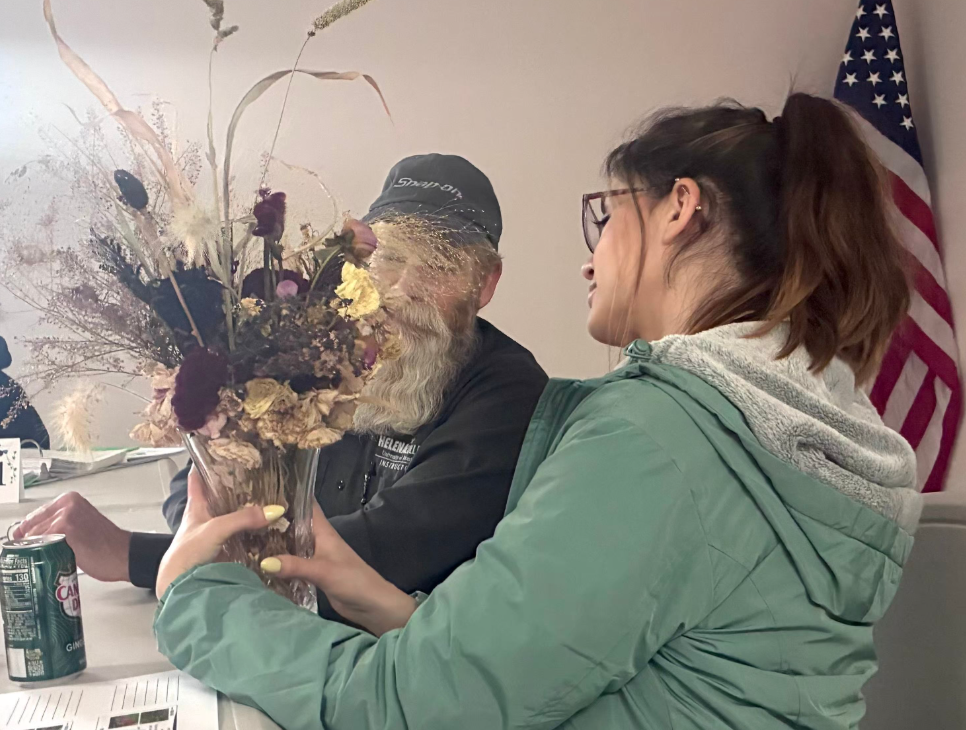
For their final class, 13 students from Jefferson and Madison counties gathered at Jefferson County Fairgrounds for Boulder resident and veteran gardener Keha McIlwaine’s presentation on home cultivation.
“Gardening is so dependent on where you live, even between [my neighbors] and I,” said McIlwaine, encouraging gardeners to experiment.
Montana State University Extension completed its 10-week, bi-county Master Gardener Program last week, with participants learning everything from handling common garden pests to proper pruning techniques and building a compost pile.
MSU Extension agents, plant professionals, and gardening volunteers provided instruction, with the March 24 gathering at the fairgrounds capping the program’s first year in Boulder.
“One thing I really like about this curriculum is that it meets the needs of the first-time gardener, it’s like 101 for [someone who] has never gardened before,” said Kaleena Miller, MSU Extension agent for Jefferson and Madison counties. “It also benefits people who have 30 years of experience – and they can still learn a lot too.”
To earn the master gardener designation, participants must pass an open-book test and complete 20 hours of community service and continuing education courses. However, students don’t need to become master gardeners to participate in the class.
In Miller’s experience, about half the students in the course go on to earn that designation, while the vast majority just apply their newfound knowledge to their own gardens. Most sign on mainly to improve their skills.
Clancy resident Alan Baris has been gardening for decades but figured he could learn some new things from the course. He has also signed up for gardening seminars in Helena. Boulder resident Erica Yakawich is more of a beginner.
“I started gardening a couple of years ago and realized I was terrible at it and I needed to take a class,” she admitted.
McIlwaine, who shares highlights from her own garden @gold.flint.flowers on Instagram, embraces community-supported agriculture, which encourages gardeners to reconnect with the origins of their vegetables and flowers and to develop a shared sense of responsibility.
She highlighted the best perennial and annual flowers for Montana. Drawing on her own experience, she also offered helpful tips, such as how to properly store narcissus bulbs over the winter and replant them in spring. These practical insights are what make the program so effective, according to Miller.
“Last week, for our pruning class, someone walked in never having held pruners and walked out of the class saying, ‘I did it. It’s not as hard as I thought,” she said. “And that was just one class. So that’s super gratifying because you’re removing those perceived barriers.”
Throughout her presentation, McIlwaine encouraged students to engage their neighbors and friends in their gardens by offering trades or sharing gardening tips. McIlwaine’s emphasis on community through gardening aligned with Miller’s vision.
These students “didn’t sign up so they can find other gardeners, but through the course and sharing with each other and getting to know each other, it comes out organically,” Miller said. “One of the most gratifying things for me is learning about friendships and gardening companionship post-course.”
That companionship was on full display at the final class. Yakawich has lived a couple of streets from McIlwaine for years and always admired her garden, but never felt brave enough to ask for tips. After watching McIlwaine’s presentation, she made a point to introduce herself.
“I walk by it all the time, and I’m like, ‘I want my garden to look like that’. I’ve been too afraid to just go knock on the door and be like, ‘Can you just tell me what you’re doing?’” Yakawich admitted. “So to have her come here and just talk about what she’s doing and her passion…I know I made a friend tonight.”
The Master Gardener Program has ended, but MSU Extension has other upcoming programs. This summer, its 4-H program will feature students from across the county showcasing their animal husbandry and agricultural skills. On April 3 in Whitehall, a workshop on judging lamb and goat markets aims to help 4H members understand how to assess and rank small ruminants.
Starting in September, Boulder will host the Big Sky, Big Leadership program for the first time in Jefferson County, as reported by The Monitor in December. The nine-month program will instruct participants on protecting themselves from burnout, working through workplace conflicts, and other issues essential for local leaders.