
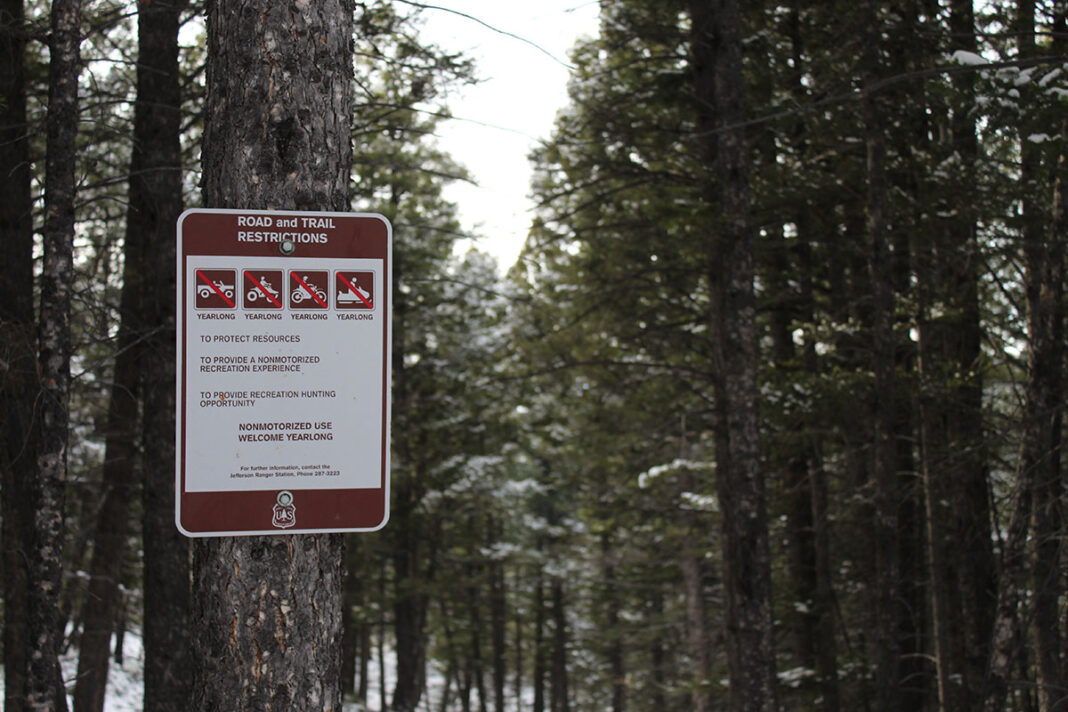
The Beaverhead-Deerlodge National Forest plans to re-engage its travel management plan for the forest — a portion of which lies within Jefferson County.
District Ranger Tim Lahey made the announcement at the Feb. 22 meeting of the Jefferson County Parks, Trails and Recreation Commission.
A travel management plan identifies areas open to motorized usage, as in what, where and when vehicles are allowed on the various roads, trails and areas in the national forest.
And with the exception of portions of the Madison Ranger District, the Beaverhead-Deerlodge National Forest lacks a travel management plan.
Maps do exist for the Gravelly Range and the Tobacco Root mountains.
In Jefferson County, that portion of the forest represents about 2,000 miles of road and 350 miles of trail.
The Commission last year sent a letter to Jefferson County Commissioners asking for support in getting the process started — one that requires public input.
“The commission is pleased to hear that the Forest Service has decided to take on this project,” said Commission chairperson Sue Kenyon.
The Commission wrote the letter to the Commissioners in December in response to increased usage of the forest in Jefferson County.
Lahey said the first step in the process is to brief the Forest Leadership Team as to what the Forest Service has and doesn’t have in terms of collected data, a brief synopsis of the planning history and a briefing on rules specific to travel management, which shapes the decision-making process.
“This is just the first step of many in the travel planning process. Following this step we will begin to engage with various public interests, user groups, local governments, etc.,” said Lahey in an email to The Monitor.
The collecting of data has begun due to the fact that the BDNF had started this process once before, according to BDNF spokesperson Catherine McRae.
Advantages of a travel management plan include access to maintenance funding, clearly defining roads and trails, providing a tool for enforcement and giving a map for emergency response.
And with the increase in the use of OHV (off-highway vehicles), the Forest Service has identified unmanaged recreation, especially from increased motor vehicle usage, as a major threat to forests and grassland in terms of erosion, watershed and habitat degradation, impacts to wildlife and cultural resources, as well as conflicts with other types of recreation.