
By DAVID LEPESKA
Editor
The U.S. Forest Service and Bureau of Land Management, which oversee more than half a million acres of Jefferson County, are undergoing organizational restructuring as wildfire and recreation seasons begin.
The BLM last week unveiled its new Wildland Fire Service (WFS), uniting the Interior Department’s previous six firefighting units in line with President Donald Trump’s June 2025 executive order to consolidate the federal government’s firefighting efforts.
“The Interior Department is committed to a holistic approach to addressing the nation’s wildfire crisis by balancing the effective wildfire response with pro-active efforts to reduce wildfire risk,” Aaron Thompson, head of the Northern Rockies for the WFS, told The Monitor.
“The Fire Service will work in close collaboration with Interior’s land management agencies to ensure fuels treatment, wildfire preservation strategies and post-fire recovery efforts continue to be fully in line with public land management goals,” he added.
When Thompson and other WFS officials updated Montana’s Environmental Quality Council on the new agency last week, several legislators questioned the logic of the overhaul, particularly given last year’s staffing cuts within the Interior Department.
“Frankly, everyone has a lot of serious questions about this new Wildland Fire Service,” said Sen. Willis Curdy of Missoula, who worked as a wildland firefighter for nearly 40 years.
He had “spent a lot of time and energy removing the kinks and improving the efficiency and movement and use of wildland firefighting resources,” Curdy added. “I want some real pinpoint examples of how this new system is actually going to be beneficial.”
The WFS unifies wildfire programs previously managed by the Bureau of Indian Affairs, the BLM, the National Park Service, U.S. Fish and Wildlife, Office of Aviation Services, and the Office of Wildland Fire in an effort to reduce role duplication and streamline communications, fire response and resource distribution.
“This unification is being implemented in deliberate phases to ensure continuity of operations and readiness for wildfire activity in 2026,” said Thompson, adding that the department’s firefighting capabilities remain fully in place, even as the WFS continues local hiring. “We’re looking right now at staffing out the geographic area firefighting organizations.”
As of early April, the hiring website USAJOBS listed 25 available wildland firefighter positions within the WFS and USFS. Yet this additional staffing is set to arrive amid broader cuts and concerns about employee morale at the Interior Department.
Last Thursday, the Interior Department announced another round of employee buyouts and early retirement offers, following the loss of about 20% of its workforce last year. The White House’s proposed budget for fiscal 2027, released last Friday, includes a nearly 13% funding cut for the Interior Department.
“2026 is shaping up to be one of the driest and most dangerous years for Western communities,” Aaron Weiss, the Center for Western Priorities’ deputy director, said in a statement. “This budget tells the people who do that work and live in the West that things are only going to get worse.”
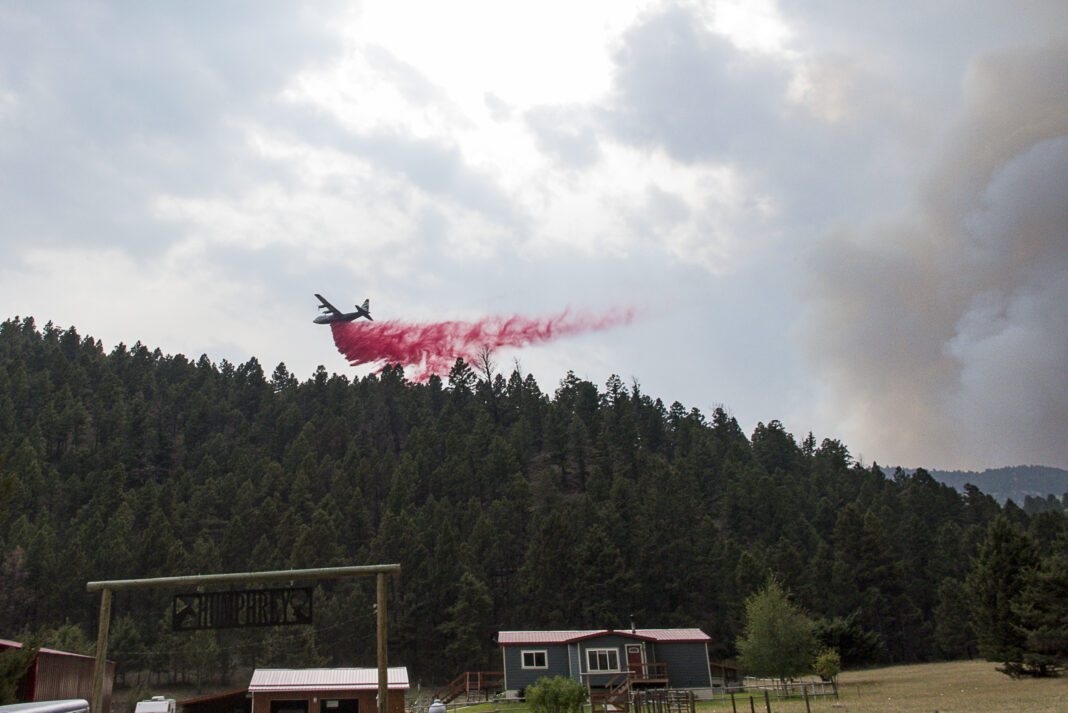
Since national forests come under the purview of the U.S. Department of Agriculture, Jefferson County and greater East Helena wildfires are often fought by USFS firefighters, in addition to state and local units. Yet with a combined 160,000 acres of BLM land, Jefferson and Lewis & Clark counties are likely to see WFS firefighters battling blazes in the coming months.
Thompson said the WFS is working to further align its wildland firefighting with the USFS through shared procurement, predictive services and research, and modern wildfire IT systems. At last week’s EQC meeting, Troy Heithecker, regional USFS forester for the Rocky Mountains region of the, noted that a feasibility study was underway to assess the possibility of moving USFS firefighting into the WFS.
For its part, the Forest Service last week announced a structural overhaul intended to bring key decision-makers closer to the forests and communities they serve. Most notable are the shifting of USFS headquarters from Washington, D.C. to Salt Lake City and the shutting of seven regional offices, which will be replaced by 15 state offices.
For Montana, the overhaul will mean the shutting down of Missoula’s Northern Region office and the Rocky Mountain Research Campus in Bozeman and the opening of a new state office in Helena. A USDA press release, which provided no timeline for completion, said the restructuring aims to save taxpayer dollars and make the USFS more “nimble, efficient [and] effective.”