
This month, I will be covering two topics – tree pruning and seed starting.
Tree pruning
Most tree species’ dormancy cycle is like a bell-shaped curve. They slowly go into dormancy, hit peak dormancy about now and then slowly come out. The initiation of that cycle and the conclusion are dependent on both temperature and the photo period. The temperature’s influence and variability are among the biggest challenges for our trees, especially deciduous species.
What does this have to do with pruning? In gardening and farming there are specific times for performing certain tasks – seeding, fertilizing, etc. The pruning window for most tree species is February through April — the downward side of the bell-shaped dormancy curve. With the exception of spring flowering shrubs, trees should be pruned just before spring. Spring flowering shrubs, such as lilacs, should be pruned soon after flowering to preserve the flower buds for the following year. Dead branches can be removed anytime. Pruning in the late summer, fall or early winter can cause winter dieback and desiccation in many tree species.
If tree pruning is on your to-do-list, and if you are looking to contract the work out, make sure you hire an International Society of Arborist (ISA)-certified arborist. Owning a chain saw does not make someone an arborist, and you shouldn’t be tempted to hire a “blow through town” company. Ask for credentials and about the insurance they carry.
If you are going to tackle your pruning yourself, here are somethings to keep in mind:
• Start with removing the “4 D’s”— branches that are dead, diseased, dying and damaged.
• Try not to remove more than 25 percent of the living canopy in one season – some pruning jobs may have to be done over a couple years.
• Leave collars — the folded tissue around the base of a branch — intact.
• Large branches should be removed with several cuts, not just one next to the main stem.
• Use only clean, sharp tools.
Seed starting
For me, the “winter blues” are the worst in January and February. I find that the simple process of planting seeds and watching them grow indoors while it is cold and snowy outdoors really helps.
Starting seeds in January may seem a bit premature, but now is the time to start several species indoors, so that when spring comes they will be mature enough to transplant outdoors and have a chance to mature in our short growing season.
Species that I recommend starting now include onions, shallots and leeks. Other species like tomatoes and peppers should wait until March or April. Species that are quick to germinate and grow fast like summer and winter squash should be started about four to six weeks before you plan to put them outside, which is about April or May for most of us.
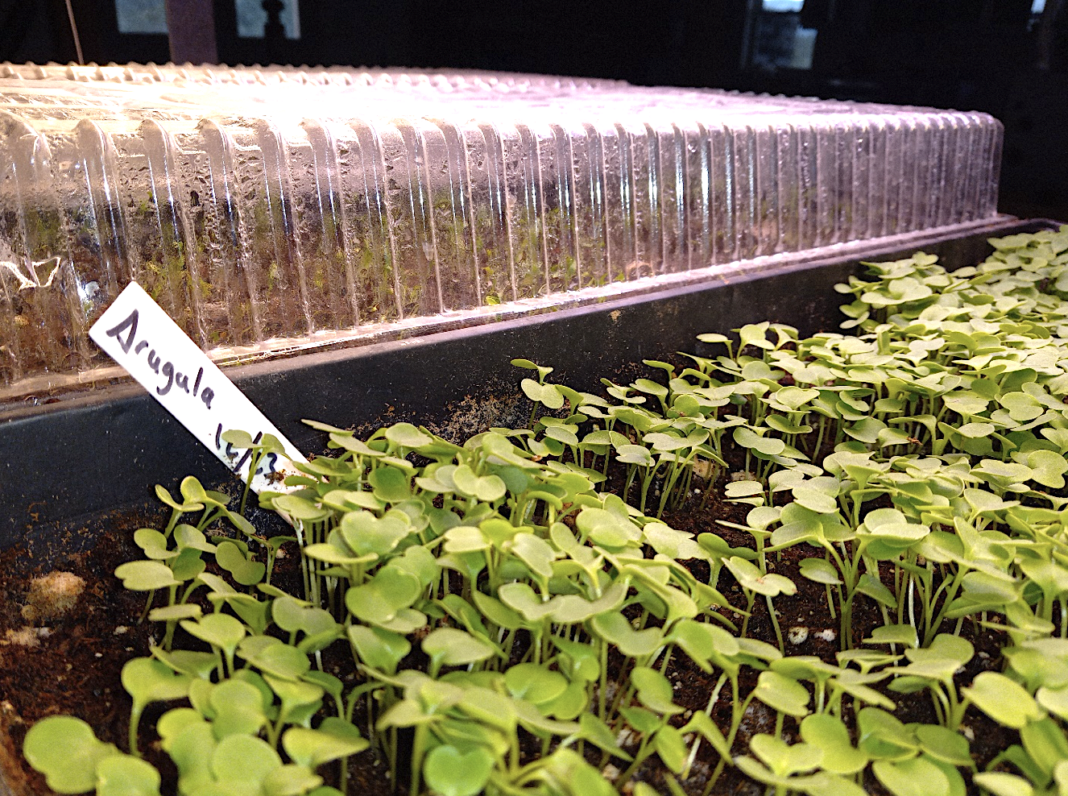
Start with a high-quality seed starting mix, which is primarily a fine peat moss mix. Keep up on the watering; when soil starts to pull away from the side of the pot, that is a good indicator that it is time to water. Simple plastic covers over the trays of pots help with germination and early growth, and should be slowly removed as the plants grow.
The biggest challenge to growing good starts indoors is lighting. A sunny south-facing window will not provide enough light; supplemental light is a must. If you have struggled with growing “leggy” plants, tall with few leaves, add more lighting and continually adjust the light so that it is only a few inches away from the plant as the plants grow.
Most commercial seed starting mixes have enough fertility in them to support plant growth for the first few weeks. After that, you will need to slowly introduce some fertilizer, usually through the water. Be careful not to overdo it, especially with nitrogen. Follow the instructions on the product, and make sure to alternate watering with fertilizer and without.
Another trick that helps grow sturdy plants is to use a small fan to blow across the plants or give your plants a daily shaking. This helps build stem strength, improving the plant’s stability. If you enjoy fresh, leafy greens and herbs, start a flat of them indoors and harvest them throughout the winter. Many of these herbs can then be transplanted outdoors later this spring.
Happy winter gardening and pruning!
Brent Sarchet, a certified International Society of Arboriculture (ISA) arborist certified crop advisor, runs Finn Creek Farm outside of Boulder with his wife Andrea. Ask him questions at bsarchet@gmail.com