Schools have been a crucible for many of the issues of the last year: The need to keep everyone safe from COVID-19 has been in tension with the mandate to educate and the desire for normalcy. Navigating that razor’s edge has been challenging for all – not least the young people whose senior year was shaped by crisis.
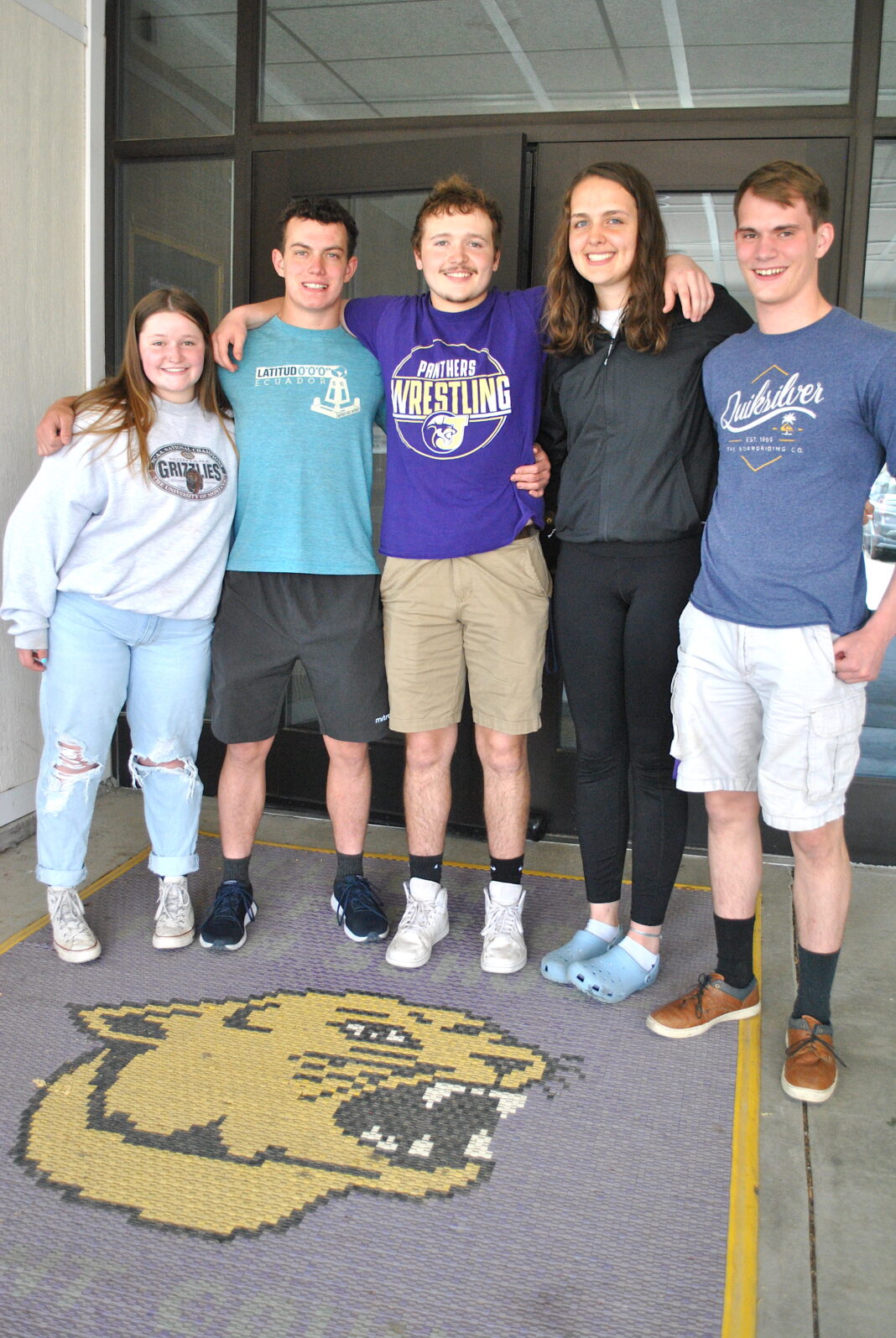
The Monitor met with five Jefferson High School seniors a week away from graduating: Harley Bailey, Miles Dodge, Derek Rasch, Rutger Shultz, and Abbie Youde. It was a group that reflected the tight connections of a small school, laughing at and with each other and finishing each other’s sentences. They spoke openly about the challenges of the last year; the politics of division; and their hopes for what comes next.
The interview has been edited for length and clarity.
The Monitor: You’ve had a year unlike any other graduating class in history. What was that like?
Derek: We sort of got cheated out of our senior year. For football, we couldn’t have watermelon Wednesday or jumping in the pool. We got half the time we usually had with classes. A lot of classes felt not as interactive or personal, which is part of the point of going to a small school.
Miles: It was pretty underwhelming. I’m not saying we didn’t have a great time, but a lot of the things seniors usually get to do — pep rally, macho volleyball, a lot of Homecoming stuff — got taken away from us.
Rutger: We didn’t have a say.
Miles: It just sort of…
Rutger: …sucked.
Abbie: We worked really hard to get as much of a senior year as possible, and a lot of it just fell through the cracks. We managed to get Senior Skip Day, but there was a different tone: We only had 20 kids come to Skip Day this year, out of 55.
Miles: It’s an energy thing. It just seems off. We’re all thankful we don’t have to do online; we get to be in school with our friends and the teachers. But it’s very different.
Abbie: It’s been really hard for the teachers. But it’s hard for students too. There’s a lot of anxiety you’re adding onto an already stressful year. This person is getting quarantined, or sports are canceled. Somebody sneezes and you think you’re going to miss two weeks.
Rutger: We had two out of district [football] games canceled at the beginning of the year. It was kind of a pain because we were doing all the practicing before, then we had to wait another two more weeks to play. It just seems to drag on.
Miles: That anxiety, it’s always in the back of your head that you can get shut down like we did last year. Especially since it’s senior year…
Abbie: …it’s your last chance.
Harley: There’s always this what-if.
Miles: I know the administration is struggling as much as we are. They want us to have a great senior year and be safe. It’s trying to find that balance.
Education, like many things this year, was politicized. In-person classes, or not? Masks, or not? Sports, or not? Did all that affect you?
Miles: It did, a lot. There’s been an argument about everything. I’m extremely grateful for the things we’ve gotten, but it definitely has an effect on you. That back and forth, trying to decide what’s best for the school, it weighs a lot on students.
Abbie: Especially for upperclassmen, you’re trying to figure out so much about your life, now there’s the added pressure of trying to figure out where you stand on all these questions, and being afraid of saying what you think. There’s a lot of judgement.
Harley: It’s a lot easier to make assumptions. If you forget to wear your mask, people just assume you’re an anti-masker.
Miles: It’s almost hard to share your opinion. People have their minds set one way or the other, and you don’t want to make enemies.
Harley: Especially today’s generation, we are so divided. You’re either here or here, there’s no in-between.
Derek: You get scrutinized.
Abbie: If you’re in the middle, it’s like, why aren’t you taking a stand?
Miles: And social media — TikTok, Snapchat, Instagram — has amplified that.
Abbie: You could tell when we came back to school in September, some people’s personalities had shifted. For some people, it was like, I don’t remember them being like that.
Derek: The self-isolation…
Abbie: I have a feeling that [while school was online] a lot of their interactions during the day came from social media. Instead of changing and adapting to your environment and the people you interact with, it became this self-centered ideal of, what can I do for myself?
Miles: In quarantine, a lot of people had to go through a lot of self-reflection. You’re just locked inside; that’s why we saw a change in classmates.
Harley: Students just start diverting, you’re not sure how they’re doing mentally.
Miles: It definitely allows people to isolate themselves more.
Tell me more about mental health. Has it become more of an issue?
Harley: It’s been a lot less talked about this year.
Abbie: The focus has been on COVID.
Miles: Because of the mood of the last year, everyone’s been down, so it’s harder to notice when people are struggling. Especially with online — you don’t get to build that connection, the relationships you usually have.
Harley: Teachers like Mr. McCauley watch every student every day. He picks up on problems. With online students, there’s no way to tell, unless students are really open to talking about their feelings with teachers – and high school kids aren’t that way.
Derek: Unless something big happens, kids aren’t open to check-ins, except with their closest friends.
Miles: We’ve been conditioned over past year to avoid people and keep our distance. So it’s been tough to get reads of people, to tell when people are down.
Derek: Especially with masks on. You can’t tell.
Abbie: I managed to walk through the halls after crying with a mask on. No one knew.
Harley: And a lot of students lack the self-confidence to share their emotions after being behind a screen for so long.
Can we move on to something more optimistic?
All: Yes! Please.
What are you looking forward to for next year?
Derek: Montana State is going back to in-person classes. I’m excited about that. They’re opening up the cafeteria.
Abbie: I’m headed to MSU Bozeman for nursing. I’m really looking forward to focusing on the subjects that interest me. An open campus, dorms are fully open; I’m very excited to meet more people.
Miles: I’m going to Wisconsin, to Carroll University. That’s going to be a huge change. We’ve all been waiting for this for a long time. It’s bittersweet: We’re going to miss each other, but it’s such a huge step in life that we’re ready to take. We’re just done with high school.
Abbie: When you get to senior year it starts to feel sort of long.
Harley: I’m going to head out to MSU Billings. I’m excited to be in a bigger city, and to get out and meet more people. I’m looking forward to figuring stuff out on my own.
Derek: That’s scary and exciting.
Abbie: Super exciting. I’m the youngest, the only one [of my siblings] left in the house. My parents are amazing, but it gets hard when you’re the only one left. Not only all the love is going in your direction, but also all the attention, and all the criticism — and all the chores.
Rutger: I’m going to Helena College. It’ll be a new experience, all the standards you have to meet. It’s going to be more work; you just have to stay on top of your classes.
And plans after that? What are you thinking?
Derek: I’m planning to be a veterinarian. I’m doing pre-vet, then med school.
Rutger: I’ll probably do my general, then go to Tech for electrical engineering.
Miles: I’m studying biology, so I want to do some sort of microbiology or wildlife biology.
Harley: I’ll take general studies, then go from there, see what interests me. My parents are hounding me: What are you going to do after college? I’m like, I don’t know, don’t worry about it. It’s on my mind all the time, but it’s not top priority.
You’re all moving from a small place to something bigger. Are you ready for that?
Derek: I’m ready to stop seeing only the same 30 or 40 people and make new friends.
Abbie: Ouch!
Miles: As much as I love these kids were graduating with, we’re all very excited to move on to something new. We’ve been in same little town for the past four years. I’m just ready to see more of the world.
All: Yeah.
That world has become very divided, politically and culturally. How do you feel about navigating that?
Miles: It’s definitely a lot to deal with. But a lot of our teachers have helped us realize that we need to not just take everything we hear as it is. You need to do your own research to form your own opinion.
Abbie: But it is scary that people’s judgement of you can be based on just a few things you believe. You can easily rub someone the wrong way very fast. It’s scary to see that happen in families too.
Harley: Whenever my brother comes home and politics come up, it’s a big argument. And I’m put in the middle. I’m like, you guys need to work this out.
Derek: I get that too. One of my siblings is Democrat and the others are Republican. At family dinners, it’s me and my sister-in-law, like, let’s try not to have them get into a political argument.
Abbie: You’d think that people could have open, healthy conversations. For some reason it always has to escalate into someone getting defensive.
Miles: Everyone takes politics very personally now.
Harley: In today’s world, everybody’s so hard-headed. Their skulls are so thick. No one seems to want to communicate, to listen to the other side.
Derek: My way or the highway.
Rutger: It’s a me me me society. We don’t want to put other people first; we just want to focus on ourselves. We want what we want, and we want it as fast as we can.
Miles: There has to be a point where you’re willing to change your mind. You have to be willing to accept that you’re wrong. It feels like that’s so out the window in today’s politics.
Harley: I’m totally fine if someone has an opposite view from me. For me it’s about understanding where they’re coming from.
Abbie: There’s a reason people think something. You have to put yourself in their shoes. Otherwise, there’s can never be understanding.
Miles: To go anywhere as a country, we need to find something that will unite us. In a weird, kind of roundabout way, COVID has helped with that.
OK, lightning round: Long term, hopeful or not hopeful?
All: Hopeful.
Abbie: There’s so much opportunity in front of a high school senior. How can you not be hopeful?
Miles: Especially after the year we’ve had. We’re all ready for something great.
Abbie: It can only go uphill.
Derek: We’ve hit rock bottom.