
As the news updates from central Texas grew increasingly horrifying over the Fourth of July weekend, I couldn’t help but worry that Jefferson County might soon face a similarly predictable tragedy. Allow me to explain.
After Kerr County, some 30 miles northwest of San Antonio, received a year’s worth of rain in four hours last Friday morning, the Guadalupe River experienced a massive surge that inundated several towns and a beloved century-old summer camp. By Saturday morning, reports said at least 25 people had died. By Sunday it was 50, and by Monday the death toll neared 100.
It’s already one of the U.S.’ deadliest natural disasters in recent memory, and reports suggest the federal staffing cuts made by the Trump Administration and its Department of Government Efficiency contributed to its impact. As The New York Times detailed a few days ago:
“The National Weather Service’s San Angelo office, which is responsible for some of the areas hit hardest by Friday’s flooding, was missing a senior hydrologist, staff forecaster and meteorologist in charge, according to Tom Fahy, the legislative director for the National Weather Service Employees Organization, the union that represents Weather Service workers.
“The Weather Service’s nearby San Antonio office, which covers other areas hit by the floods, also had significant vacancies, including a warning coordination meteorologist and science officer, Mr. Fahy said. Staff members in those positions are meant to work with local emergency managers to plan for floods, including when and how to warn local residents and help them evacuate.
“That office’s warning coordination meteorologist left on April 30, after taking the early retirement package the Trump administration used to reduce the number of federal employees…At both offices, the vacancy rate is roughly double what it was when Mr. Trump returned to the White House in January.”
In Jefferson County, the main natural disaster concern is of course not flooding, but wildfires. And as The Monitor reported in late May, with a 20% reduction in Forest Service staff at Helena-Lewis & Clark National Forest and a 40% decrease in fire-related workers, our county seems to face much the same risk as Kerr County faced a week ago.
In Texas, local services predicted rain but without the level of urgency and concern the situation would soon demand. Here in southwest Montana, the state has issued several warnings about what has thus far been a mostly dry and hot summer. And a few weeks ago, Jefferson County Emergency Coordinator Doug Dodge reminded residents of our shared responsibility in mitigating, preparing for, and responding to wildfires.
We’ve done what we can. Nobody’s neglected their duties or failed to do their job. But the question remains: When the time comes, will it be enough? When lightning sparks a fire outside Clancy, will first responders spread the word quickly enough to bring the wildfire response and evacuate locals? When campers in the Elkhorn Mountains start a late-night wildfire that’s raging by morning, are we sure HLCNF has adequate fire response to handle the problem?
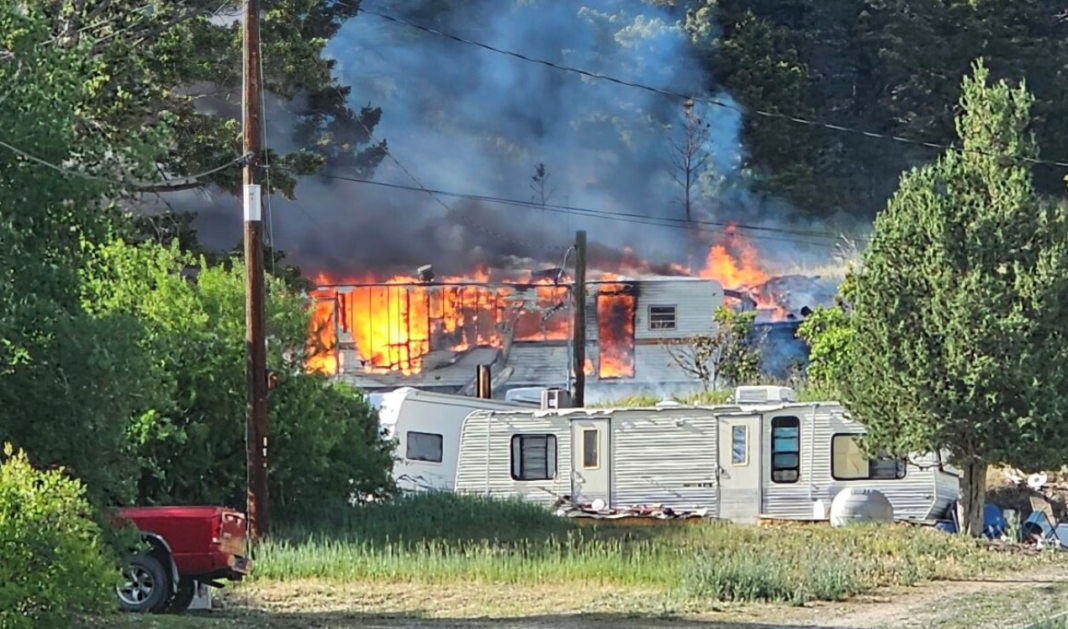
Just last week in Basin, residents responded quickly enough to a fireworks-sparked fire that it was extinguished after destroying just one mobile home. Yet even that little Basin fire required the involvement of five fire departments, plus staffers from nearby Beaverhead-Deerlodge National Forest – underscoring just how many hands are needed to ensure a robust response.
What if next time the neighbors aren’t home or the fire breaks out late at night? There’s no way to know for sure whether we’re adequately prepared, just like Kerr County. In that case, can we be absolutely sure that the high death toll was due to reduced federal staffing? We cannot. But we do know that more people would have helped, that the early warning system proved woefully inadequate, and that the good people of Kerr County deserved better.
Here’s hoping we don’t soon experience similarly dark days.


