
In a world where information is everywhere, it has become harder — not easier — to make fact-based decisions. Few topics illustrate this better than vaccines. The Centers for Disease Control and Prevention’s recent changes to national childhood vaccine recommendations have sparked concern among healthcare providers and confusion among parents.
Amid the turmoil, it’s easy to lose sight of a basic truth: vaccines are one of medicine’s greatest successes, and families are best served by guidance from healthcare providers focused on prevention.
In January 2026, following a brief review of how other countries administer vaccinations, federal officials stopped recommending several childhood vaccines, including for hepatitis A and B, COVID-19, rotavirus, influenza, meningococcal disease and RSV. These vaccines are now recommended only for high-risk individuals or through shared clinical decision-making.
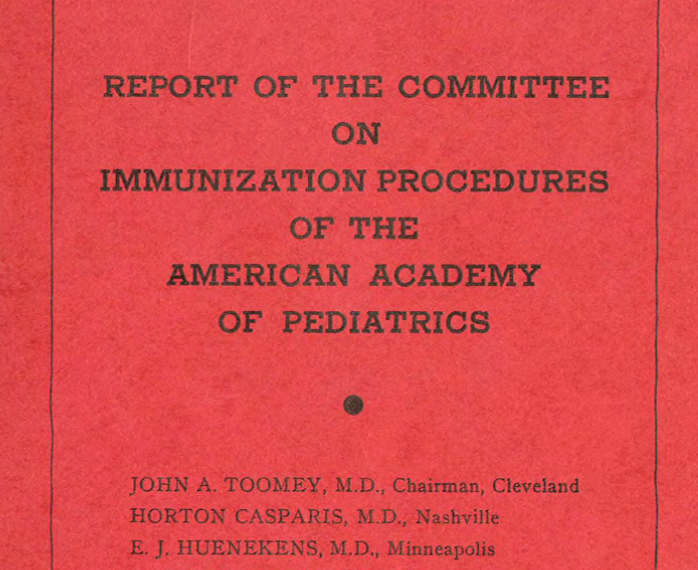
This shift is a change from the long-standing U.S. process, which carefully examined disease-specific risks, as well as the health effects on children and how our healthcare system works. The American Academy of Pediatrics (AAP) made the first vaccine recommendations for children in the late 1930s, and printed a booklet with vaccine guidance for pediatricians.
The 1938 publication had a red cover, which inspired its nickname, “The Red Book.” Since the first edition, the AAP Red Book has provided critical information about vaccines to prevent and treat diseases in children.
In the 1940s, the AAP led the first discussions and studies about the best timing for vaccines and the optimal number of child immunizations. As doctors learned more and other vaccines became available, recommendations evolved, and the vaccine schedule was updated.
In 1964, the AAP, the federal government, and public health partners agreed that children and families would be best served by a single, unified vaccine schedule. To support that goal, the Advisory Committee on Immunization Practices (ACIP) was created to independently review scientific evidence and recommend vaccines for children and adults.
For decades, the ACIP has carefully reviewed evidence-based research and made vaccine recommendations, which were approved by the CDC and endorsed by the American Academy of Pediatrics and other medical organizations. The schedule was reviewed every year and updated every February. Together, the medical associations, ACIP, and government agencies established a unified, science-based system that has protected generations of Americans.
Each vaccine is recommended to protect against a specific disease and is timed to shield children before they are likely to be exposed and when their immune systems can respond most effectively. These recommendations are not arbitrary or excessive—they reflect decades of careful study, real-world experience, and scientific review.
Every vaccine on the schedule plays a critical role in preventing serious illness. The dose, timing, and frequency have been proven to be safe and effective in providing protection. Yet on January 5, 2026, the CDC released a revised childhood immunization schedule that shifted several vaccines from routine use to shared clinical decision-making or high-risk categories.
The process departed from long-standing practice: the schedule was developed within the Department of Health and Human Services without the customary external advisory input. Since its release, no major healthcare professional organization has endorsed the new schedule.
The science hasn’t changed. These vaccines are still safe and effective at preventing serious illness and death. The American Academy of Pediatrics continues to stand behind the established childhood and adolescent immunization schedules—and, as it has for nearly 90 years, has issued its own recommendations. Those recommendations are grounded in decades of research, real-world experience, and one guiding principle: what best protects children.
Narrowing vaccine recommendations puts children—and entire communities—at risk. Sorting vaccines into categories like “for all children,” “for high-risk children,” or “based on shared decision-making” can give the mistaken impression that some vaccines are less important than others. The evidence is clear: vaccines have drastically reduced—and in some cases eliminated—diseases that once devastated communities.
While “shared clinical decision-making” may sound new, it’s worth remembering that the decision to vaccinate a child has always rested with families, guided by their healthcare providers. Parents receive a Vaccine Information Statement (VIS) before any vaccination, clearly outlining both risks and benefits.
Trusted healthcare professionals – physicians, nurses, and pharmacists—remain available to help families make informed decisions about vaccinating their children. For now, changes to the CDC vaccine schedule haven’t affected insurance coverage.
Families should still be able to get all recommended vaccines, and insurance companies have stated they plan to continue covering vaccines on the full schedule through 2026. Sadly, these federal changes could make it harder to get vaccines in certain places.
And when there is more than one category of vaccine recommendations instead of one clear standard, it’s easy for confusion to creep in—creating gaps in coverage that are a challenge to navigate.
Vaccines reflect the core purpose of modern medicine: preventing disease before it causes harm. Like seatbelts, clean water, and early treatment, vaccines protect children so illness never becomes an emergency. Choosing prevention is one of the clearest ways we show we care.
If you have questions about vaccines or recent changes in national recommendations, the next step is simple: talk with a trusted healthcare provider. They understand the science and share the same goal as every parent—healthy kids who can grow, learn, and thrive.
Pam Hanna is Jefferson County’s Public Health Supervisor, phanna@jeffersoncounty-mt.gov.