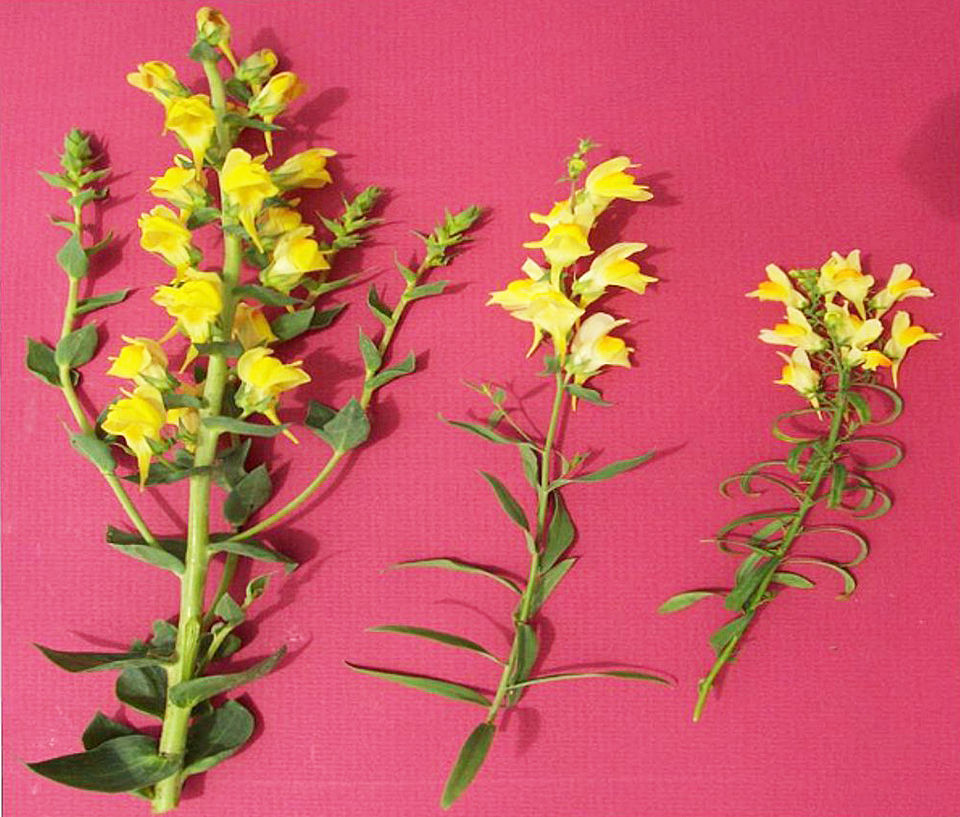
Dalmatian toadflax (Linaria dalmatica) and yellow toadflax (Linaria vulgaris) are two closely related state designated noxious weeds that were inadvertently brought over from Eurasia. Both damage farming, range lands and wildlands. They have yellow flowers that look like garden snapdragon flowers, which they are also closely related to.
We deal with one insect that eats Dalmatian toadflax. The insect is the Dalmatian toadflax stem mining weevil, Mecinus janthiniformis. We will be collecting these in the next week if you are interested in a release for your land. We have released many of these throughout Jefferson County and in the Helena area where there is much Dalmatian toadflax. The insect is slow-acting, and we are having variable success. This small, black, slim weevil is a strong flier and has dispersed from all the releases we all have made, to most of the northern half of Jefferson Co. and most of the Helena valley area.
We are involved in two insects for yellow toadflax. The first is also a small, slim, dark colored weevil called the yellow toadflax stem mining weevil (Mecinus janthinus). It is much like the Dalmatian stem weevil mentioned above (they are very closely related and almost impossible to tell apart by sight). We may have a very few releases available soon. We are also trying to grow a second species of insect called the yellow toadflax stem galling weevil (Rhinusa pilosa) in our insectary at Whitehall Schools in special insect cages. We are doing this in conjunction with the Bozeman Forestry Sciences Laboratory. This will be our first full year growing these so, we hope we can be successful and produce some for release. There are also several other insects that attack both yellow and Dalmatian toadflax, but I will not get into them in this article as they are almost everywhere, so we do not deal directly with them.