Jefferson County voters will decide this upcoming Tuesday, June 7, whether to impose two new permanent mill levies, or taxes, on property and whether to renew an existing levy.
One of the three proposals, for the Jefferson County Weed District, will ask voters to renew an existing levy at its current level, which would not increase the amount that property owners pay in taxes. The other two proposals—one from the Jefferson County Library System for expanded operations, and one proposed by the Animal Shelter and Care Committee for an animal shelter and associated services—would instate new levies in addition to current property tax levels.
Another mill levy proposal will appear on the general election ballot in November: A five-year mill levy funding the Jefferson County Public Health Department is set to expire at the end of this year, and a proposal to renew it would need to appear on the general election ballot—and then pass—to maintain funding.
The primary election is being conducted by in-person voting at polling places on June 7.
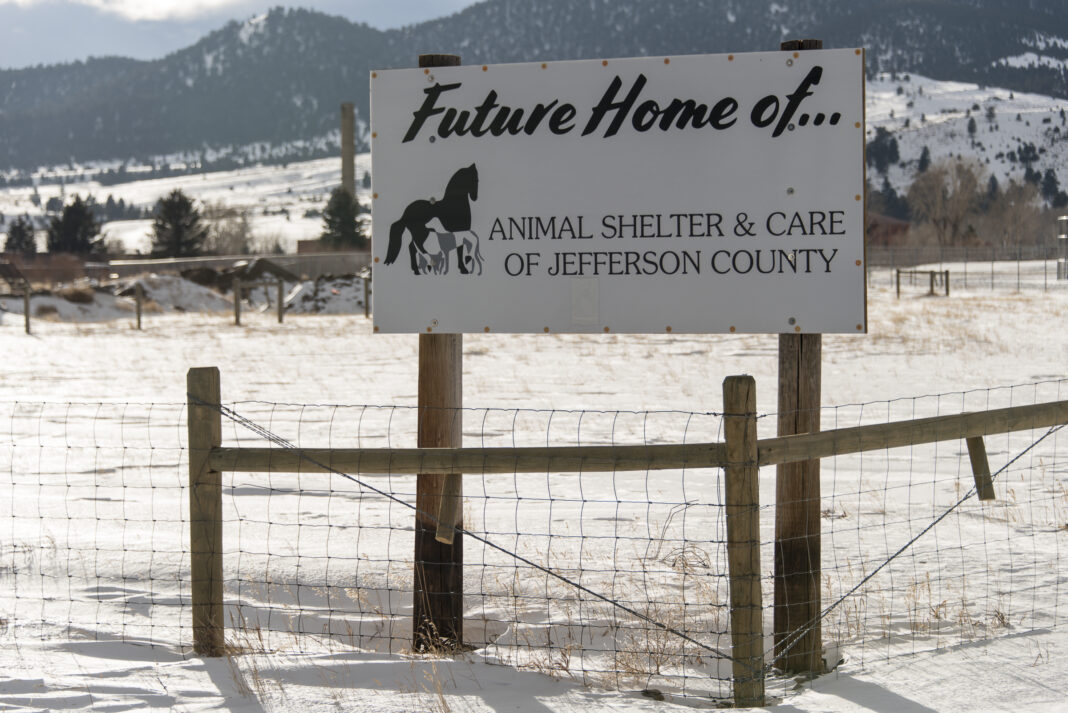
Animal shelter levy
The animal shelter mill levy proposal would, if passed, impose a new and permanent additional tax on property in Jefferson County. A similar proposal on the 2020 primary ballot failed by 38 votes. At a public forum hosted by The Monitor on May 4, members of the public who questioned levy supporters were mostly skeptical of the proposal’s price tag, although many agreed with levy supporters that the services their proposal aims to provide are sorely needed.
According to the resolution that placed the proposal on the ballot, if passed, the funds generated by the mill levy would go toward constructing “a nonprofit animal shelter facility in Jefferson County, Montana, for the sheltering of lost or unwanted animals, the quarantine of animals ordered to be quarantine by court order, fostering and adoption of the animals in Jefferson County for the welfare and protection of the animals and citizens of Jefferson County.” Funds would also go toward the ongoing operation and expenses of an animal shelter once it is established, as well as the continuation of a spay and neuter program, microchipping, vaccine clinics, and other services that are currently offered by the Animal Shelter and Care Committee of Jefferson County. The county wouldn’t directly construct or operate the shelter—rather, the levy would fund a contract with a nonprofit organization that would build a shelter and provide services.
The levy, if passed, is projected to raise $291,952 annually. Taxes for a $100,000 property would increase by $12.15 annually; taxes on a $200,000 property would increase by $24.30 annually; and taxes on a $300,000 property would increase by $36.45 annually, according to county estimates.
About 140 animals are picked up in Jefferson County each year, according to the committee, and some end up going to the Lewis & Clark Humane Society in Helena, which charges the county $125 per animal, although that facility takes some animals from the county for free. Cheryl Haassakker, who heads the committee, told the commission on Jan. 25 that the county currently pays the Lewis & Clark shelter about $3,000 to $5,000 each year for animals taken there.
In interviews with The Monitor, Haassakker stressed that mill levy funds wouldn’t automatically flow to her organization—if passed, the county would take bids from any interested group, such as other animal shelter nonprofits, to provide services, meaning that the Animal Shelter and Care Committee would have to compete to be selected.
The committee envisions an annual budget of $353,720 supporting a facility with 20 dog kennel runs, an activity and clinic recovery room, space that could be used by a visiting veterinarian, a 42-cat cattery, a community cat lounge and a cat isolation room, and additional room to continue community programs, along with pet boarding, microchipping, personalized collar tags, and training programs for pet owners and prospective pet owners. The facility could cost upward of about $715,000 to construct.
The committee projects that payroll would cost $181,485 annually across three full-time and three-part time employees. Additional costs include annual facility expenses of $45,235, which Haassakker said included debt service on the construction of a shelter, as well as upkeep and taxes. The budget also listed annual expenditures of $15,000 for office expenses, $50,000 for veterinary services, $40,000 for animal care, $3,000 for euthanasia, $8,000 for spay and neuter programs, and $11,000 for miscellaneous expenses.
The committee says that the $291,952 annually from the mill levy would fund most of the facility’s budget, but whoever ends up building and operating the facility—should the levy pass and a shelter be built to the committee’s plans—would need to fundraise to cover the remaining amount to cover the total 353,720 annual budget. The committee’s plans listed a total of $83,720 in annual revenue beyond the levy: $15,620 from “grants, donations and fundraising;” $9,600 from boarding and reclaiming fees; $16,700 from impound fees; $37,000 from adoption fees; and $4,800 from “miscellaneous fees and services.” That would give the facility a $21,952 annual surplus.
At the forum, Dan Hagerty, a candidate for County Commission, said that “it seems like an awful lot of money,” especially compared to the 4 Paws Rescue operation in Cardwell. “Had you ever thought of starting out small?”
Lower Boulder Valley resident Bob Sims also brought up 4 Paws, noting their smaller scale. Considering the county’s current expense for stray animals, he observed, “we’re going from $5,000 to a quarter of a million.”
As many in the public argued that it didn’t make sense to raise taxes to spend $291,952 annually for services currently accomplished for a few thousand dollars, Jeanie Thiel, seated in the public, countered that the proposal would provide far more services, and at a greater scale, than what the county currently accomplishes.
“We have to remember we’re going from $5,000 doing nothing,” she said. “That’s not really replacing one program with the same program.”
The downside if the levy doesn’t pass, she said, “is that the program won’t happen. We won’t have animal control.”
If that’s the case and the levy fails again, committee member Vickie Cordeiro said, “then we’ll keep volunteering, keep fundraising and trying to do it ourselves … it may take years and years, but we’ll get there.”
Library levy
The other proposed permanent mill levy—six mills to fund increased operations in the Jefferson County Library System—is for far less money and would bolster existing facilities.
The levy would generate an estimated $92,508 annually and would support expanded hours of operation, expanded services and programming, an increased digital and physical collection within the system, and expanded “informational and educational opportunities for preschoolers, children, youth and adults in operating and researching on a variety of digital platforms.” If passed, the levy would increase taxes on a $50,000 property by $4.05 annually; taxes for a $100,000 property would increase by $8.10 and taxes for a $200,000 property would increase by $16.20, according to county estimates.
At the forum, Jackie Thiel explained the proposal to the public and said that the levy, if passed, would help continue to pay for some staffing expansions that are currently in place but are paid for with money the county receives from the federal government in lieu of property taxes on federal lands.
The library system needs increased funding because of increased use, she said, citing figures that show “there is proof that, in Jefferson County, at least, people still go to the library.”
The system now sees 80,000 annual visits, she said—double its traffic in 2004, when the system last requested a levy. The system now offers 400 children’s programs, up from 90, and 300 young-adult and 700 adult programs, she said. Nearly 70,000 items were checked out systemwide last year, and the system now offers 15 mobile internet hotspots available for checkout “at no cost to you,” she said. The number of patrol computers systemwide increased from 13 in 2004 to 38 currently.
But even the system’s existing services could be in jeopardy. Thiel explained that “the value of a mill has been decreased by about $10,000 per mill,” and the the district hasn’t asked for more mills since 2004, meaning its budget has decreased as revenue drops. The county had to use federal dollars to fund salary increases, she said.
“It’s increasing the things that people can check out as well as the services we can provide,” she said. “We have to stay fairly current with technology.”
Weed control levy
Voters will also decide whether to renew the weed levy for another three years. The levy is already in place; voters are being asked whether they want to continue it.
The levy is estimated to generate about $97,317 annually. About $64,878 of that “will be used to support the county-wide herbicide cost-share program allowing county residents and landowners to acquire herbicides at a reduced costs (sic) and provide some reimbursement of other herbicide costs.” The remaining $32,539 would be used for weed control in public spaces, educational programs encouraging land stewardship, assistance for residents to acquire applicator licenses, and to research and address “specific location and weed problems,” according to the resolution.
If passed, the proposal would renew the existing levy for three years with no increased cost to property owners. The levy currently costs $4.05 in taxes annually for a $100,000 property, $8.10 for a $200,000 property and $12.15 for a $300,000 property.