
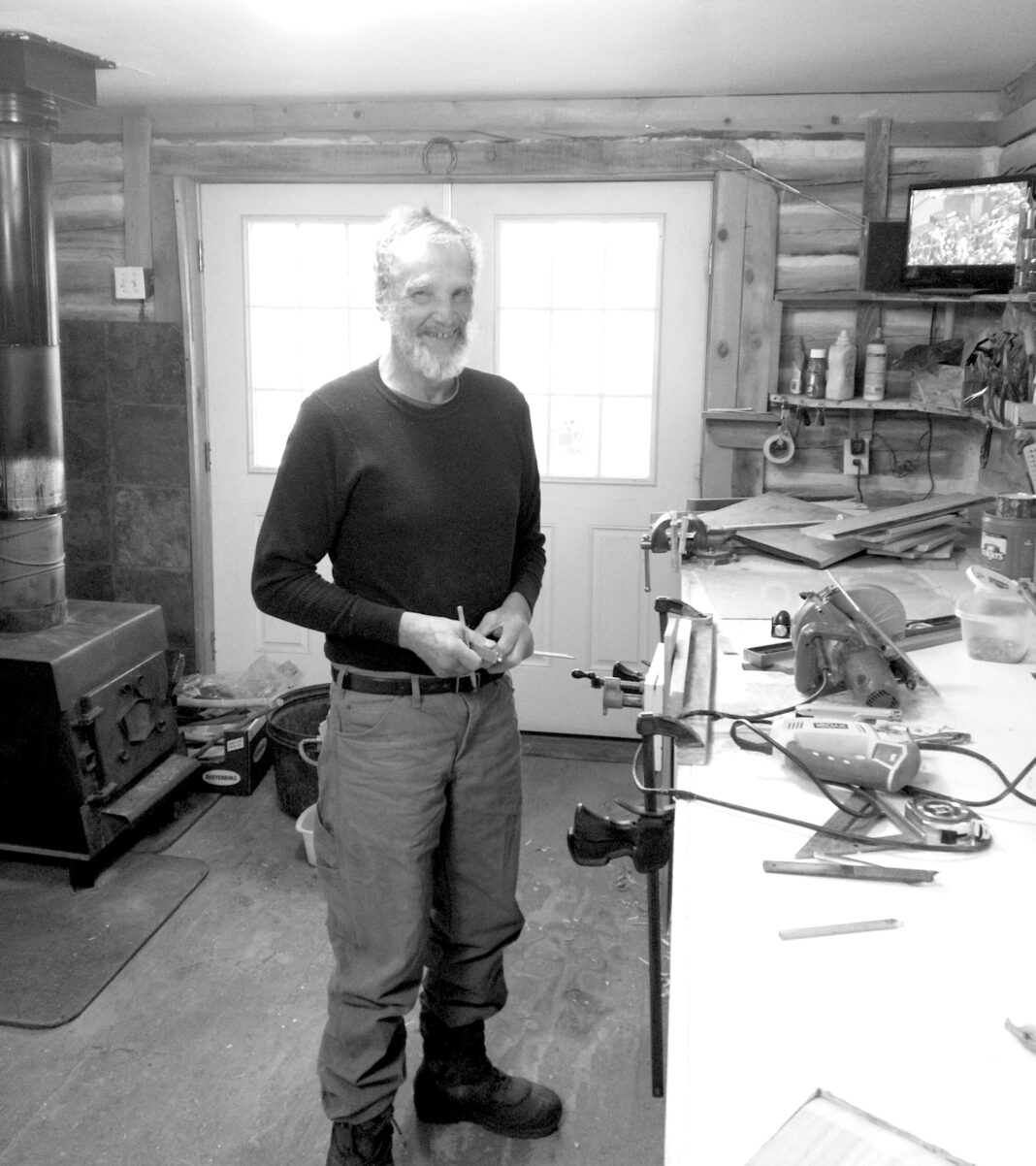
My father never quite understood how I could live in New York City. He always preferred Montana, open rather than dense, prairie rather than concrete. Great Falls was his birthplace, and later he stayed in Carter and Plains, before living his last years in Boulder. If he could have, he would have kept close to the Missouri River at all times. Before he passed last July, he asked us to mark the end of his life at the put-in by the Wolf Creek Bridge, cool waters swishing gently past lush green fields.
I have traveled to Boulder three times a year for the past ten years. I won’t claim to know the people there well. But I know they helped keep my father alive. The L&P Grocery and the Elkhorn Pharmacy fed him and kept his medication up to date. Neighbors looked for smoke from the chimney and called if there was none. The little grid of downtown streets made it safe for him to poke along in his old truck.
But we owe his life not just to this small town and the care of his dear sister. I am a historian who studies public policy in the U.S. I know that the United States federal government kept my father alive. With President Trump in office and Elon Musk empowered to take a chainsaw to “waste, fraud, and abuse,” I want to point out how government services made my dad’s life possible.
First, federal investment in cancer research gave him a decade of life beyond his 2014 diagnosis of metastatic prostate cancer. Specifically, Xtandi/enzalutamide slowed the cancer’s growth without too much discomfort. 99 percent of all drugs depend on federally-funded research. I’m not a scientist, so I can’t trace the exact connections, but the National Institutes of Health’s database shows hundreds of projects totaling $270 million of federal investment into prostate cancer research. Since inauguration, President Trump has frozen or cut many parts of scientific research funding. On Apr. 4, a federal court issued an injunction against some cuts at the NIH – but the attack on our federal research infrastructure continues. People with cancers like my fathers, and so many other health conditions, are now more likely to die.
Second, my father was proud of a few things – his children, the modest but beautiful houses he built by hand, two of them in Boulder. And his work as an air traffic controller. He told us many stories about his years at the Federal Aviation Administration. How demanding it was, how small the margins of error were. It was work done in quiet but sacred trust. President Trump’s attacks on the FAA would have sickened and dispirited my dad. Elon Musk’s push to profit off the agency by making them a Starlink client, or the President’s attempt to score political points off the deadly crash days after he took office: neither show the seriousness that this kind of work – and all air passengers – deserve. I think it is a mercy that my father can’t hear his work defamed, the pride that sustained him undermined.
He was deeply proud, also, that his three children were able to graduate from college – something that never happened for him. He, and we, depended on federal student loans to supplement what he scraped together to pay for our college tuition. A few weeks ago President Trump signed an executive order in favor of closing the federal Department of Education. The Department of Education channels funds to school districts around the country through programs like Title I (for students living in poverty) and the IDEA (for students with disabilities). It also administers financial aid for college students and their families. Closing the Department is beyond the scope of the president’s powers – Congress has to vote to close a Department that Congress established. But the threats to the agency, combined with massive layoffs, create great uncertainty about whether parents today can rely on the student loan programs that changed my, and my siblings’, lives for the better and made it possible for my father to beam with pride at graduation ceremonies.
And third, although his spartan lifestyle let him build up some savings, my father depended on his monthly deposits from the Social Security Administration – for the disability that led him to leave the FAA, and for his retirement. He checked the bank statements each month, and sat easier in his beloved recliner afterward. As he got older, and understandably more confused with paperwork, he’d sometimes have difficulty figuring out exactly where the money was. A spike of anxiety would interrupt his usually placid mode. I can only imagine how he would feel had he seen news reports of massive layoffs at the Social Security Administration, or heard of un-vetted staffers at the Department of Government Efficiency accessing databases containing his information. How furious he would be if he saw the world’s richest man treat so callously that which he and so many others needed to live.
My dad was a distinctive person. He never signed up for cable news, and hated the cell phone I bought for him. He took hours planing a piece of scrap wood to fit some job rather than spend a few dollars on a new piece. He was fiercely independent. He nodded along appreciatively at stories of government bloat or overreach. I bet he voted Republican more than Democrat.
But he also knew that he depended on others. Like all of us do. Some of those we depend on are in our town or the other end of the valley. Many others are workers at an acronym agency: OPM or NSF or SSA. They are distant, but their work is a tributary that twists and flows to the main stream, our lifeline.
I don’t know if news of the Trump administration would have overcome my father’s lifelong aversion to politics. He voted but never rallied or displayed yard signs. But we can do more. We can demand that those we send to Washington ensure that the federal government we pay for with our tax dollars does what we depend on it to do. We can see beyond the bluster, knowing that our lives are not short-term cost savings. We can insist our representatives use their considerable power to stop the heedless destruction that President Trump embraces. If not, people like my dad will be hurt, with less life to live along the river.
Ansley T. Erickson, a descendant of three generations of Montanans, is an associate professor of history and education at Columbia University. She lives in New York City.