
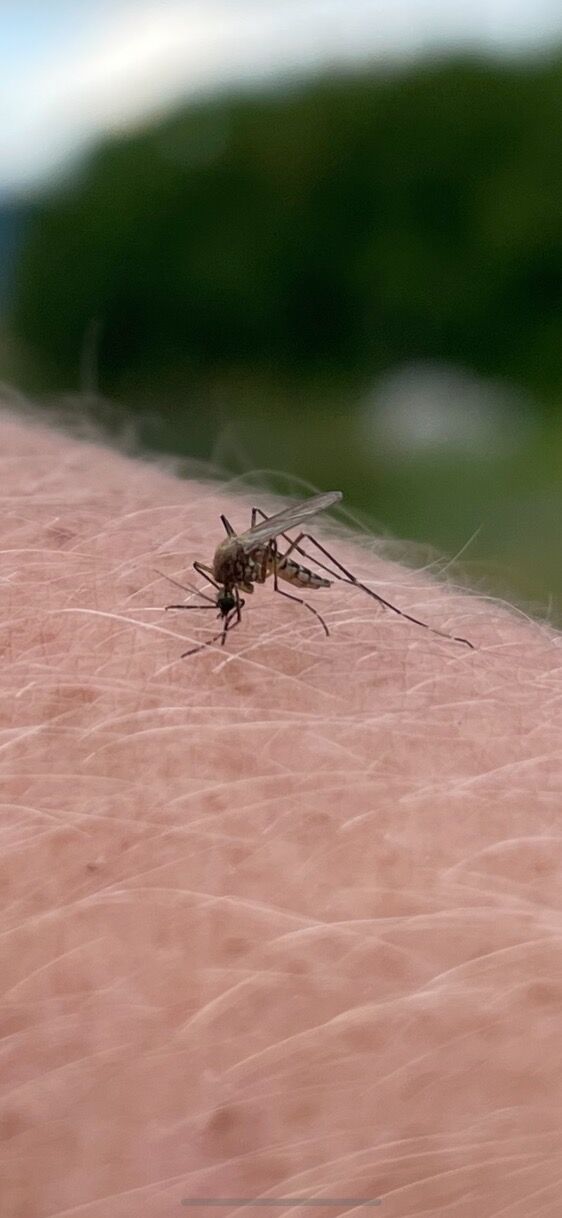
Known as the “Mosquito Town” of Jefferson County, Boulder is enjoying an exceptionally mild mosquito season this year.
Conversations with public representatives, city officials, and local residents reveal that while some parts of the city might still have mosquitoes, the city has effectively managed to contain the population. This success allows residents to enjoy the summer outdoors without worrying about big mosquito bites.
“It’s nearly not as bad as last year,” said Boulder resident Mechele Anderson.
Last year, Anderson avoided going outside in the evenings. In contrast, this summer has been much better, she said.
“I’ve seen maybe only three mosquitoes all summer,” Anderson added, noting that her friends in town shared similar experiences.
A low winter snowpack followed by a very dry summer has significantly reduced the county’s mosquito population, according to the city’s mosquito district director, Jill Allen.
“The mosquito population is totally based on weather. They need water and consistent temperatures in order to be able to hatch,” said Allen. “This year we had minimal larvae because the cool spells were freezing out the larvae.”
The mosquito district typically controls mosquitoes through aerial application and ground adulticiding, which is a process that uses fogged poisons to kill adult mosquitos. A contractor based in Helena conducts aerial inspections of mosquito larvae starting in April, locating their position and condition, within large areas of shallow water, usually less than a foot deep.
Mosquito larvae numbers are measured from still water samples, which present a good idea of future activity levels. Then, when the mosquitoes are at the larva stage, depending on the weather, they begin treatment with larvicide, starting around June and continuing as needed, sometimes through early fall. The contractor flies an airplane and drops pellets or mosquito spray to kill them in the larva stage.
This year, applying larvicide has been particularly challenging due to wildfires.
“Mosquito treatment is a super sensitive activity as it needs a consistent temperature for a certain amount of time with low wind speed without any cool wet spells. When all these align, only then can we proceed with fogging. On top of all this, wildfires have made aerial fogging exceptionally challenging,” Allen said.
The city conducts perimeter fogging twice weekly. This year mosquito traps around the city show minimal populations, and the completion of haying has further reduced mosquito numbers.
Jefferson County Commission Chair Cory Kirsch noted that the mosquito situation in Boulder has been notably better this year. Typically, he receives at least five calls annually about mosquitoes, but he hasn’t received any so far this year.
“Boulder is a mosquito town, so we mitigate the best we can,” Kirsch said. “It’s been really good, and the dryness has made a difference.”
Kirsch mentioned that the fire hall on the other side of the river experienced some mosquito problems, but he hasn’t received any complaints inside the town.
Despite successful mosquito control this year, officials stress that Boulder residents need to remain diligent in preventing mosquito breeding.
“A mosquito can lay eggs in an area as small as a tablespoon of water,” Allen said.
She urged each landowner to participate in mosquito management by removing items like rubbish, tires, birdbaths, or broken-down cars from their property, as these items create opportunities for water to pool.
“Each landowner needs to be conscientious of their own space,” Allen added.
Mosquito fogging continues as needed, typically lasting until late summer or early fall. Last year, the city monitored and fogged until August.