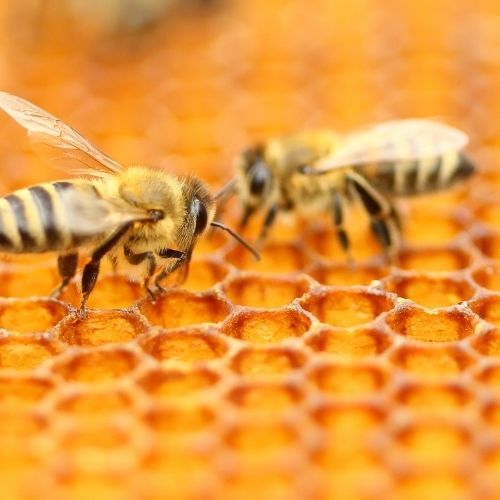
We’ve been keeping honeybees at our farm on and off for a decade and a half, and every year they teach me something new. Some years, I seem to get things right and they survive the winter and are healthy going into the spring. Other times, even though I think I do everything right, they don’t make it through the winter. It can be a frustrating, discouraging experience.
But whenever we have bees, our produce yields are higher — and we are fortunate to have a healthy population of native bees. For our crops, we’ve found that honeybees and native bees complement each other on pollination. We have some crops, such as our honeyberries, that the honeybees don’t seem to visit much, but the native bees and wasps absolutely love. Honeybees prefer our apples, pears, and vegetables the native bees avoid.
And of course, the honey is amazing! Honey from your own bees is something to be treasured. Montana honey is prized and usually receives a premium price because it tends to be a light color, which honey buyers want so they can blend it with darker honey to get that lovely golden brown consumers are used to. Montana honey also boasts a mild floral flavor that can sometimes be complex, depending on the area’s native flowers.