Jefferson County voters will once again decide whether to pay more in taxes to fund the construction and operation of an animal shelter in Boulder that serves the county.
Two years ago, in June 2020, a similar measure failed by a margin of just 38 votes in a year when elections and efforts to educate voters on ballot initiatives were complicated by the coronavirus pandemic, which began in the U.S. a few months prior.
Last week, at its Jan. 25 meeting, the County Commission unanimously voted to place on the June 7 primary ballot a proposal to establish a permanent mill levy of nine mills on all taxable property in the county. The mills were estimated to generate $265,365 annually, according to the county. Annual property taxes on a property valued at $50,000 would increase by $6.08 under the proposal, according to the resolution that placed the initiative on the ballot. Taxes for a $100,000 property would increase by $12.15 annually; taxes on a $200,000 property would increase by $24.30 annually; and taxes on a $300,000 property would increase by $36.45 annually.
The resolution stated that, if passed, the $265,365 generated annually by the mill levy would go toward constructing “a nonprofit animal shelter facility in Jefferson County, Montana, for the sheltering of lost or unwanted animals, the quarantine of animals ordered to be quarantine by court order, fostering and adoption of the animals in Jefferson County for the welfare and protection of the animals and citizens of Jefferson County.”
Further, the funds would also go toward the ongoing operation and expenses of the animal shelter once it is established, as well as the continuation of a spay-and-neuter program, microchipping, vaccine clinics and other services currently offered by the Animal Shelter and Care Committee of Jefferson County.
The committee, led by Boulder resident and prolific community volunteer Cheryl Haassakker, proposed the tax increase to fund a county contract with a nonprofit that will allow the nonprofit to build and operate a shelter facility. If approved, the county would award an animal care contract through an open, competitive process.
“It’s not for us, per se, if it is passed by the voters. All nonprofit animal groups would submit a proposal to get a contract,” Haassakker said at the meeting.
Haassakker told the commission that she and other volunteers take in up to 40 animals annually in Jefferson County—animals she said often must be handed over to Lewis & Clark Humane Society at a cost of $125 each. And although “I’ve grown a really good rapport with them, and I’ve begged them not to charge the county for some of the cases,” she estimated that the county currently pays about $3,000 to $5,000 annually to the Lewis & Clark Humane Society.
Anita McCauley, who attended the meeting via video call, thanked Haassakker for her efforts toward providing animal care in the county, but said she also had “some real concerns about mill levies.”
“Personally, I think we have to, at some point, think outside the box about how all the programs are funded,” McCauley said. “For example, mill levies hit businesses and bigger property owners like ranches at a bigger level.”
McCauley said that the 2020 proposal would have cost her ranch $287 annually, and that ranching costs have continually increased despite that “our last good calf prices were in 2015.”
In response to McCauley’s question about whether the shelter would become “the county’s responsibility going forward,” Haassakker explained that the mill levy would fund a contract between the county and whatever nonprofit eventually entered into a contract with the county to build and operate a shelter. She estimated that a shelter would cost about $715,000 to construct and, according to a budget she presented to the county, would cost $328,000 annually to operate.
“The employees will not be county employees, they’ll be through the nonprofit organization. The building would also be the nonprofit organization’s building,” Haassakker said. “The county is basically contracting with the nonprofit shelter to take care of all animal control.”
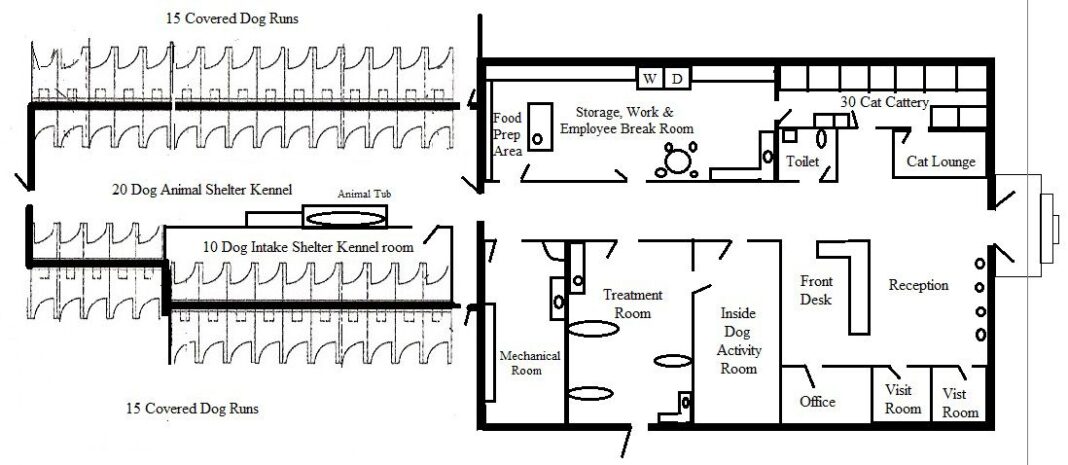
The proposed shelter would accommodate 30 indoor/outdoor covered dog runs, two isolation indoor/outdoor covered dog kennel runs, a 42 cat cattery, a community cat lounge and a cat isolation room, as well as additional room to continue its community programs, along with pet boarding, microchipping, personalized collar tags, and and training program for pet owners and prospective pet owners, Haassakker previously told The Monitor ahead of the 2020 mill levy proposal.
Haassakker and Commission Chairman Leonard Wortman said that the $265,365 the mill levy would generate annually to fund the contract would cover debt service on the building construction expenses, which was a component of the budget, and most of the remaining operating budget. Haassakker said that the remaining costs not covered by the county contract would be funded by donations, grants, fees and in-kind volunteer service.
McCauley asked if a shelter would ask for additional taxpayer funding in the future if costs increase. Haassaker replied that “I don’t foresee it,” and noted that the nine mills proposed in Jefferson County is at the low end of the nine to 12.5 mills she has seen charged in other counties to fund contracts for similar services.
“We went to the basic because we’re hoping that we can really push to do the fundraising,” she said.
McCauley reiterated that her questions weren’t motivated by any opposition to providing animal care or the establishment of a shelter, but rather out of concerns over increased tax burdens, particularly for businesses, ranches and people with fixed income.
“I just want to point out … that a lot of times when we question these things, it’s not that we disagree with it or we don’t care about those situations,” she said, adding that, before voters decide on the issue on June 7, “I think we have to have really good information about what that cost is.”
McCauley said she appreciated The Monitor’s coverage of the proposal two years ago, but Haassaker said she believed that “Some of that information was kind of misinterpreted in The Monitor,” and that an inability to hold in-person educational events on the proposal because of the pandemic caused the initiative to fail in 2020.
“In my opinion, for the voter, the more information they have prior to the vote, the better,” Haassakker said. “That is our goal.”