
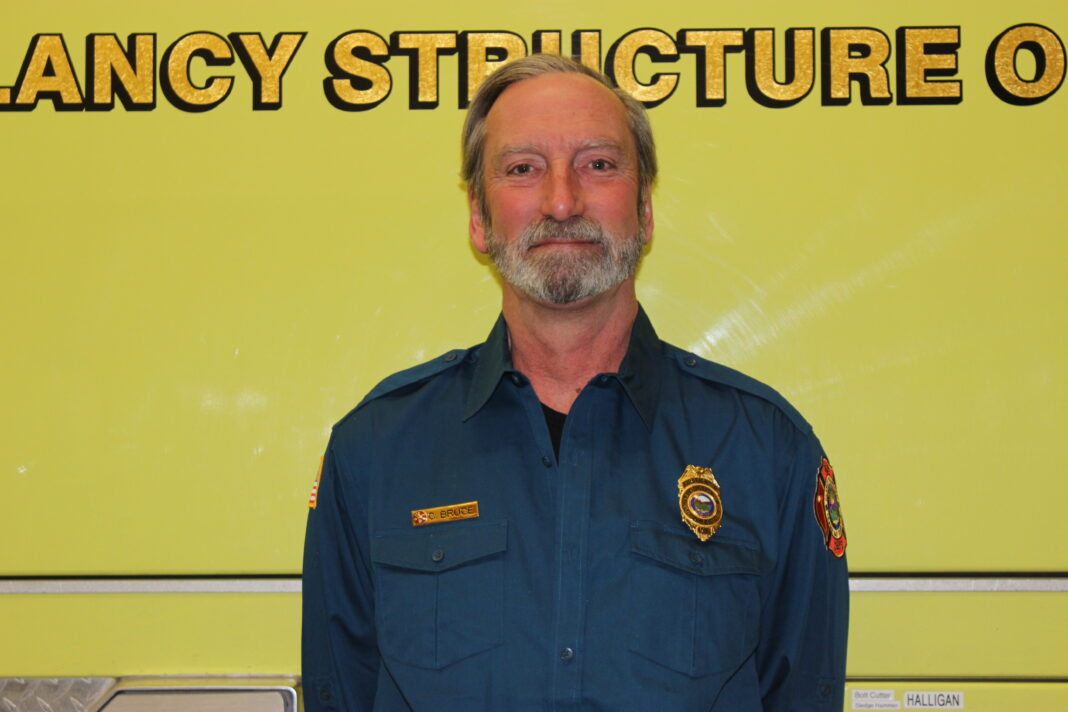
After serving the Clancy community for over 16 years, I recently submitted my resignation to the Clancy Volunteer Fire Department. As I explained to Chief Greg Robson, the truth was I no longer felt I was capable of carrying out the duties required of a volunteer firefighter. Age gets us all, none of us gets younger. Within that truth, though, there were many other considerations that make up a whole truth.
My initial desire when I joined the department was to make a small effort to thank a community that had been so welcoming to an outsider (from California, no less!). What I discovered is that being a volunteer firefighter involved much more than just showing up and spraying water around. There were many aspects of the operation of a volunteer organization, and I pledged to not only learn how to be a good firefighter, but also what it takes to be a good volunteer. Both of those endeavors proved to be among the most exhilarating and rewarding experiences in my life.
Regardless of where they work, firefighters face similar issues: the commitments of time that are required, the recent trend in the loss of regional and national resources to assist on incidents, and of course, routinely and professionally facing extreme dangers. Putting out fires requires a team effort. The trucks and personnel must get to a scene and have the tools and training necessary to handle the incident. On the scene, work is divided up by incident command: Some firefighters will run the water pumps on the truck, some will hold the hose and spray water, some will do salvage work.
This all requires orderly instructions and management, and trust in the command structure. In Jefferson County, radio communications between working units is often poor or nonexistent, and even more difficult when multiple organizations are involved. On large wildfires, there may be dozens or hundreds of firefighters and support personnel involved, requiring management, cooperation, and a common understanding of the objectives, and always carried out with mutual respect for each other. When those core elements of trust and respect are not present, the organization weakens, and a fragile system of volunteers can collapse.
There are emotional costs. I still have memories of incidents that will always have an effect on me. Like waiting for the coroner to arrive at an accident scene the night after Christmas — and sweeping up gift-wrapped packages ejected from a vehicle along with its driver. Or helping a family carry the few belongings they could salvage from their home that had just burned down in front of us, despite our firefighting efforts. Or the first time (for that matter, every time) I had to assist in extracting someone I personally knew from a damaged vehicle.
But those darker memories are balanced with good ones. The joy that my neighbors expressed when we stopped a fire from doing damage to their home. Or when we rescued their cat from a tree. Or the smiles on their faces as I waved from the fire truck during the Clancy Days parades. Or watching the kids cash in the eggs they found on the baseball field every Easter. Those good memories remind me of that initial reason I joined: gratitude.
The volunteer part of the job was also extremely rewarding. The title of this article refers to a portion of the Clancy Volunteer Fire Department’s newsletter I wrote, called “Notes From The Nozzle.” It consisted of small mentions of members’ achievements or significant department activities that usually fit in somewhere on the back page.
That newsletter, as well as learning how to properly create and submit department incident reports, were my small contributions as a volunteer. They took a lot of time and commitment to learn to do correctly. I am not mechanically inclined, nor a great truck driver, but I do know a little bit about how computers work, and I made it my disciplined routine to keep the department’s reports up to date. The reward was helping the trustees and officers acquire grants and financing over the years that were used to upgrade equipment and improve the department’s trainings and functions. Those grants would not have been possible without the record keeping I introduced.
Local firefighters also face some unique issues. The recent population growth and demographic diversity has presented new challenges, but not a great increase in volunteers to help. When new volunteers do come in, they (like me in the beginning) may not think the same way as the locals who grew up together in the community, sometimes even related to each other. Respect and trust for others must be learned and practiced, just as one learns how to put on a breathing apparatus or drive a truck. It is a skill that all members must learn, not just “the new guys.” In order for any organization to stay operational, it must practice cooperation, tolerance, respect and understanding among its members, so that it can be exercised when needed in those larger situations with many people involved.
There are not many of the firefighters at Clancy VFD that I would call my “close friends,” but each one will be my beloved brother forever. That is part of the whole truth I mentioned before.
I will never stop being a fireman; I still wake up and check weather and state fire reports, and make sure at least one radio is tuned into Jefferson County Radio’s emergency broadcast system. Just the same, I’m pretty confident I won’t miss the uphill and downhill hikes in the backcountry in 90 degrees carrying a pack of hoses. I likely won’t miss standing by the side of the interstate in freezing cold, waving my STOP sign futilely at traffic, trying to slow them down as they approach an accident scene.
But as I turn in my bunker gear and wildland equipment, my hope is that the next lucky person who has the privilege to put them on has the same, soul-fulfilling experience I got when I wore them.