
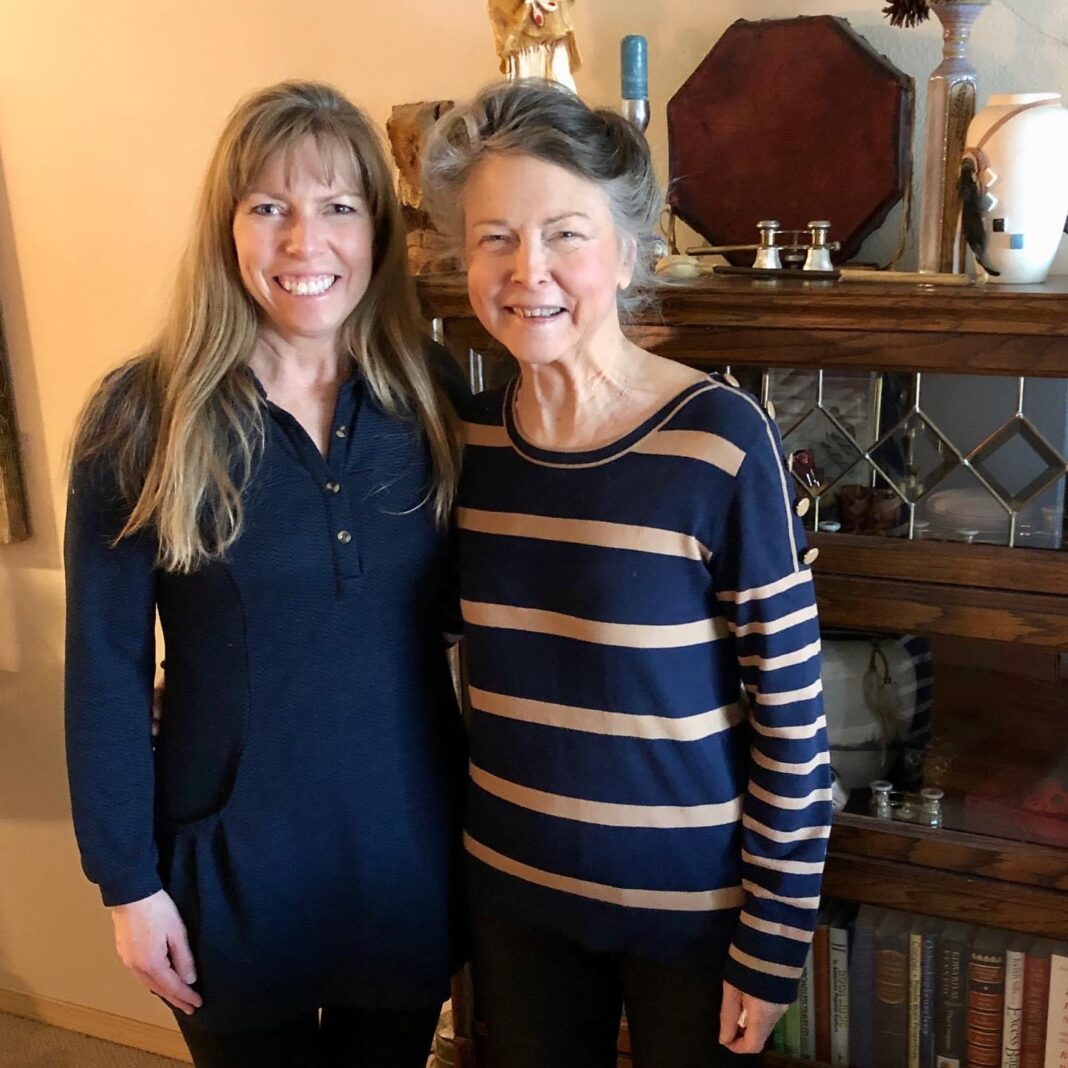
A Clancy woman tells the story of going from denial to acceptance of her mother’s dementia and offers hope for others in a similar situation
In the early stages of her mother’s dementia, Melanie Williams believes she was the one most in denial.
For years, her mother had mentioned problems with her mental functioning to her doctors and her family, but because she was highly intelligent, it made it harder to determine just how much she had declined, said Williams.
Her mother, Audrey Thompson, was also a Type 1 diabetic. It was during an appointment with her diabetic educator that Williams was asked if she knew she was her mother’s “primary caretaker.” By then, Thompson was beginning to show signs of confusion and memory loss, especially when her blood glucose levels were off.
Williams was caught off guard by the educator’s question and it unleashed a torrent of feelings.
“How could I be her caretaker and offer her advice? Our roles were reversing. The tables were slowly turning, whether either of us was ready for it or not, and neither one of us was prepared nor aware of it. She was my rock and when I realized my rock was crumbling, I felt frightened and alone,” wrote Williams in a blog post she wrote in 2019 about her experience coming to grips with her mother’s dementia.
A Clancy resident, Williams will be sharing her story and expertise at a program titled, “Effective Communication Strategies,” a free education program presented by the Alzheimer’s Association and hosted in partnership with the North Jefferson County Library District. The program will be held via Zoom on Wednesday, April 21, 7-8 p.m. See related story this page or the ad on page 6.
Denial
Once Thompson was diagnosed, Williams, a Montana City School teacher with a husband and two college-age children, shifted into high gear, trying to make everything “fine” again for her mother. She and her husband bought Thompson a house about 15 miles away in Helena to relieve the stress of being a homeowner as they took care of those duties. Williams also worked to get the type of medical equipment that would allow her to help monitor her mother’s blood sugar levels from afar. This sometimes turned into middle of the night trips to her mother’s house when her blood sugar levels began to fall. Williams made lists as reminders for her mother, went to her doctor’s appointments and helped manage her medical bills.
“I soon found that every waking moment (and sometimes sleeping moments) was consumed with trying to make things “fine” for my mom,” wrote Williams on her blog.
After a lifetime of being cared for by her mother, Williams deeply wanted to bring her back to normal. But the all-consuming effort had become overwhelming.
“The stress was in trying to balance both being a mom to my own kids and helping them through their college careers, and be a caretaker for my mom. When I was put in a position where I had to choose, it was usually to take care of my mom because her needs were more immediate and demanding,” said Williams.
A phone call
After one particularly difficult day, and just months before her mother would be officially diagnosed with non-defined dementia, Williams received a call from Thompson’s doctor. As they began talking, Williams started to cry.
“I felt like I had totally lost control and was letting my mom down. I felt like a failure,” she wrote on her blog.
The doctor explained that, due to the illness, her mother wasn’t behaving the way she was on purpose.
It was what Williams described as a “revolutionary moment.” Williams realized her mother didn’t know what she was doing and in her mind, everything was normal.
“It changed my outlook and was the beginning of my road to taking better care of me,” she said.
Life with dementia
Williams said her mother didn’t exhibit some of the common dementia symptoms, such as personality changes. But there were other noticeable differences.
“Mom never got combative, but she would get defensive sometimes which is understandable. She didn’t cook on the stove which was a blessing, but there were many times I would stop by to check on her in the morning and find her supper from the night before still in the microwave. Forgetting to eat was one thing that worried me with her dementia. Her problem-solving skills digressed which was very hard for me. She had always been so intelligent and such a creative, outside-the-box thinker. So, to see her not remember how to stop and start a video she was watching, or remember what to do when her blood sugar was off, or remember where things were, was very hard for me I knew I had to give her time and be patient while coaching her through how to do something. The easy approach is to talk to them like they are a little kid, but they pick up on that and that makes them feel devalued and humiliated. So, talking patiently and kindly and as an adult was critical. I also learned how to retrace her steps for her to find what she had lost because people with dementia don’t remember where they were or what they were doing when they lost something,” said Williams in an email to The Monitor.
The Alzheimer’s Association highlights 11 types of dementia on its website, with Alzheimer’s being one of those. Other types include Creutzfeldt-Jakob Disease, Lewy Body Dementia, Frontotemporal, Huntington’s Disease, mixed dementia, normal pressure hydrocephalus, posterior cortical atrophy, Parkinson’s Disease dementia and dementia associated with Down’s Syndrome.
Stabilized
Williams said the period surrounding her mother’s diagnosis of non-defined dementia and her ensuing struggles as a caretaker was from 2016-2017. She has a younger brother, but during that time he was living too far away, plus had two small children, to play a more direct role. Today, Thompson lives in Highgate, an assisted living facility in Billings and Williams’ brother, who is an RN there, has taken over as caretaker.
“Since moving her in there, her glucose levels have been more stable and we have put her on some different medications that have actually helped stabilize the progression of her dementia,” said Williams, adding that Type 1 diabetes is often linked with dementia.
On her blog, Williams shares a few lessons she’s learned about being a caretaker, in short:
Take time for yourself without guilt, learn more about what you’re dealing with, take a step back from the situation, find a support group, exercise and seek counseling or someone to talk to.
“It’s okay to talk to someone to help us see our part in the picture and remind us how to prioritize and utilize the skills we have. Also, admitting when we don’t have the tools is okay too. In fact, it will lessen the burden when we acknowledge our own limitations,” wrote Williams on her blog.
Williams has since become a volunteer with the Alzheimer’s Association. She said the organization
does an excellent job of training their volunteers.
“Their curriculums are thorough, yet easy to follow. They provide all the materials you need to present and are always available for questions and support,” she said.
Becoming a part of the Alzheimer’s Association also brought relief, as Williams realized she wasn’t alone.
“I didn’t realize being a caretaker for someone with dementia was so exhausting. I’ve also learned that dementia can look very different in each person and changes from day to day. When the person living with dementia is lucid, you learn to cherish those moments knowing you may start witnessing them less and less. The Alzheimer’s Association has taught me that and taught me not to beat myself up for not being able to fix everything for my mom. I’ve learned to be more accepting of how things are,” said Williams.
To read her account, visit https://www.simplestepstoahealthylife.com/becoming-my-moms-caretaker-an-emotional-and-honest-account-of-my-journey/