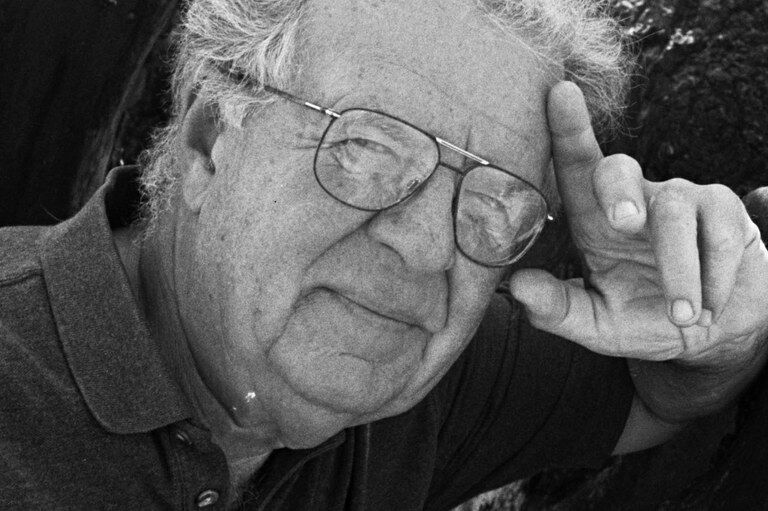
There’s one passage in William Kittredge’s The Next Rodeo that has sneaked into my brain and my way of thinking. It’s from the essay “Home”: “Looking backward is one of our main hobbies here in the American West, as we age. And we are aging, which could mean growing up. Or not. It’s a difficult process for a culture that has always been so insistently boyish.”
When Kittredge died, I went back and reread The Next Rodeo, his last book of essays. Once again that passage struck me with the same note of caution it has before: Aging is unavoidable. Growing up, though, takes work. Through his writing, Kittredge offered a path for doing this: He waded through his own ancestors’ complex relationships with the land. Through writing rooted in place — and in a detailed understanding of human nature — Kittredge modeled a way to tell more clear-eyed stories about the West.
William Kittredge died on Dec. 4, 2020, at 88. He was a giant of the literary world of Montana, “the king of the Missoula literati,” as one writer called him. He taught at the University of Montana for three decades and was a beloved teacher to many. He told his students not to write like anyone else: “Find your obsessions and follow them,” he said in a 1997 interview with Cutbank, as he was retiring.