
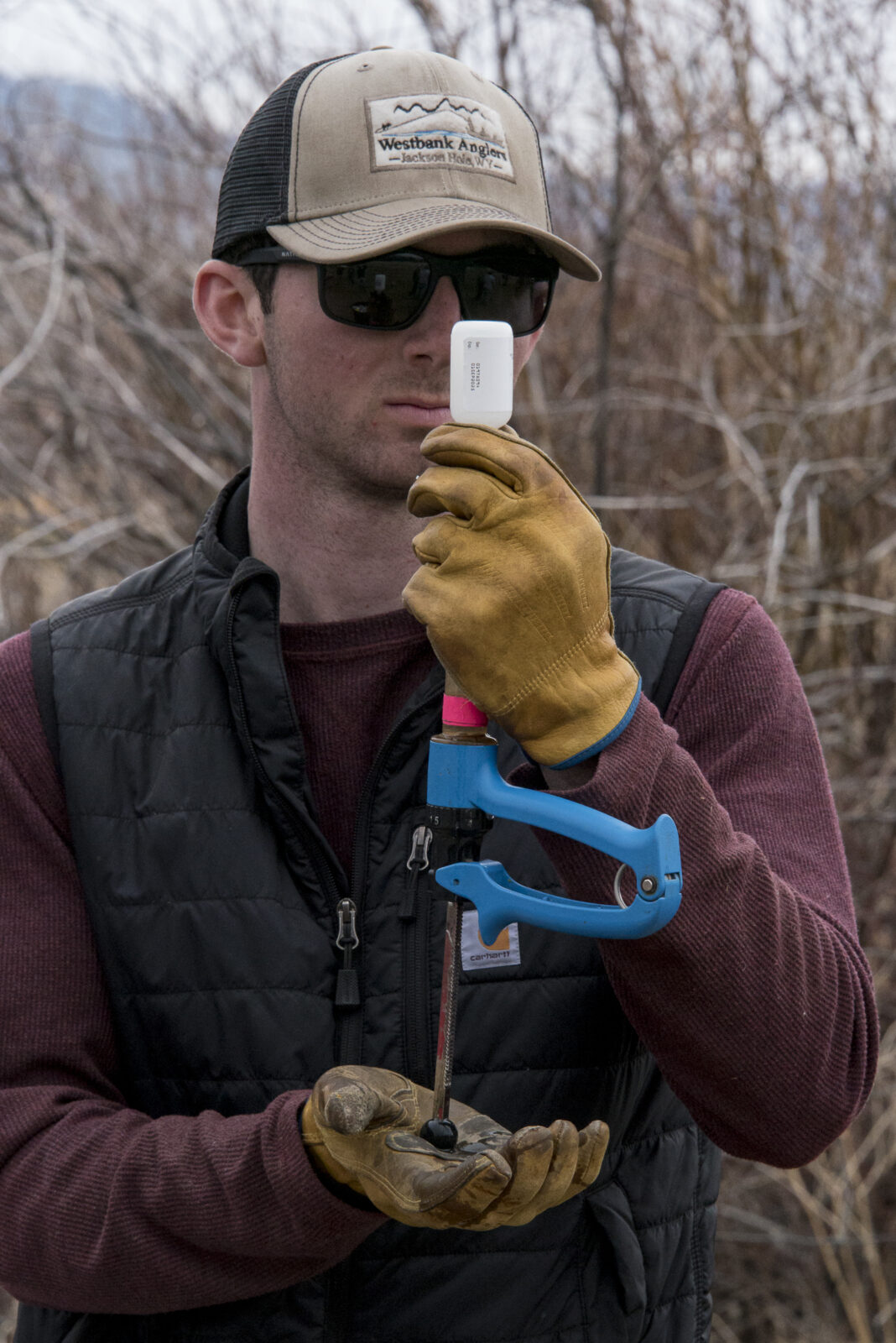
Fence work, maintaining irrigation systems, pushing cows, roping and branding and wrestling and vaccinating, and a lot of time outside. That’s what Joe Zecher thought working on a cattle ranch this spring and summer would be like, and he was right.
But Zecher, 19, isn’t a regular ranch hand: His two weeks at the Compton Ranch in the Lower Boulder Valley will help earn him three college credits, and his rotation at the ranch last month was just the first of five consecutive two-week stints at different working ranches around Montana. Zecher, a wildlife biology major and wilderness studies minor who just finished his sophomore year at University of Montana, is one of four interns accepted this year into the state Department of Natural Resources and Conservation’s Working Lands Internship. This particular paid internship was his choice, but the three credits it confers are required for his major.
He was at the Compton Ranch May 16–27. May 30 through June 10 he’s in Baker. After that, he’ll continue crisscrossing the state from Winifred to Nye and, finally, Ekalaka. Each DNRC intern visits different ranches from the others, meaning 20 total ranches statewide get an intern for two weeks.
“I was kind of nervous about doing the internship and having someone follow Ryan and I for two weeks,” Leah Lewis, who works the Compton Ranch with her father Gene Compton, said, “but then it ended up being a really great experience.”
Compton was appointed by Gov. Greg Gianforte onto the DNRC’s Rangeland Resource Committee in November, “so I just learned of the program myself. They were looking for host ranches, so we decided to sign up,” she said.
Although the scope of work at the Compton Ranch—Zecher’s first of the internship—was generally what he expected, he’s relatively new to the ranching world, and the West. He grew up near Purcellville, Virginia, a rural town about 40 miles northwest of Washington, D.C., and although his immediate family didn’t farm, he said, his grandfather and an aunt and uncle do. He occasionally rode horses with friends as a kid, “but was not real into it” otherwise.
Last summer, after his freshman year at UM, he said, he led horseback rides on a dude ranch in Wyoming knowing full well that “that’s nothing like a working ranch, but I came to appreciate more of the agricultural lifestyle.”
Drawn to the West after annual childhood trips to Montana and Wyoming, and by skiing, weather and low population that contrasted the East Coast, Zecher initially didn’t know what he might do with his degree after graduation, but “I knew I wanted to do something outside.”
Now, he said, he thinks he might pursue a career as a game warden, or possibly as a conservationist with an agency like the DNRC. That work would involve balancing “conserving wildlife and conserving agricultural lands,” he said, and this internship has helped him “get the perspective of ranchers and agriculturalists”—a perspective he said he wants to understand and to help inform his future decisions. His goal, he said, is to help make it easy for agriculture and wildlife to coexist and thrive together.
“It’s important to understand all the different stuff that ranchers deal with,” he said, “and what may be priorities for a land manager, there’s so much other stuff going on for a rancher that they can’t prioritize that stuff.”
Lewis noted that “a lot of agency personnel don’t come from ag backgrounds, but then they have to make agency decisions without knowing what [ranchers’] lives are. I think that will be meaningful for him in his future career.”
To get that perspective, Zecher dove headfirst into ranch the work he foresaw but hadn’t yet done himself.
“Last year my job was just take people on rides, just know the horses. Here there’s so much going on,” he said. “It’s not a very lucrative business. People aren’t in it for the money. There’s a lot going on and you have to be good at a lot of things, and know a lot about a lot of things. No one’s great at everything but they’re good at everything.”
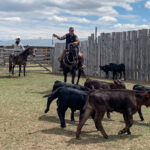
He visited the ranch for a branding day on April 30, ahead of his internship, and was pressed into service wrestling roped calves and, later, administering vaccinations—neither of which he’d done before that day. At a later branding day he tried his hand at “heeling” calves—that is, roping their hind legs from horseback—which he said was much more difficult than roping their necks.
Driving cattle on horseback during the internship was new, too: “I actually thought that was going to be more difficult than it was. You just kind of ride behind them and they walk.”
After the last day of his internship in Boulder concluded, he still predicted a future as a warden or conservationist, but “I could definitely see myself in future years doing work for [a ranch].”