
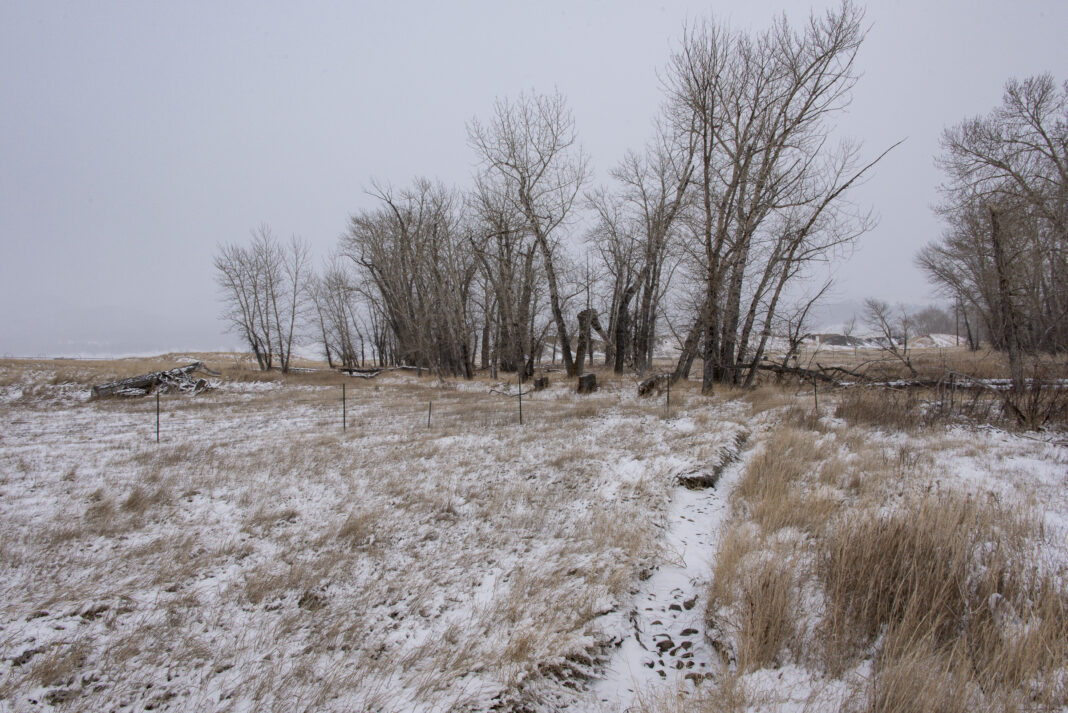
Two longtime Boulder Valley ranchers are suing the city of Boulder over its approval last fall of the Fuller Subdivision on the city’s northeast corner that straddles the ranchers’ irrigation ditch.
The ranchers, Ed and Anita McCauley, argue that not only did the city fail to follow proper public notice requirements during the approval process, but that the city also failed to meet state law and its own regulations by not considering how the subdivision could harm their water rights and easements for the ditches, and not taking appropriate measures to mitigate such harm. The city disputed the allegations in a recent filing.
A 12-page complaint detailing the McCauleys’ claims against the city was filed in Jefferson County Fifth District Court on Nov. 16, 2021. The complaint, filed by attorney Jack Connors, requested that the court void the city’s decision to approve the subdivision and remand the matter back to the city—essentially a request for the city to redo the subdivision approval process while following city and state regulations that the McCauleys allege the city failed to follow the first time. The lawsuit also asked the court to award the plaintiffs—the McCauleys and McCauley Ranches General Partnership—costs and attorney fees, as well as “any other relief this court deems just and proper.”
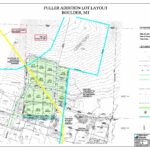
The subdivision, proposed by Chad Bullock, is comprised primarily of 15 lots across 11.3 acres southwest of the Boulder Cemetery, at the east end of East Second Avenue.
In a Feb. 11 filing that opposed the plaintiffs’ Jan. 21 motion for summary judgment—a court ruling for one party without a full trial—Sarah Mazanec, an attorney representing Boulder, argued that the city’s process in approving the subdivision complied with relevant laws and regulations, and that proper public notice had been provided. Contracted City Attorney Ed Guza filed a motion to dismiss the lawsuit on Jan. 4, which the McCauleys have opposed.
The lawsuit, which is still pending, takes issue with the amount of public notice provided ahead of the Oct. 18 City Council meeting at which the council approved the subdivision. It claims that by noticing that meeting in The Monitor on Oct. 6 and 13—short of the 15 days prior notice stipulated in the city’s subdivision regulations—and by failing to specifically notify the McCauleys as required, the city deprived them of their rights to know and to participate in government proceedings, as laid out in the Montana Constitution.
Previously, the Boulder Planning Board met on Oct. 4 to consider the subdivision application and hold a public hearing on the matter. The Planning Board cannot approve or deny a subdivision; it is tasked by city regulations with assessing an application and recommending to the City Council either approval, approval with conditions or denial of an application. That meeting was noticed in The Monitor on Sept. 8 and 15, and the McCauleys stated in their lawsuit that they received a certified-mail letter notifying them of the meeting.
Ed McCauley attended the Oct. 4 hearing and voiced opposition to the subdivision, citing impediments to maintaining the irrigation ditch that runs through the south side of the subdivision and serves his ranch, as well as inadequate easements for the ditch, increased draw on the aquifer supplying water to the ranch and wildlife that could be pushed onto his ranch once the subdivision is developed.
McCauley did not attend the Oct. 18 City Council meeting in which the council approved the subdivision; the lawsuit attributes his absence to a lack of proper notice that left him unaware of the meeting.
In the city’s Feb. 11 filing, Mazanec pointed out that state law only requires a minimum of one public hearing on subdivision applications—a hearing that must be noticed at least 15 days prior and include notice specifically to “certain affected property owners.” The McCauleys and the city agree that the Oct. 4 Planning Board hearing was noticed in accordance with law, and Mazanec argued that was enough for the entire process to comply with public noticing requirements because the law “does not require the notice and hearing process to be repeated when the governing body acts on that recommendation.”
Essentially, the filing argued that the city met the legal requirements for public noticing with the public hearing at the Planning Board meeting—the one required public hearing for the subdivision—and therefore did not have to meet those requirements again when the City Council took up the board’s recommendation to approve the subdivision.
Impacts to ditch maintenance
The McCauleys’ lawsuit also claimed that the city failed to properly take into account state law and its own regulations that required it to consider the McCauleys’ ability to access and maintain their irrigation ditch, specifically by granting and recording easements for the ditch and secondary easements to facilitate maintenance.
A city staff report presented at the Oct. 4 Planning Board meeting stated that the subdivision would include a 15-foot-wide easement centered on the ditch to provide access. McCauley stated at that meeting that the proposed easements were not adequate for maintaining the ditch, which often requires large equipment. Boulder’s Subdivision Regulations require that ditch easements be of “sufficient width to allow the physical placement and unobstructed maintenance of open ditches.”
The City Council, when approving the subdivision on Oct. 18, modified the easement to a “no-build zone,” which the lawsuit argues is vague and open to interpretation.
The lawsuit also argues that the city violated state law and its own Subdivision Regulations by limiting the McCauleys’ historical easement to 15 feet, by failing to afford the McCauleys a secondary easement through which they can access the ditch, and by failing to properly record easements crafted “in a manner consistent with historic and legal rights” in the subdivision plat approved by the city.
The lawsuit further alleges that the city’s approval of the subdivision violates its own Subdivision Regulations’ guidance on evaluating “conflicts between the proposed subdivision and adjacent agricultural operations,” including that “potential conflicts between [agricultural water] facility users and subdivision residents shall be evaluated,” and that “the rights of all water right owners and users of the facility shall be considered.” The lawsuit cited possible conflicts between the McCauleys and future subdivision residents relating to ditch maintenance, access and easement preservation, as well as garbage from the subdivision possibly flowing onto the McCauleys’ property in the ditch.
However, Mazanec pointed out in the city’s Feb. 11 filing that that language comes not directly from the city’s Subdivision Regulations, but rather from a summary of the city’s growth policy that is attached to the regulations as “Appendix A” and is referenced by the regulations as things to consider when conducting public hearings on subdivision applications. The Growth Policy Summary language cited in the lawsuit, the city argued, does not constitute regulations but instead simply “provides a general outline of what to expect at public meetings.”
“In this case, the Growth Policy Summary’s general outline of how public meetings are conducted is consistent with the nature of the Growth Policy as a ‘general policy,’ rather than a regulatory document. As a matter of law, the Growth Policy Summary cannot be applied in regulatory fashion as argued by Plaintiffs,” the filing stated, further arguing that the Fuller Subdivision met the requirement of having overall “substantial compliance” with the Growth Policy.