
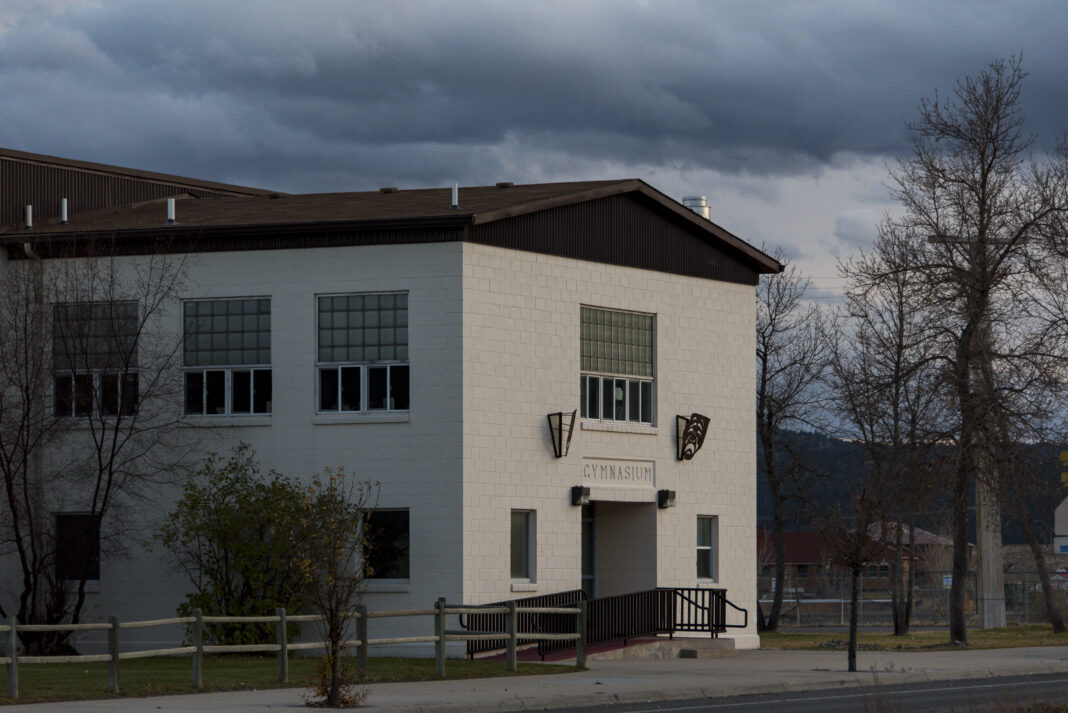
Jefferson High School’s $12.5 million bond issue, geared to fund long-anticipated expansion and improvements at the school, quickly sold out to institutional investors on Jan. 13, clearing the way for the district’s completion of the issue Feb. 1 and, then, the project’s launch.
The issue will raise a net total of $14.58 million for the district, reflecting a premium of $2.24 million over the bonds’ face value.
Voters approved the issue by a wide margin in November. State law allows 60 days following an election for voters to protest the result—and no objections emerged. In that period, however, another event occurred that would significantly affect the offering: The owner of the Montana Tunnels mine paid $5.1 million in overdue taxes to Jefferson County.
About $470,000 of that windfall was earmarked for the Jefferson High district. The payment, said JHS business manager Lorie Carey, allowed the school to rebuild its reserve to the state-mandated maximum of 10% of its annual budget.
In response to the increased reserve, Standard & Poors Financial Services raised its rating on the bond issue to A+ from A. In its opinion, Standard & Poors cited the likely expansion of Jefferson County’s economy, given its proximity to major employment centers; and the school’s growing student population and strong financial position.
An A+ rating indicates an “investment grade” issue that the borrower likely will repay; AAA is Standard & Poors’ highest rating.
The higher rating had the effect of lowering the district’s borrowing costs, said Bridget Eckstrom, senior vice president at D.A. Davidson, the investment bank that managed the bond issue. The bank set a coupon rate of 4% on the bond, meaning that the district would pay 4% interest on the $12.5 million in bond principal as it was issued over 20 years.
The coupon was intentionally higher than market rates, accommodating the expectations of the banks, insurance companies, and other institutional investors that today’s low rates eventually will move higher. “Since they’re holding onto this investment for up to 20 years, having a premium helps protect the value of their asset,” Eckstrom said. “They’re willing to pay a premium to the school district for that higher rate.”
The Bank of the Rockies, based in White Sulphur Springs, purchased $1.5 million of the issue, the largest investment by a banking company, according to Eckstrom. Other non-bank investors bought larger amounts, she said.
In November, D.A. Davidson estimated that the 4% coupon would bring the district a premium of $1.98 million. The improved rating from Standard & Poors, though, made the offering more attractive, lifting the premium to $2.24 million. That had the effect of lowering the district’s overall borrowing costs to 2.355% of the total, significantly less than the 2.53% estimated when voters approved the issue.
What happens to the premium won’t be known for some time. “If there’s some unexpected expense [related to construction], the premium could cover that,” Carey said. “Or there could be additional construction activities” that the district identifies as the project unfolds.
If neither happens, the premium funds could be returned to taxpayers, either as the project budget becomes firm or at the end of construction, scheduled before the start of the 2024 school year.
Carey said the district board planned to regularly communicate its intentions to taxpayers. “As a taxpayer, I get the idea of returning funds to the public,” she said. “But as a business manager, there are innumerable things schools can use. [The] important part is that we do things that public approves.”
Assuming the bond offering closes on schedule, design and permitting for construction should take about a year, followed by approximately 16–18 months of construction, according to SMA Architects, the Helena firm that has advised the district.
The project seeks both to catch up with education standards and to remedy the effects of decades of patchwork growth. Most prominently, the work would remove the modular classrooms on the school lot’s southeast corner, originally built in the mid-1990s to accommodate a surge of students and put to use again more recently as population growth in Clancy and Montana City have returned the school’s census to more than 300 students.
The district’s plan envisions a new, two-story structure added to the east end of the existing school building. It would include five regular classrooms with mobile tables to encourage small-group work; new spaces for art, music and band, and special education; and two large science rooms accommodating both lectures and labs.
SMA’s plan also would add space for Career and Technical Education classes such as drafting, cooking, woods, and metals. And it would convert the existing band and music room into a drama classroom, with flexible partitions separating the existing stage and the new space on one side, and the old gym on the other.