

A few months ago, the ceiling above the entryway of the Jefferson County Clerk and Recorder’s office sprung a leak.
According to County Clerk and Recorder Ginger Kunz, it was nothing that serious — but the prospect of a lot of wet papers was enough to make her glad that her office had decided to move forward with a digital archiving project.
While the Clerk and Recorder’s office has been digitizing new deeds, loans, certificates and other records for quite some time and currently has a database featuring digitized records circa 1975 to the present, it has long considered digitally preserving the county’s vast collection of older records as well — largely to safeguard against something like another leak, fire, or natural disaster.
Kunz decided to bite the bullet this year, allocating money from the office’s record preservation fund to digitizing records from years prior to 1975 — some dating as far back as Jefferson County’s mid 1800s incorporation. The project is set to begin Feb. 20, and is projected to take a few weeks.
The county’s Fifth Judicial District Court office will follow suit with a digitization project of its own, aiming to preserve and streamline access to documents like 19th-century land records and court cases involving rancher easements. Both offices have contracted with ArcaSearch, a company that has digitized records for other Montana counties.
The Clerk and Recorder project is estimated to cost $89,924, with half paid at the time of project approval and the remaining half to be paid at the time of completion. The project cost will be funded by document recording fees that the county has collected over the years. Associated software maintenance expenses also will be covered by the county’s records preservation fund.
The District Court’s record digitization is slated to take place with ArcaSearch immediately following the completion of the Clerk and Recorder’s project, likely beginning in mid March. According to Woods, the project is estimated to cost $68,534, drawn from county funds, according to Court Clerk Dorianne Woods.
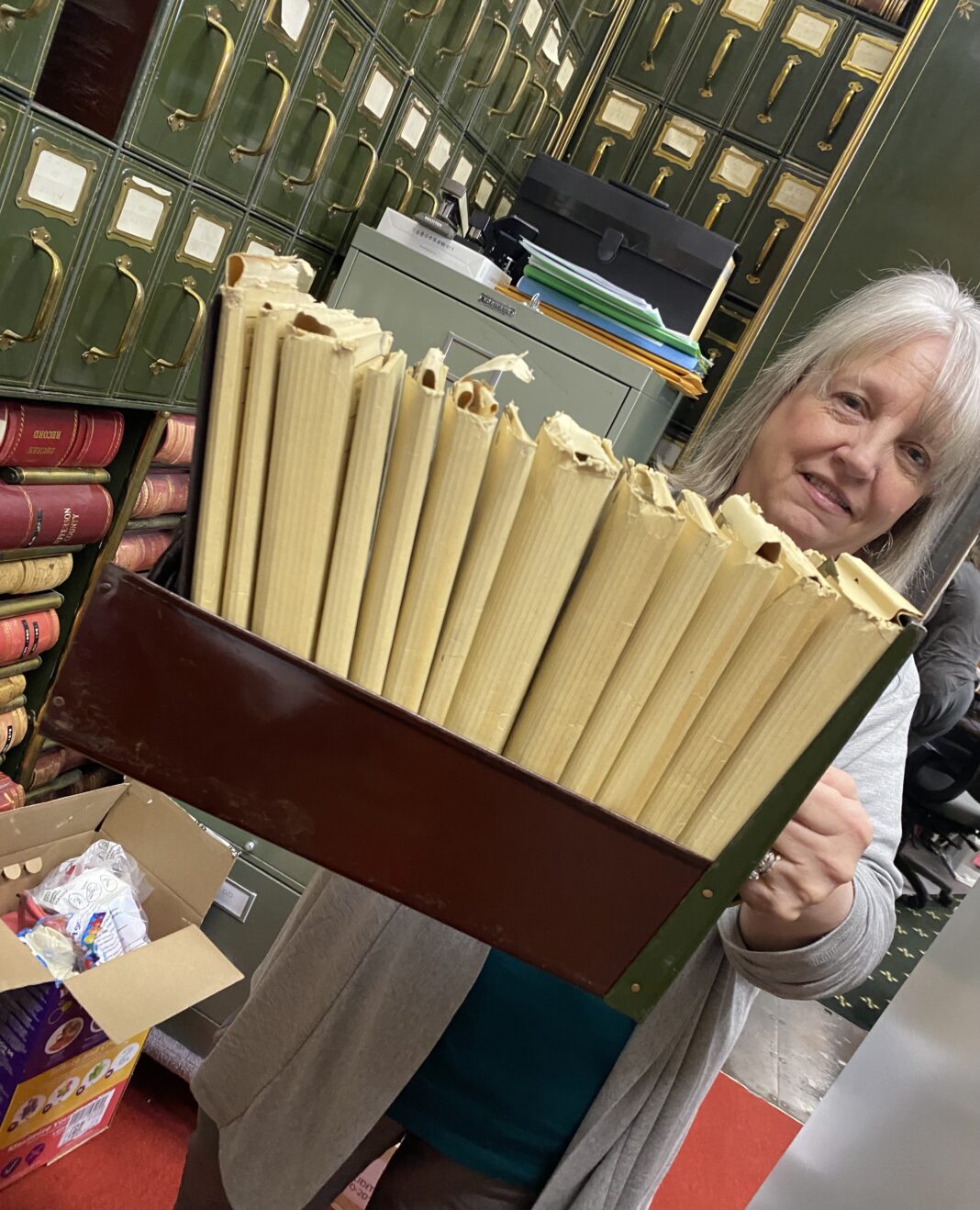
Kunz says the Clerk and Recorder’s Office has been weighing the records digitization project for years, predating her own tenure in the position. “This has been a conversation the entire time I’ve been here, and with [former Clerk & Recorder] Bonnie [Ramey] prior to that,” Kunz explained. “The books these old records are in, they’re ancient and somewhat fragile…they’re expensive to fix, and if something were to happen to the building, there’s no backup.”
Kunz believes that the preservation of these records is vital, and considers it the driving factor behind the project. However, she acknowledges that the project also will make documents more accessible: the ArcaSearch software employs optical character recognition (OCR) technology, effectively “reading” the handwriting in the scans and allowing documents to become indexed and searchable. In principle, that makes it far easier to find records by searching for keywords — a deed holder’s name, for example, or a property address.
While the office will keep and preserve older physical records, and inquiring parties can still seek information by submitting a traditional records request, Kunz says residents looking to access these documents will now also have the option of using the ArcaSearch system on the office’s computers.
Woods says that protecting the documents is a primary motivator behind the District Court’s project, as well. Woods recalls a serious leak in the courthouse roof a few years back, recounting water pouring off the old stacks and people frantically rushing to cover the fragile archives with sheets of visqueen.
“It’s a wake up call. Once that’s destroyed, the information is lost forever,” Woods said. “These are important records to a lot of people, and it’s important that we are taking care to preserve them.”
This will be the third records application employed by the Clerk and Recorder’s office, which already uses Laserfische and DocumentPro, respectively, for searches of modern records of county and resident business. Adding more software to its repertoire and dealing with associated hassle and fees was Kunz’s biggest hesitation when undertaking the project; but at this time, she says, there just isn’t an all-in-one that suits the county’s needs.
The digitization project’s first priorities include preserving records found in old deed books, mining claims and patent books, as well as remastering film and microimages from aperture cards – a punch card with embedded microfilm — in a way that makes them more readable.
Kunz envisions both the Clerk and Recorder’s preservation project and the District Court’s as work that will be of service for generations to come, allowing people a hundred years from now access to the records of Jefferson County’s history.
“It is very exciting that this project is finally being done,” Kunz says. “I do enjoy going back through the historical books, seeing the handwriting… We’ll still be able to do that, but this will really make everything easier and less time consuming. Preservation is the goal all of this really came down to, and this accomplishes it.”


