
As the county draws nears to resolving its fiscal year 2023-24 budget, Jefferson County Road and Bridge Supervisor Bear Taylor again finds himself with the arduous task of prioritizing projects, as the $2.2 million budget goes fast.
This budget – which includes fuel tax – is not a lot, Taylor said, especially considering he has eight full-time operators, three part-time operators and 1,600 square miles to cover.
Taylor accepts this is what he has to work with, and that the budget won’t increase anytime soon, as county road department budgets are capped by state statute.
“We do the best we can with the resources we have, but the cost of supplies and equipment is going up so much we can’t afford to buy everything we need,” he said. “We have a hard enough time maintaining what we have, let alone make any improvements.”
Around $885,000 of the budget goes toward payroll, insurance, workers comp and everything else associated with employees. $1.4 million goes toward tools, supplies, road gravel, salt and sand, culverts, signs, equipment parts, fuel, dust control, asphalt for patching potholes, safety supplies, improved equipment and other additional materials. Only $200,000 of the budget goes towards bridges, so any extensive bridge repair requires money from the general fund, or grants.
Fortunately, Taylor said, there are not extensive bridge repairs needed in Jefferson County at this time. Right now, one of the biggest expenses involves chip sealing. The road department is taking on 12 miles of chip seal maintenance this summer. In fiscal year 2021-22, this cost roughly $500 a ton for oil. In FY 2022-23 it costs $890 a ton, which adds up, as the 12 miles of chip sealing required around 300 tons. And this is just the beginning of the cost, as Taylor said chip seal oil alone is $250,000, and chips themselves have gone up from $15 a yard to around $30 a yard, which gets expensive when there is 3,000 yards to cover.
“It’s the cost of doing business,” he said.
Taylor, who also is a board member of the Montana Association of County Road Supervisors, understands this is an issue for most rural counties. Areas with greater population density have more tax dollars per mile of road. In rural areas, with fewer people, roads have less traffic, but they’re a needed fixed cost.
Jefferson County Commissioner Cory Kirsch said he wishes Taylor’s budget could be increased, but he said he’s always impressed with how much the road department accomplishes each year, especially considering the challenges. With inflation making materials more expensive and a six percent cost of living raise for all employees, there can be a bit of a balancing act. This balancing act, however, has been achievable for Taylor.
“We really can’t gripe too much,” Kirsch said. “The road department has done an excellent job given the staff, the equipment and the amount of ground to cover. We hear complaints about roads plenty, especially gravel roads and dust control in the summer and the need for plowing in the winter. We receive a lot of compliments, as well.”
Since property tax appraisals came in last month, Taylor said the department has received more complaints than usual, as some residents have called saying, considering how much they pay in property taxes, their roads should be in better condition. Taylor tries to remind these individuals just how much of their respective property taxes go toward roads. On average, a home worth $300,000 pays around $81.69 a year for road maintenance, based on last year’s mills.
Still, Taylor said he and his crew are intentional about keeping the roads in as good of shape as possible, despite the obstacles they face, which are largely related to Mother Nature and increased traffic.
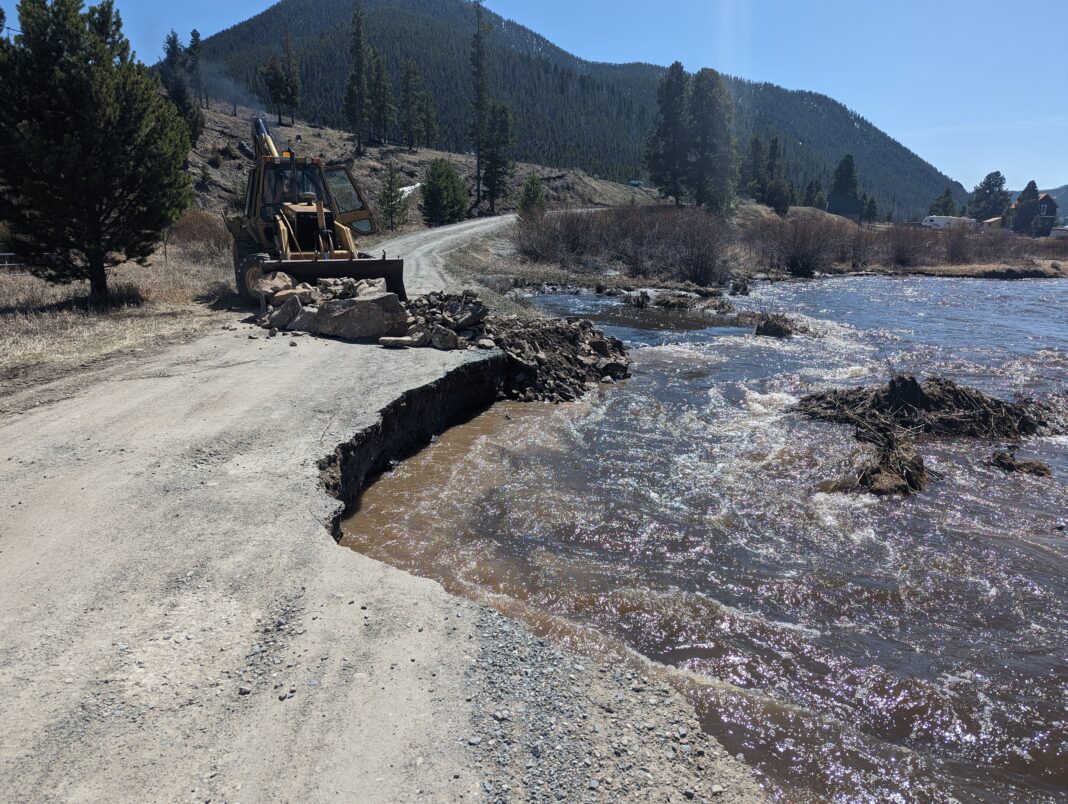
“Weather conditions really play a part with the budget needs,” Kirsch said. “[Taylor] and his crew do a great job staying on top of these unforeseen events, which this year have largely been flood-related.
“We’ve had six different roads get washed out,” Taylor said. “One road in Whitehall washed out twice in one week.”
Some of the roads were so impacted by the heavy rains Taylor said “you couldn’t even tell we graded the roads the day after.”
Taylor said he’s always concerned about his budget, especially when it comes to mills. On Monday, Aug. 7, the Jefferson County Clerk and Recorder will receive the taxable values from the Department of Revenue.Jefferson County Clerk and Recorder Ginger Kunz said she expects the mill values to go up, which means fewer mills will be levied.
“When we get the valuation numbers, we will go through all these calculations and enter what we can levy, what cash is on hand and what has been budgeted,” Kunz said. “If there won’t be enough revenue and cash on hand (budget doesn’t balance), the expenditures will need to be cut down somewhere.”
If that’s the case, Taylor said he hopes potential cuts don’t impact his need for new trucks and equipment.
“Better equipment makes us more efficient and reduces repair cost,” he said.
Kunz said the county is limited on how much it can increase levies, but it’s too soon to say how that will affect the road department’s preliminary budget.
As far as Taylor is concerned, what matters most to him is that his crew get the wages they deserve. He’s had the same team of operators for the past three years, which is rare, especially considering neighboring counties can pay its road crews higher wages. Taylor said he’s glad to see his employees are rewarded for their commitment, and hopes that remains the case.
“I love the guys I work with,” he said.
Despite not having the budget he’d like, Taylor said he’s grateful for his situation, as he loves doing road work and loves working with the people of Jefferson County. He also appreciates the county commissioners, as they “have a good grasp on each department and they let us do our jobs.”
Taylor said he’s happy to answer any questions the public might have regarding roads. He can be reached at (406) 225-4158.