
Water woes continue for the Clancy Water and Sewer District, which is now seeking a site for a third test well with the hopes of one day addressing the nitrate contamination in the town’s private well systems with a clean central water and sewer system.
The town’s nitrate contamination results from individual septic systems constructed in close proximity to private wells.
In March, it appeared that the eight year search for clean water had come to an end, when the district’s second test well produced 200 gallons of water per minute – which was more than the district needed to be sustainable.
“It looks promising,” Great West Engineering Project Manager Joel Pilcher told the Clancy board in March. However, the momentous occasion was short-lived when first round water quality test results revealed another potential contamination: elevated uranium levels (0.0261 milligrams per liter).
“This could prove to be problematic, as it would certainly be on [the Department of Environmental Quality’s] radar,” Great West’s Business Unit Manager Collette Anderson said during the June 27 meeting, adding that it wasnearly 90% of the maximum contaminant level allowed in public drinking water.
Clancy Water and Sewer District Chair Lori Gilliland said the second round of water quality test results – which will reveal whether uranium levels remained elevated – were expected to arrive before the board’s July meeting; however, by Aug. 2, Gilliand said she had not received the results from Great West.
Until the viability of the district’s second test well is revealed, Gilliland said the board is pursuing a third test well in the same area on Clancy local Virginia Kalchbrenner’s property.
***
Clancy isn’t the only rural community in Montana struggling to secure a clean water source after battling with nitrate contamination.
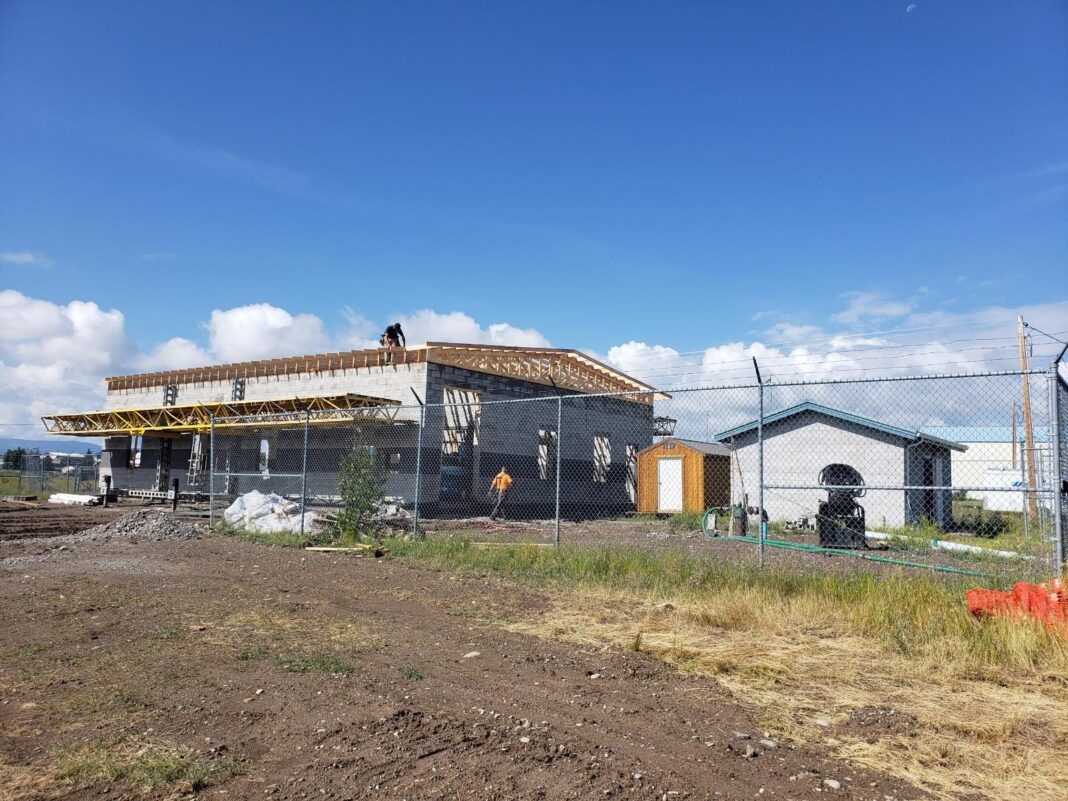
Already pursuing a solution to this issue is the fellow rural, Montana town of Wilsall, which is constructing a five stage water treatment plant.
In 2017, day-to-day life changed for residents of Wilsall – a town of approximately 230 people in Park County – when floodwaters mixed surface water with the groundwater.
“Basically, something happened underground to let creek and river water mix, with what was pretty clean groundwater,” Wilsall Project Secretary and District Operator Sadie Collins told The Monitor. Not long after, Collins said, test results revealed high nitrates in one of the district’s two wells.
The Wilsall Water District initially avoided the installation of a water treatment plant when water in one of the town’s wells tested positive for nitrates – and for good reason, since the plant came with a $2 million bill. The district’s first attempts included building two test wells and experimenting with nitrate-eating bacteria.
When the district discovered that the winter temperatures slowed the bacteria’s rate of consumption to insufficient levels, the Wilsall Water District had lost a $1 million investment in its search and was left with the more expensive solution.
“After that, we and the engineers … started pleading our case to every agency that would listen,” Collins said.
Collins and other district board members went door-to-door and hosted public meetings informing residents that a base rate increase from $36 to $82 was necessary to help fund such a project.
The district also received $17,000 per household from the U.S. Department of Agriculture’s Rural Development to help foot the bill – the largest amount ever received in Montana, according to Collins.
Construction costs for the plant doubled following the COVID-19 pandemic, increasing the Wilsall Water District’s bill to $4 million and delaying the groundbreaking on the facility until spring of 2023.
The remainder of the new balance was funded through grants from the American Rescue Plan Act and other agencies, Collins said.
Wilsall’s water treatment plant will process the town’s water in five stages – ion exchange, microfiltration, cartridge filtration, ultraviolet disinfection and chlorine treatment – when construction wraps up by the end of 2023.
Anderson said similar treatment options exist for treating uranium; however, they are “expensive and more complex to operate.”
Bobbie Shular, a circuit writer for the Montana Rural Water Systems Inc. – which provides member systems with technical assistance and troubleshooting – explained that once uranium is filtered out of the water it must be properly stored and disposed of due to its radioactivity.
Unfortunately, there is no resale value for uranium removed from the water.
“It has no real value to anybody,” Shular said, explaining that the uranium removed from the water is not of commercial value and cannot be sold.
“It would be best if we could find a source that does not require a water treatment plant,” Anderson told The Monitor.
Bobbie Shular, a circuit writer for the Montana Rural Water Systems Inc., suggested some other solutions to Clancy’s water situation, noting that “H2O is not simple.”
The first solution Shular posed was mixing the contaminated water with clean water in the storage reservoir to lower contaminants per liter to acceptable ratios.
“If we can’t dilute it to a safe level of consumption then you have to discontinue use of that water system,” Shular said.
If the Clancy Water and Sewer District is unable to find a clean water source, Shular said there is still another option: importing water from another district such as Helena. This method has been used by other rural communities, such as the Dry Prairie Rural Water System, which delivers to Plentywood, Poplar and other northeastern Montana towns via the Big Muddy to Culbertson Mainline.
However, Shular said, 10 miles of piping could cost around $1 million, and Clancy lies 12.8 miles down the highway from Helena’s water treatment plant.
“You want to pick the best solution for your system,” Shular said, adding that Clancy’s position in the mountains makes finding water challenging.
Still determining the best solution, Clancy Water and Sewer is considering a third test well until the second round of water quality testing determines whether test well 2 is a viable source or not.
Until these results are received, Collins wished Clancy and any other district dealing with a similar project, “good luck.”