
“Swoosh.”
The sound of its wings whipping only inches away startles me and shifts my focus to its flight path. But just as fast as it appeared, it’s gone again.
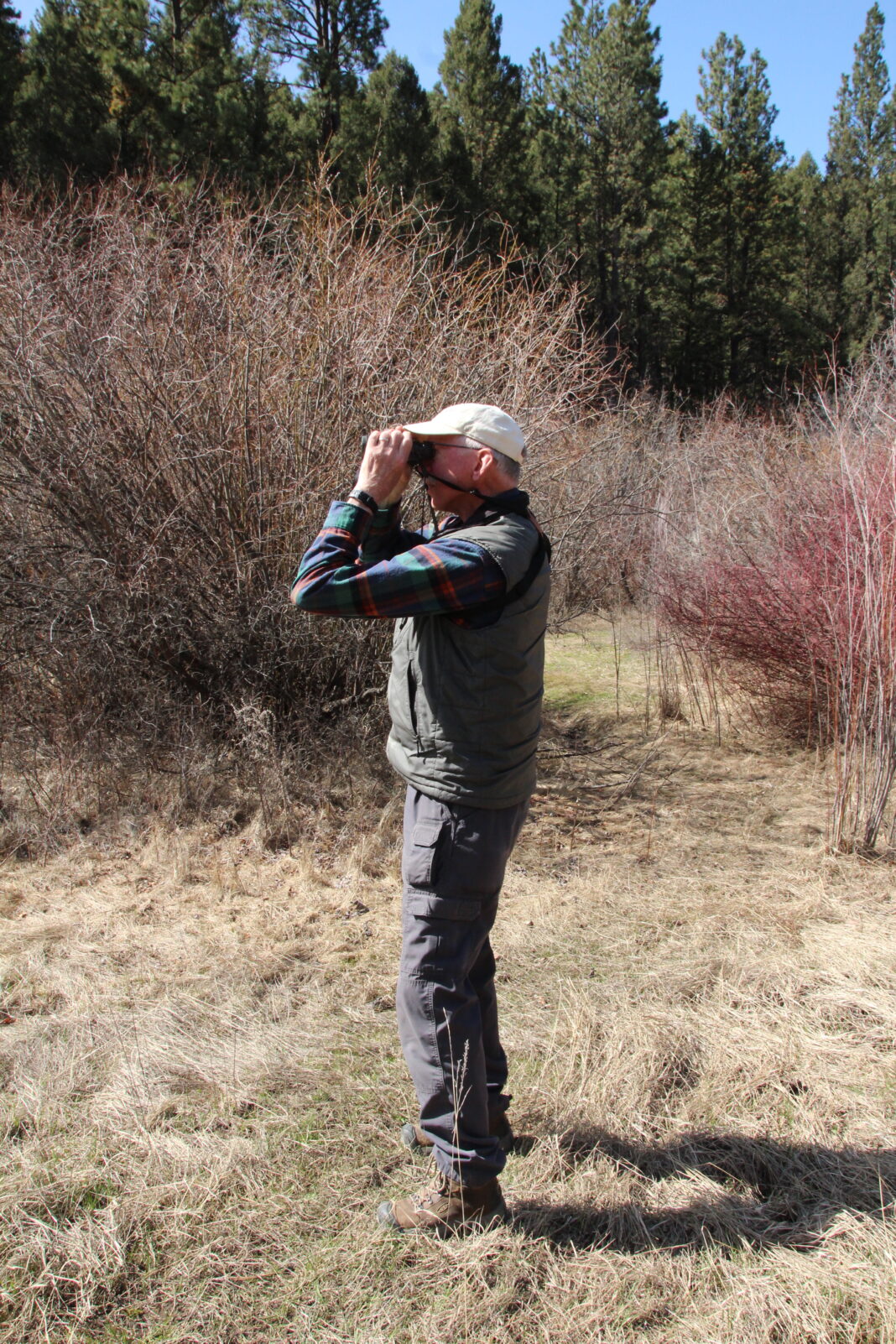
“That was the cat bird,” said my guide – avid bird watcher and Jefferson County local Dan Ellison – with a smile spreading across his face.
Prior to this outing, I was unaware of this particular species’ existence, and Ellison was eager to introduce me to this and several other flight experts.
***
Ellison is a bit of a flight expert himself.
His interest in birds began young when he received his first book: a birding field guide. As he watched each feathered creature take off, the mystery of flying called to him. He had to learn how.
At 18 years old, Ellison joined the Navy with the intention of learning to fly — and fly he did.
Twenty-six years later, he left the Navy. However, his interest in flight was far from diminished.
Without wings of his own, Ellison’s focus returned to those who invented flight themselves: the birds.
Bird watching, Ellison said, provides us with connection to the world around us. And the best part? Anyone can do it.
To go bird watching, you’ll need very few tools. A pair of binoculars are helpful, but not essential. A camera is enjoyable, but unnecessary.
“You’ll need your eyes and your ears,” explained Ellison.
Your ears are especially important, as oftentimes, you’ll hear the birds before you see them. More so, listening to the unique chatter and calls provides you with crucial details as to which bird you should be looking for.
What was once background chatter in your everyday life, sends a shock of excitement through you while birding. In just a moment, the silence of your surroundings can erupt into song. After one of these “bursts of activity,” as Ellison refers to them, you’re filled with a feeling unlike any other.
It’s for this reason — and many others — that Ellison finds birding so uplifting.
“A young bluebird will exit its box one day and fly for the first time, better than I did with years of training,” he remarked.
Just as fascinating for Ellison is how birds can migrate thousands of miles non-stop.
“They give me hope… [and] a whole lot of enjoyment,” he explained.
Though the main event, birding isn’t the only way that Ellison explores nature. As an avid outdoorsmen, he enjoys hunting, fishing and hiking with his wife as company.
After each birding venture, Ellison said he leaves richer for it. Whether he saw the bird he’d set out searching for, or encountered a four-legged creature along the way, it’s all worth it to him.
“I get to see nature in all of its beauty and splendor,” he added.
This time of year – when the birds migrate from their winter residence to their summer accommodations – Ellison goes birding three or four days out of the week.
Although he plans to travel the world seeking out rare kinds of birds, much of Ellison’s bird watching happens right here in Jefferson County.
The best birding spots, according to Ellison, are the KG Ranch and Slough, the Lewis and Clark Caverns area, Milligan Canyon and the Whitehall Cemetery; however, North County residents can appreciate their avian friends in the Clancy area or at Ashgrove Park in Montana City – which is ranked number eight on Ellison’s list of best birding spots in Jefferson County.
“It’s a great place to get out,” said Ellison.
Birders can also enjoy several busy locations in Helena at places, such as the K-Mart ponds and nature park.
While birding in Jefferson County, you’ll have the opportunity to witness dozens of bird species.
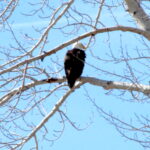
One bald eagle, two turkey vultures, three tree swallows and five mountain bluebirds appear while on one adventure. Five American robins, two cat birds, two lazuli bunting and one spotted towhee on another. But that’s only a small portion of what you’ll see while birding.
In reality, you see more birds than that every day and just don’t notice. Once exposed to the excitement of birding, these feathered creatures become more apparent in your everyday life.
You don’t have to have an interest in flying or grow up reading a field guide on fowl to take up birding. There are opportunities right here in Jefferson County for those interested in picking up the hobby, such as the Last Chance Audubon Society North Jefferson County Field Trip.
Ellison and fellow birder Jane Fournier will lead the field trip through two riparian areas of North Jefferson County – alongside Prickly Pear Creek at Ashgrove Park and Buffalo Creek northwest of Clancy – on June 12, 2023 at 6:45 a.m.
While on this walking trip, Ellison expects to see the MacGillvray’s warbler, a belted kingfisher and a black-headed grosbeak. Ellison recommends that participants bring hiking boots, hats, binoculars, sunscreen, insect repellent and rain parkas.
Those interested in participating in the field trip can register by emailing daellison70@gmail.com their name and phone number.
Though birding provides a special connection for Ellison, he also sees it as an opportunity to learn how to protect and preserve his feathered friends.
“[The] birds need our help,” Ellison said, explaining that as more people move into the area, there are fewer habitats for them to live in. “[There are] lots of little things you can do.”
Birders and non-birders alike can take steps toward protecting the birds, by setting up feeders and planting vegetation, which provides both shelter and food, according to Ellison.
Bird watchers can also play a helpful role in tracking the migratory patterns and observation of birds in the area through apps such as eBird and iNaturalist, according to Montana Natural Heritage Program Program Coordinator Bryce Maxell.
“Some of the data we are getting from them has really been important to our understanding of the distribution and status of a number of species in Montana,” Maxell said. “For instance, we have extended the known ranges for a few species and gotten the first state records of a weed species via iNaturalist.”
No matter what the inspiration is behind it, birding is there for anyone interested, and it doesn’t take much to spark the passion. At the conclusion of each birding venture – no matter how long or short it may have been – there’s a resistance to leave and a desire to remain connected with the natural world.