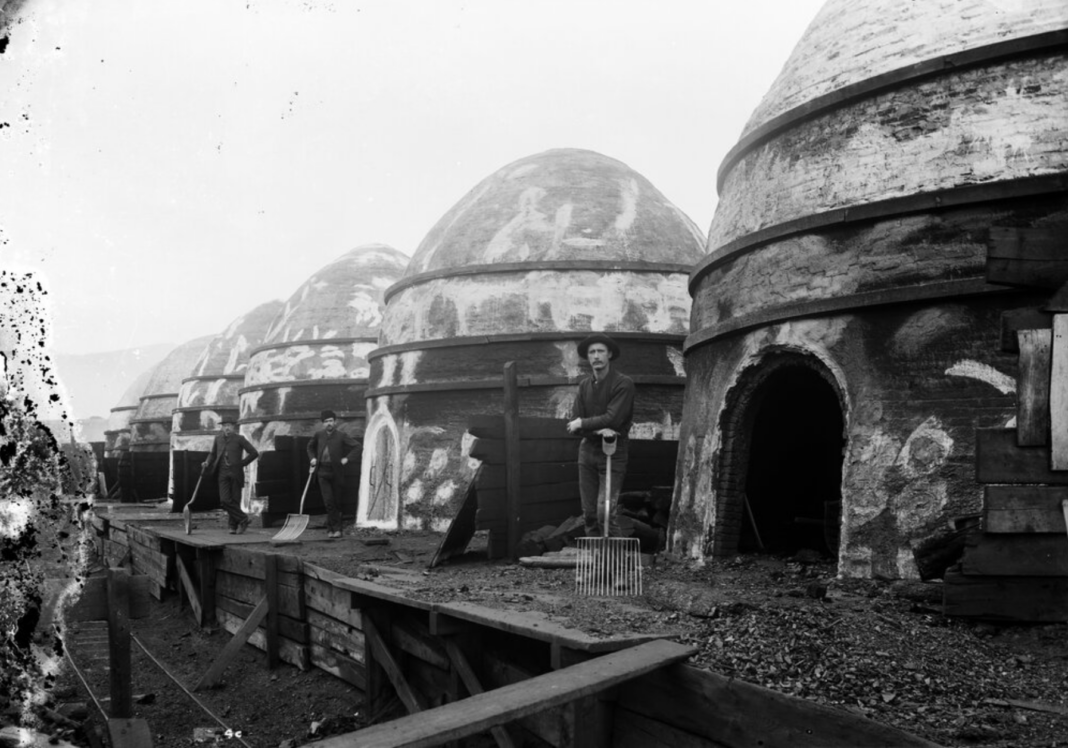
Limestone kilns dotting the landscape around Jefferson County remain standing as silent reminders of a very different time in county history.
During the late 1800s and early in the 20th century, the region bustled with mining camps that grew up around the large gold discovery near Last Chance Gulch in Helena. Mining operations, connected by dusty roads for horse-drawn carts and railroad spurs, spread from Helena south into what is now Jefferson County, with larger communities developing in Clancy, Wickes, Comet and Basin.
The kilns, many of which are still visible today, served the mining operations by producing charcoal that was used for smelting operations, as well as quicklime used in mortar for brick laying, according to the U.S. Forest Service. Often incorrectly believed to have smelted ore, the kilns, known as “continuous kilns,” were loaded with wood and layers of limestone mined from local hills. Constructed from wooden poles, wire and brick and mortar, the kilns served as very hot vertical ovens.